Baba Ganoush
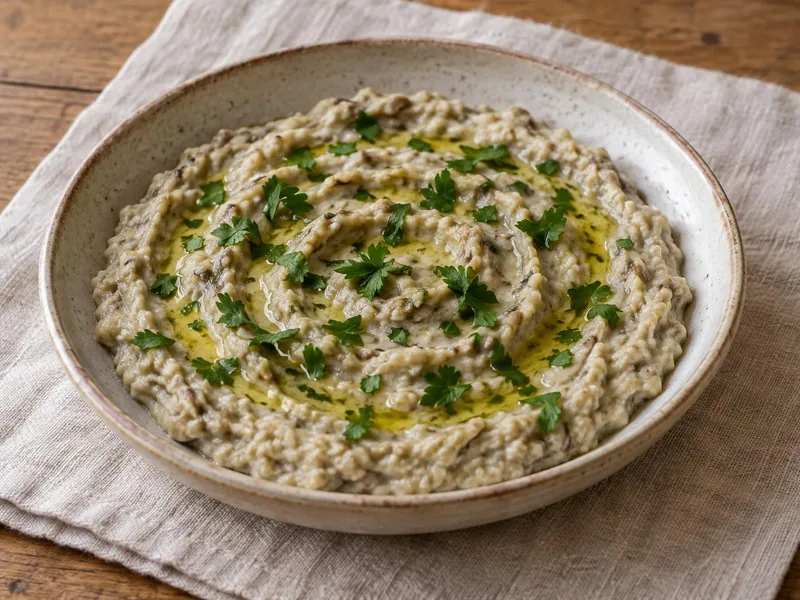
A spoonable roasted eggplant dip with a lemony tahini base, made in the oven for deep roasted flavor or over open flame for a clearly smoky taste.
 AI-generated image
- 900 geggplant
- 60 gtahini
- 45 gfresh lemon juice
- 30 gextra virgin olive oil
- 28 gextra virgin olive oil
In the US and UK, a dip of roasted eggplant, tahini, lemon and garlic is almost always sold as baba ganoush. In the Levant, this tahini-rich version is traditionally called mutabbal (mutabbal batinjan), while Levantine baba ganoush is usually dressed with pomegranate molasses and olive oil plus finely chopped vegetables such as tomato, pepper, onion, parsley and mint, without tahini. This recipe is the tahini version most people search for under the baba ganoush name. It is eaten as part of a meze spread at room temperature, with warm flatbread, raw vegetables, olives and other small dishes. Turkish cooks also make charred eggplant meze, so you will find similar ideas under different names.
The main method here uses the oven, which is the easiest route for most home cooks. It gives a deeply roasted, sweet and savory eggplant flavor, with skins that darken and blister. Oven roasting does not reliably give a strong smoky aroma. For that, char the eggplants directly over a gas flame or on a hot grill (barbecue), as described in the notes. The flesh is cooled, scooped from the skins and left to drain so the dip is not watery or bitter, then chopped by hand rather than blended, which keeps some texture.
The tahini is whisked with lemon juice and a little cold water before the eggplant goes in, so the base turns pale and creamy and the dip does not turn grainy. A short rest before serving lets the garlic mellow and the flavors come together.
Preparation
- Step 0110 min
Heat the oven to 230°C (450°F), or 210°C (410°F) fan. Line a rimmed baking tray with heavy-duty aluminum foil (aluminium foil). Do not use baking parchment at this temperature, as many parchment papers are not rated for it.
- Step 022 min
Prick each eggplant 6 to 8 times with a fork or the tip of a knife so steam can escape. Set them on the foil-lined tray.
- Step 0345 min
Roast for 40 to 50 minutes, turning once halfway. Times are approximate and depend on size. They are ready when the skins are dark, wrinkled and blackened in patches, and each eggplant has collapsed and feels completely soft all the way through when pressed with tongs. If the skins look done but the center still feels firm, roast for another 5 to 10 minutes.
- Step 0410 min
Move the eggplants to a plate or board and let them cool for about 10 minutes, until you can hold them comfortably. Cut off and discard the stems, then slit each eggplant lengthwise and open it up. Scoop the soft flesh away from the skins into a colander set over a bowl or the sink. Discard the skins.
- Step 0520 min
Leave the flesh to drain for 20 minutes, pressing gently with the back of a spoon once or twice, until it stops dripping freely. Prepare the garlic and tahini base in the next two steps while it drains.
- Step 06
Put the garlic and salt on a board and mash with the flat of a knife into a smooth paste. Set aside.
- Step 07
In a medium bowl, whisk the tahini with the lemon juice and cold water until pale, smooth and thick like soft frosting. It may stiffen first, then loosen as you whisk. Stir in the garlic paste and cumin, if using.
- Step 083 min
Chop the drained eggplant flesh with a knife into a coarse, spreadable mash with some strands left. Fold it into the tahini mixture with the 30 g olive oil until combined.
- Step 0915 min
Taste and adjust with a pinch of salt or a little more lemon juice. The dip should taste roasted, tangy and savory, not bitter. Leave it to rest for 15 minutes so the flavors settle.
- Step 102 min
Spoon the portion you will eat into a shallow bowl, make a swirl with the back of the spoon, and drizzle with the 28 g olive oil, using about half if you serve only part of the dip. Scatter over the parsley and serve with warm pita or other flatbread, or with raw vegetables (not included in the ingredient list). Cover the remaining dip and refrigerate it right away.
Kitchen notes
- Timing: about 105 minutes in all, including 10 minutes of oven preheating, 45 minutes of roasting, 10 minutes of cooling, 20 minutes of draining (while you make the garlic and tahini base) and a 15 minute rest.
- For a clearly smoky flavor, char the eggplants over a gas flame instead of roasting them in the oven. Set them directly on the burner grate over medium-high heat and turn with tongs every few minutes. Expect roughly 12 to 15 minutes for smaller eggplants and longer for large ones of about 450 g each. The time is only a guide: the eggplant is done when the skin is blackened and the whole eggplant has collapsed and feels completely soft through to the center. If the skin chars before the inside is soft, finish the cooking in the oven at 200°C (400°F) on a foil-lined rimmed tray, or move the eggplants to the cooler side of a grill (barbecue) with the lid closed, until they slump and are soft all the way through. Keep the area ventilated, stay at the hob, and keep cloths and paper well away. Do not put foil, parchment or a tray over the burner or grate. Move the charred eggplants to a rimmed tray to catch the juices. A hot grill works the same way. Then continue from step 4: cool until you can handle them, cut off the stems, scoop out the flesh, discard the skins and stems, and only then drain the flesh.
- Draining matters. Skipping it gives a loose, watery dip that can taste bitter.
- Chop by hand rather than using a food processor if you want a rustic texture. A few quick pulses is fine if you prefer it smoother, but avoid over-processing.
- To serve: warm pita or other flatbread is the usual partner, about 60 g per person. It is not part of the ingredient list or nutrition values here. Check the label of any bread you buy for gluten, milk, egg and sesame if these matter to you. Raw vegetables such as cucumber, carrot and pepper strips also work.
- Storage: keep the dip in a covered container in the refrigerator at 4°C (40°F) or below for up to 3 days. Across preparation and serving, do not leave it at room temperature for more than 2 hours in total, or 1 hour if the room is above 32°C (90°F). Take out only the amount you plan to eat, stir it, and add a little lemon or oil if needed. Do not return served dip to the container.
- Variations: stir in a spoonful of pomegranate molasses, add finely chopped tomato and mint on top, or sprinkle with sumac or pomegranate seeds. The dip itself is vegan and gluten-free, and contains sesame from the tahini.
Diet and allergens
Suitable for: Vegan, Vegetarian, Gluten-free, Dairy-free, Nut-free.
Contains: sesame.
Labels come from the ingredient list by fixed rules. If you cook for someone with an allergy, check the labels of packaged ingredients such as stock, spice blends, tahini and bread, since brands differ. How labels work.
Frequently asked questions
What is the difference between baba ganoush and hummus?
Baba ganoush is built on roasted eggplant, while hummus is made from chickpeas. Both usually contain tahini, lemon and garlic, but baba ganoush is looser and more textured.
Is this baba ganoush or mutabbal?
In the Levant, eggplant mashed with tahini, lemon and garlic is traditionally called mutabbal, while baba ganoush there is usually made without tahini and dressed with pomegranate molasses and vegetables. In the US and UK, the tahini version is commonly sold as baba ganoush, so that is the name used here.
Why is my baba ganoush bitter or watery?
Usually the eggplant was undercooked or not drained. Cook until fully collapsed and soft through the center, drain the flesh for 20 minutes, and make sure the garlic is not overly sharp by pasting it with salt.
How do I get a smoky flavor?
Oven roasting gives a deep roasted flavor but only a mild char, so it will not taste strongly smoky. For real smoke, blacken the eggplants directly over a gas flame or on a hot grill (barbecue), and finish them in the oven if the skin chars before the inside is soft. Then cool, scoop out the flesh and drain it as in the oven method.
References and sources
- Nutrition: USDA FoodData Central records Eggplant (aubergine) (FDC 169228), Tahini (FDC 169410), Fresh lemon juice (FDC 167747), Garlic (FDC 169230), Fine salt (FDC 173468), Cold water (FDC 173647), Ground cumin (FDC 170923), Extra virgin olive oil, for the dip (FDC 171413), Extra virgin olive oil, for drizzling (FDC 171413), Flat-leaf parsley (FDC 170416).
- Proportions: main ingredients and salt per serving were compared with the median of 4 published recipes for this dish. How we make recipes.
 AI-generated image
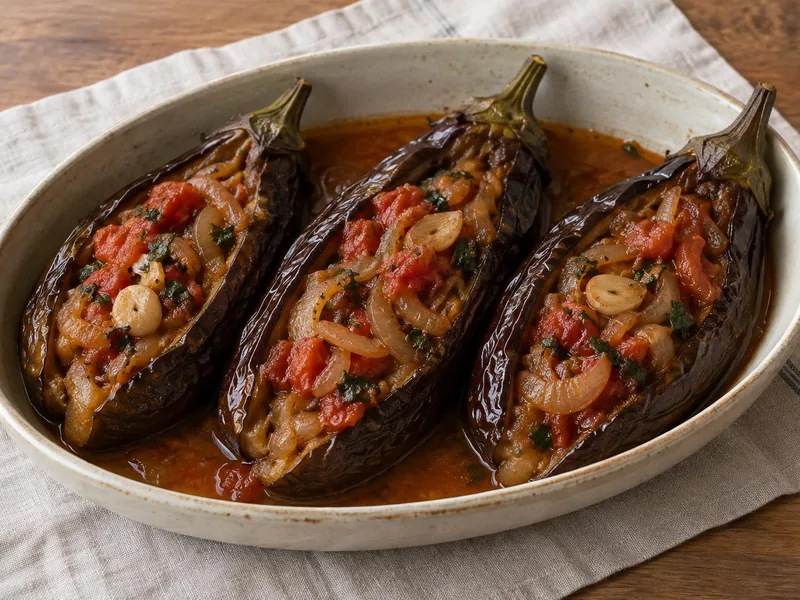
Imam Bayildi
Silky eggplants stuffed with sweet, jammy onion and tomato, braised in olive oil until meltingly tender.
 AI-generated image
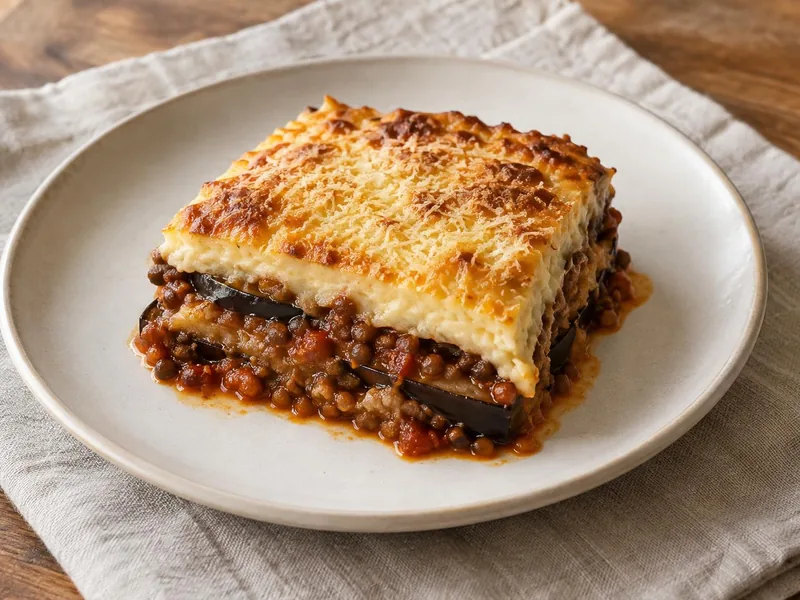
Vegetarian Moussaka
Roasted eggplant, a lentil and tomato sauce warmed with cinnamon and allspice, and a thick, golden béchamel, layered and baked until bubbling.
 AI-generated image
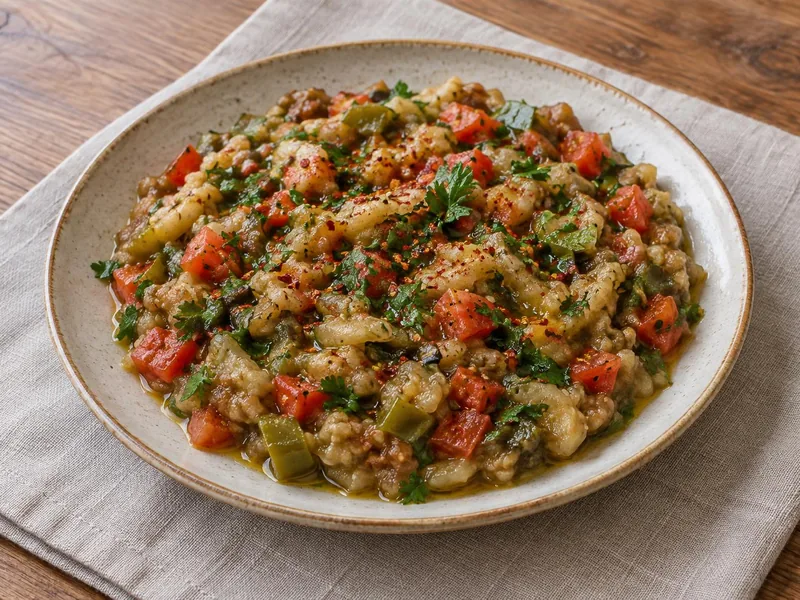
Turkish Smoky Eggplant Salad (Patlıcan Salatası)
Eggplants and long green peppers are charred until smoky and soft, then chopped by hand and dressed with garlic, lemon, olive oil, tomato and parsley.