Greek Salad (Horiatiki)
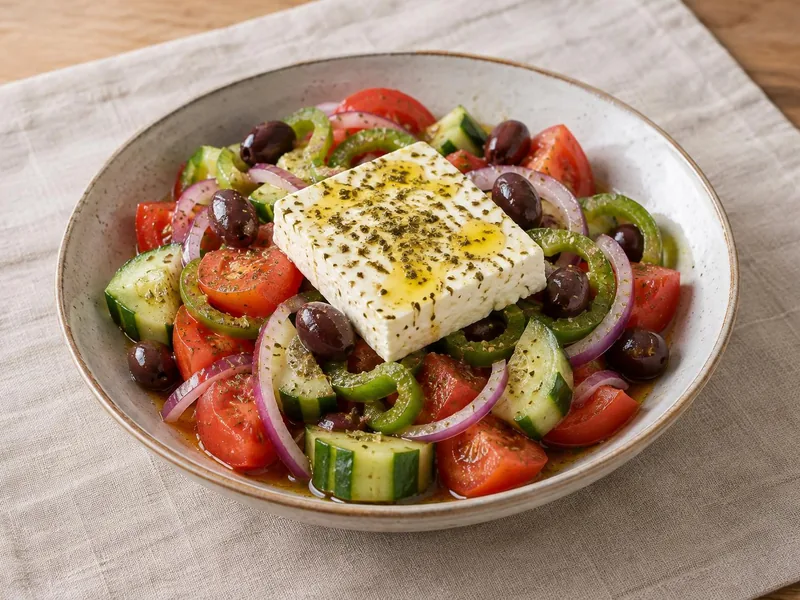
A village-style Greek salad of chunky ripe vegetables, olives and a whole slab of feta, dressed simply with olive oil and oregano.
 AI-generated image
- 700 gripe tomatoes
- 300 gcucumber
- 200 gfeta cheese made
- 160 gred onion
- 120 ggreen bell pepper
Horiatiki is the Greek salad most people picture: big wedges of tomato, cucumber, green pepper, red onion and olives, topped with a thick slab of feta. The name is usually translated as village or country salad. There is no lettuce, and the vegetables are cut large so they stay juicy and crisp.
It is eaten across Greece and in Greek restaurants worldwide, usually as part of a spread of shared dishes with bread, grilled vegetables or beans. The tomato juices mix with olive oil to make a dressing that people like to mop up with bread.
This version works because the details are simple. Use the ripest tomatoes you can find, salt them first so they release their juice, mellow the onion in cold water, and keep the feta whole so each person breaks off what they like. Use a good olive oil, since it is the main dressing. The recipe calls for feta made with microbial or vegetable rennet, so the whole salad is vegetarian.
Preparation
- Step 0110 min
Put the sliced red onion in a small bowl, cover with cold water and leave for 10 minutes to soften its sharpness.
- Step 02
Cut the tomatoes into thick wedges, or into chunks if they are large, and put them in a large wide bowl with any juice from the board.
- Step 0310 min
Sprinkle the tomatoes with the salt and toss gently. Leave them for 10 minutes, until a pool of red juice collects in the bowl.
- Step 04
Peel the cucumber in alternating lengthwise stripes, halve it lengthwise if it is thick, and cut it into thick half moons.
- Step 05
Cut the green pepper into thin rings, discarding the seeds and white pith.
- Step 06
Drain the onion well and pat it dry with a clean towel.
- Step 07
Add the cucumber, pepper, onion, olives and capers (if using) to the tomatoes.
- Step 08
Pour the vinegar and two thirds of the olive oil over the vegetables and toss gently with your hands or a spoon, keeping the tomato wedges intact. Taste a tomato and add a small pinch more salt only if needed.
- Step 09
Lay the feta slab on top of the salad, without breaking it up.
- Step 10
Sprinkle the oregano over the feta and the vegetables, then drizzle the remaining olive oil over the feta.
- Step 11
Serve right away in the bowl, letting each person break off feta as they like. Bread for mopping up the juices is optional and not part of the ingredient list.
Kitchen notes
- Serve within about 30 minutes of dressing for the best crunch. Salted tomatoes and cucumber keep releasing juice as the salad sits.
- Leftovers: refrigerate within 2 hours of serving, covered, at 4 C (40 F) or below. Eat within 1 day. The vegetables will be softer, so they suit eating with bread rather than serving fresh.
- To prepare ahead, cut the onion, pepper and cucumber and keep them covered in the refrigerator for up to 4 hours. Cut and salt the tomatoes, and add the feta and dressing, just before serving.
- Vegetarian note: the feta must be labeled as made with microbial or vegetable rennet. If you cannot find one, choose another brined white cheese whose label confirms non-animal rennet.
- The salad is gluten-free as written. Bread is optional and not included in the recipe; if you serve it for the juices, use gluten-free bread for a gluten-free meal.
- Variations: a few leaves of fresh oregano or a handful of parsley is fine, but traditional horiatiki has no lettuce. Skip the capers if the olives and feta already taste salty to you.
- Cold tomatoes lose flavor, so keep them at room temperature before cutting and do not refrigerate whole tomatoes if you can avoid it.
Diet and allergens
Suitable for: Vegetarian, Gluten-free, Nut-free.
Contains: milk.
Labels come from the ingredient list by fixed rules. If you cook for someone with an allergy, check the labels of packaged ingredients such as stock, spice blends, tahini and bread, since brands differ. How labels work.
Frequently asked questions
What is the difference between horiatiki and a regular Greek salad?
Horiatiki is the traditional version with tomato, cucumber, pepper, onion, olives and a slab of feta. Versions outside Greece often add lettuce and a thicker, vinegary dressing.
Why is the feta served in one piece?
A whole slab stays creamy and does not dissolve into the dressing. Diners can break off pieces and press them into the tomato juices and oil.
Can I use olives with pits?
Yes. Olives with pits usually have a firmer texture and fuller flavor. Weigh about 120 g to get roughly 100 g of flesh, and warn guests about the pits.
Is this salad vegetarian?
Yes, as written, because the recipe specifies feta labeled as made with microbial or vegetable rennet. Traditional feta can use animal rennet, so do not use a feta without that label statement.
Why salt the tomatoes first?
Salt draws out their juice, which mixes with olive oil to make the dressing and gives the tomatoes more flavor.
References and sources
- Nutrition: USDA FoodData Central records ripe tomatoes (FDC 170457), cucumber (FDC 2346406), green bell pepper (FDC 170427), red onion (FDC 790577), pitted Kalamata olives (FDC 169094), capers in brine (FDC 172238), fine sea salt (FDC 173468), feta cheese made with microbial or vegetable rennet (FDC 173420), dried oregano (FDC 171328), extra virgin olive oil (FDC 171413), red wine vinegar (FDC 172240).
- Proportions: main ingredients and salt per serving were compared with the median of 4 published recipes for this dish. How we make recipes.
 AI-generated image
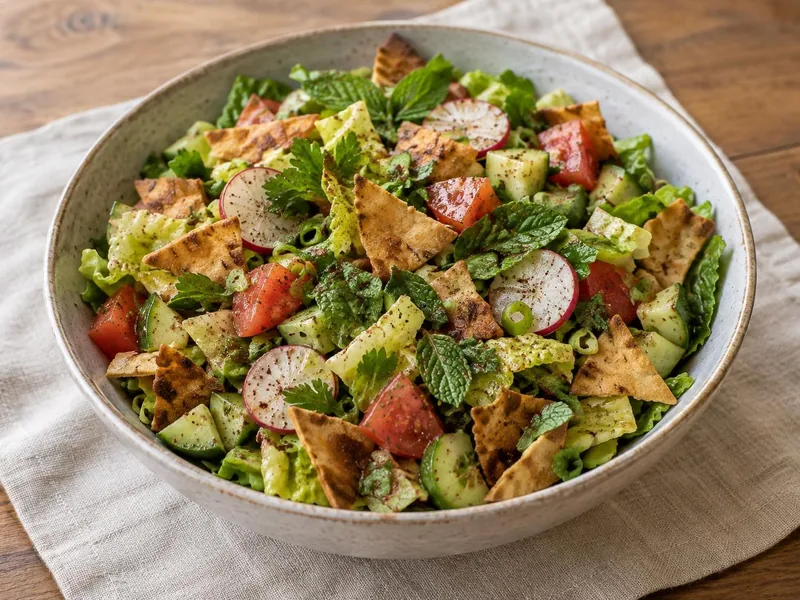
Fattoush
A crunchy Levantine bread salad of crisp pita, juicy vegetables and plenty of herbs, tossed in a tart sumac and lemon dressing.
 AI-generated image
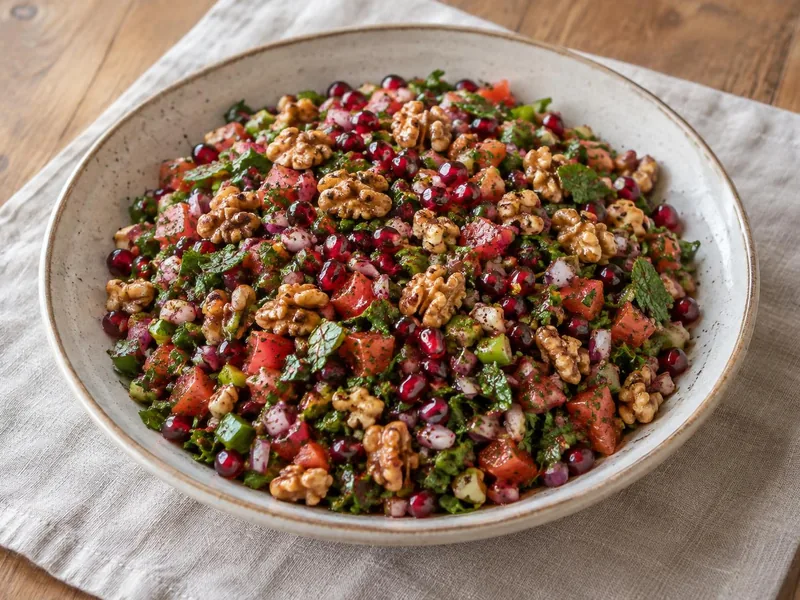
Pomegranate and Walnut Salad
Juicy pomegranate seeds and toasted walnuts tossed with finely chopped tomato, pepper, onion and herbs in a sweet-sour pomegranate molasses dressing.
 AI-generated image
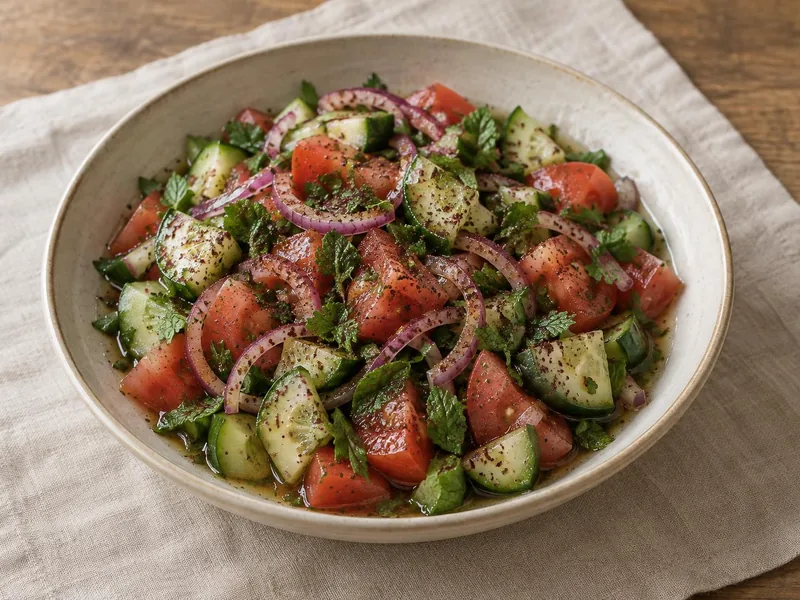
Cucumber Tomato Salad with Sumac
A bright, juicy Turkish and Mediterranean style salad where sumac-rubbed onion and a dressing made with the tomato juices do the flavoring.