Aleppo Pepper: What It Is and the Best Substitutes
Aleppo pepper is a flaky, fruity, moderately hot red pepper, and when you cannot find it, several close swaps and one easy homemade blend can fill in.
- Aleppo pepper is a flaky, fruity, slightly smoky red pepper with moderate heat [1][3].
- It tends to be half as spicy as regular crushed red pepper flakes, so adjust the amount when swapping [2].
- Marash and Antebi peppers are excellent Turkish substitutes, and ancho chili powder is the closest for spiciness [2][5].
- For a pantry fix, blend equal parts crushed chili flakes and Hungarian sweet paprika, or cayenne and paprika [3][5].
- A homemade blend of gochugaru, oil, smoked paprika, cumin and sea salt keeps in a sealed container for up to one month [4].
What Aleppo pepper is
Aleppo pepper comes from the town of Aleppo in northern Syria [1]. The flaky crushed sun-dried pepper has a slightly smoky flavor [1]. Its name originates from a city in northern Syria where peppers are sun-dried with salt [2]. It is often found in a crushed, flaky form [3].
Because of the Syrian civil war, most Aleppo pepper is now grown in Turkey and the United States [2]. That is one reason the name on a jar and the origin of the pepper inside it may not match.
How it tastes and how hot it is
Aleppo pepper is a medium-spicy, fruity red pepper with complex heat that fades quickly [1]. It has a subtle, smoky earthiness with a raisin-like scent and moderate heat [3]. Its flavor is said to be reminiscent of pasilla chiles [3]. It is known for its deep red color and slightly sweet yet spicy flavor [2].
The key point for substituting is heat. Aleppo pepper brings more flavor than average red chile flakes but not the heat [2]. It is about half as spicy as regular crushed red pepper flakes [2]. In a steak and aioli, Aleppo pepper from northern Syria gives a sweet, earthy flavor [1].
How to use it
Aleppo pepper can be added to a variety of sauces, soups, marinades and rubs [3]. It can be used during cooking, and also afterwards as a finishing spice [3]. It can be used in place of ordinary dried and crushed red chilies [3].
It suits many dishes, from meat to dips to Turkish poached eggs [2]. Dried urpa or Aleppo pepper, or hot paprika, is an ideal seasoning for roast pepper spread [1].
- Stir it into sauces, soups, marinades and rubs while cooking [3].
- Sprinkle it over finished dishes as a finishing spice [3].
- Try it on meat, in dips, or on Turkish poached eggs [2].
Where to find it
Aleppo pepper can be found in Middle Eastern groceries and online [1]. It is usually found in Middle Eastern supermarkets, spice shops, or online [2]. It can also be found in Middle Eastern and Greek markets, as well as many gourmet grocery stores [3].
It is not always easy to track down. One article attributes the shortage to the civil war in Syria [5]. In that article, Rucker says he has not seen Aleppo pepper since late spring or early summer [5].
If you do buy a jar, check how long it has been in your cabinet. Spices have shelf lives, and old spices taste like sawdust [5]. One source advises replacing any spices that have been in the cabinet since this time last year [5].
The best substitutes
Almost any red pepper flakes can replace Aleppo pepper, with a caveat: Aleppo pepper tends to be half as spicy as regular crushed red pepper flakes [2]. You need to adjust the amount you use to achieve similar results [2]. Start with the table below, then choose by what you want to match: heat, smokiness, or sweetness.
For the closest match in character, look to Turkish peppers. Either Marash or Antebi pepper is an excellent substitute for Aleppo [5]. If you want a smoky taste, Marash peppers are the choice [2].
- Want similar spiciness? Ancho chili powder is recommended as the closest substitute for a similar level of spiciness [2].
- Want more heat? Reach for crushed red pepper flakes for higher heat levels [2].
- Want sweet and spicy? Korean gochugaru brings a balance of sweet and spicy [2].
- Want a pantry fix? Try blending cayenne and paprika [5].
Substitute comparison
Use this table to match a substitute to your dish. Because heat varies, add gradually and adjust to taste [2].
A simple homemade substitute blend
If you cannot find Aleppo pepper, you can substitute a mixture of equal parts dried crushed chili flakes and Hungarian sweet paprika [3]. For a more detailed blend, one recipe combines gochugaru with sunflower oil, smoked paprika, ground cumin, and sea salt to mimic the flavor of Aleppo pepper [4].
The recipe uses 2 tablespoons of gochugaru or another seedless pepper flake [4]. It adds ½ teaspoon of sunflower oil or another neutral-tasting oil, and ¼ teaspoon of smoked paprika [4]. To start, place the chili flakes in a small bowl, add the oil, and stir with a spoon to coat the flakes [4].
The blend contains all five ingredients, so mix the smoked paprika, cumin and sea salt in with the oil-coated flakes before treating it as ready [4]. Amounts for the cumin and salt are not listed here, so add them a little at a time and adjust the spices to match the heat and flavor you want [4]. Once mixed, the substitute is ready to use straight away [4].
You can also store it in a sealed container for up to one month [4]. If you use inherently smoky flakes such as chipotle, you can omit the smoked paprika [4]. The blend works well in Middle Eastern, Mediterranean, or other cuisines calling for Aleppo pepper [4].
| Substitute | How it compares to Aleppo pepper |
|---|---|
| Marash pepper | Smokier with a little more heat, but very similar, and its coarse grind makes it a great finishing pepper [5] |
| Antebi pepper | More fruity and milder than both Aleppo and Marash peppers [5] |
| Urfa pepper | Far darker and much smokier than the other three peppers [5] |
| Ancho chili powder | Recommended as the closest substitute for similar spiciness [2] |
| Korean gochugaru | Brings a balance of sweet and spicy [2] |
| Crushed red pepper flakes | Used for higher heat levels, so adjust the amount [2] |
| Cayenne and paprika blend | A pantry option when you cannot get to a spice shop [5] |
| Dried crushed chili flakes plus Hungarian sweet paprika | Equal parts of each make a substitute [3] |
Frequently asked questions
Is Aleppo pepper very hot?
No. It is a medium-spicy, fruity red pepper whose heat fades quickly [1]. It tends to be half as spicy as regular crushed red pepper flakes [2].
Can I use regular red pepper flakes instead?
Yes, red pepper flakes can be used as a substitute [1]. Since Aleppo pepper tends to be half as spicy, adjust the amount you use [2].
Which substitute is closest in spiciness?
Ancho chili powder is recommended as the closest substitute for a similar level of spiciness [2].
Which substitute is smokier than Aleppo pepper?
Marash pepper is smokier and carries a little more heat, but is very similar [5]. Urfa pepper is far darker and much smokier than Marash, Antebi and Aleppo [5].
How long does the homemade substitute keep?
It can be stored in a sealed container for up to one month [4].
Sources
- Aleppo-Style Pepper (epicurious.com)
- Why You Should Consider Spice Levels When Substituting Aleppo Pepper - Tasting Table - Why You Should Consider Spice Lev (tastingtable.com)
- What is Aleppo Pepper? | Rouxbe Online Culinary School (surlatableonlineculinaryinstitute.rouxbe.com)
- Easy Aleppo Pepper Substitute - Cup of Yum (cupofyum.com)
- Can't find Aleppo pepper? Here's why, and what to substitute - Tap to enable a layout that focuses on the article (latimes.com)
Recipes that use this
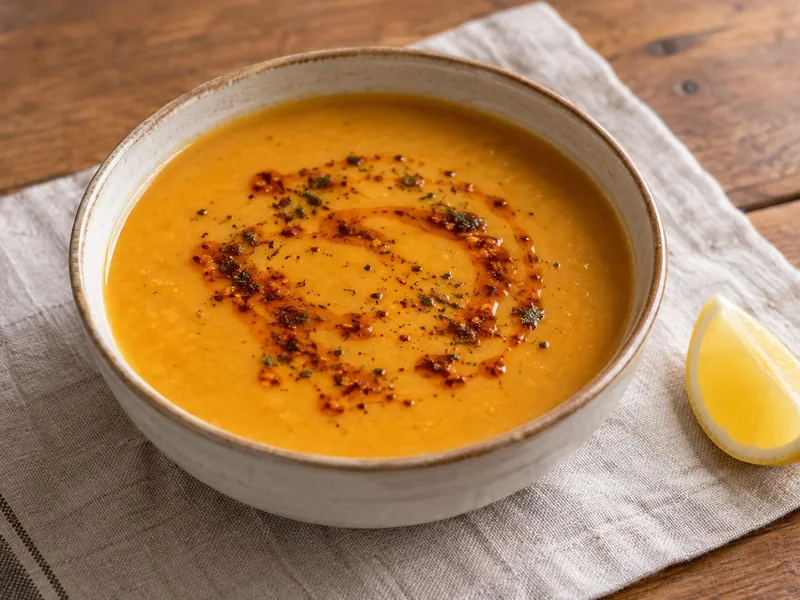 AI-generated image
Red Lentil Soup (Turkish Mercimek Çorbası)
A silky, gently spiced red lentil soup made from pantry staples, finished with lemon and a sizzling mint and chili oil.
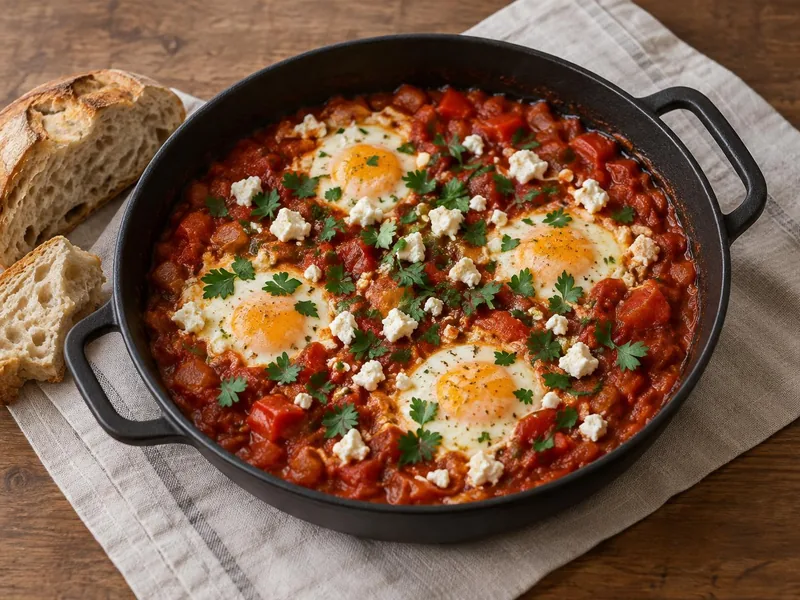 AI-generated image
Shakshuka
Eggs gently cooked in a thick, cumin and paprika scented tomato and pepper sauce, made in one pan and served with bread for scooping.
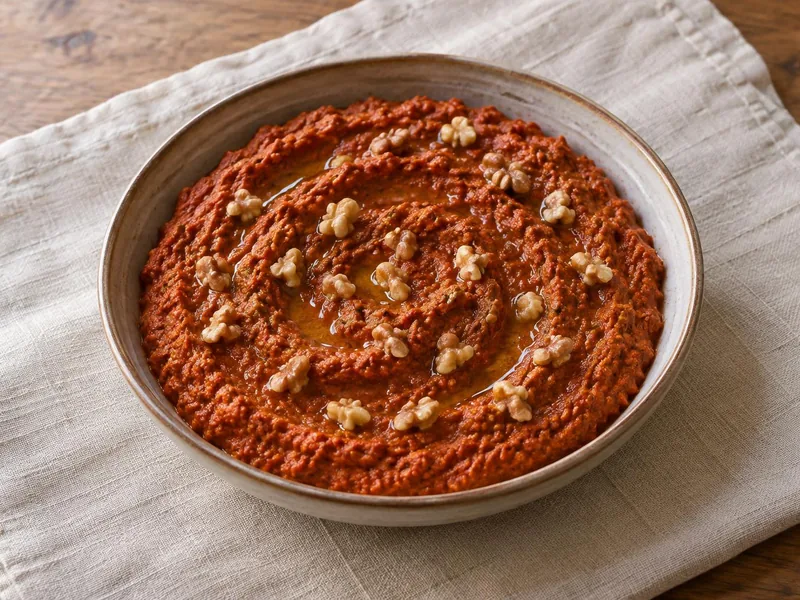 AI-generated image
Muhammara
A smoky red pepper and walnut dip with a sweet-sour edge from pomegranate molasses, best scooped up with warm bread.