Pomegranate Molasses: What It Is and What to Use Instead
A practical guide to the tart, sticky Middle Eastern syrup, plant-forward ways to use it, and the swaps that make sense when your jar is empty.
- Pomegranate molasses is a tart, sticky syrup made from reduced pomegranate juice, and it is a condiment rather than a sweetener [1][2].
- It is not grenadine, which is a sweet cocktail syrup [1].
- Use it in vinaigrettes, dips, grain salads, bean sauces, roasted vegetables, and yogurt, starting with a small amount [1][2][3][4][6].
- For a swap, try a homemade pomegranate reduction, balsamic vinegar adjusted with sugar or lemon juice, balsamic glaze, or tamarind paste [2][6].
- Refrigerate it after opening [2].
What pomegranate molasses is
Pomegranate molasses, also called pomegranate syrup, is a thick, sweet, sticky syrup used in Mediterranean and Middle Eastern cooking [1]. It is essentially the concentrated juice of pomegranate fruits [6]. It is a reduction of pomegranate juice, which comes from pomegranate arils [3].
Some versions are boiled down with sugar and lemon juice [1]. Some recipes add a little sugar and lime juice [3]. The juice is cooked until it becomes a fairly thick syrup [3].
One naming point matters: the word molasses is misleading. Standard molasses is made by refining sugar beet and cane into a sweetener, while pomegranate molasses is a condiment [2]. It is also described as mouthwateringly tart rather than sweet, and the Turkish name for the most common variety translates as "pomegranate sour" [4].
How it tastes and what it is not
The flavor is a balance of sweet and tart with high acidity [2]. Another description is a deep fruity sweetness paired with an almost vinegar-like tartness and astringency [6]. Its color is a dark red, almost brown, and the consistency is pourable and viscous [6].
A useful comparison is reduced balsamic vinegar. Pomegranate molasses has a similar intensity, but it is brighter and more sour [3]. Another source says it can be compared to balsamic vinegar but is much fruitier and should be used sparingly [6].
Do not confuse it with grenadine. Pomegranate molasses is not the same as grenadine syrup, which is a sweet pomegranate-based syrup used to flavor and add color to cocktails [1]. Pomegranate molasses is tart and fruity, and its color is a much darker red, closer to brown [1].
Bottles can differ. Pomegranate molasses sold in the U.S. is often darker and more syrupy than a traditional Turkish batch, and it likely contains added sugar, starch, and flavorings [4]. Taste yours before you decide how much to add.
How to use it in plant-forward cooking
Pomegranate molasses is used as a marinade, in sauces and dips, and as a beverage sweetener [1]. Cooks also use it to add complex acidity to bulgur dishes, to mix with rice for stuffed grape leaves, and to shake with oil for vinaigrettes [4]. Start with a small amount, because it is recommended to use it sparingly [6].
Cooking and raw use give different results. Cooking the syrup with other ingredients mutes its sharp acidity and enriches sauces, marinades, and soups [4]. A raw finishing drizzle adds a sharp, bright layer that reinforces the pomegranate flavor while balancing the cooked richness [4].
- Vinaigrette: swap it in for vinegar in salad dressings [2]. It can also be used in place of balsamic vinegar in vinaigrettes, and a pinch of sumac creates a flavor reminiscent of fattoush [5].
- Bread dipper: mix about a tablespoon with 2 tablespoons of olive oil [1]. Its tartness pairs well with fruity olive oil [1]. One family also adds red pepper flakes to this mixture for breakfast [4].
- Yogurt: stir it into plain yogurt [1].
- Hummus: drizzle it over creamy homemade hummus [6].
- Roasted vegetables: it works on broiled eggplant [3]. A pan-roasted Brussels sprout variation is tossed with cumin and pomegranate molasses and topped with pomegranate seeds [3].
- Grain salads: an Egyptian barley salad dressing uses pomegranate molasses, cinnamon, and cumin [3]. It is also used in kisir, a bulgur salad [2].
- Dips: it is a key ingredient in muhammara, a spicy roasted pepper and walnut dip [1][2].
- Beans and soup: a spicy-tart bean sauce uses grated tomato, chili peppers, paprika, and garlic simmered with several tablespoons of pomegranate molasses, plus a drizzle on top [4]. Adding hot water to the molasses-based sauce turns it into ikşili çorba, or sour soup [4]. That soup takes 15 minutes start to finish and gets a finishing drizzle of molasses [4].
- Tomato sauce: use it to finish tomato sauces [5].
- Sweet uses: it can replace maple syrup in a strawberry granola recipe [6]. It can also be added alongside honey in sticky pistachio cinnamon baklava [6].
What to use instead
No substitute matches pomegranate molasses exactly, so pick the swap by the job it does in your recipe. For dressings, the source simply says to swap vinegar for molasses, so the reverse logic is to think of it as an acid first [2]. For syrup uses, balsamic vinegar will do in a pinch [6].
If you go with balsamic vinegar, look for a bright and fruity variety and add a bit of sugar or lemon juice to adjust the sweetness and tang [6]. Taste as you go, since pomegranate molasses is brighter and more sour than reduced balsamic [3].
Make a simple version at home
You can make pomegranate molasses at home [1]. One simple version uses a couple of cups of pomegranate juice, about half a teaspoon of sugar, and a pinch of salt [3]. Bring the mixture to a simmer in a wide skillet, such as a 12-inch skillet, so you have lots of surface area [3]. Boil it, then reduce the heat to a simmer until it has reduced to about one-third of a cup, which gives a glazy consistency [3].
A larger batch starts from about 8 cups of juice [2]. Boil the juice, then lower the burner to medium and simmer, stirring occasionally to prevent caramelization [2]. It simmers for roughly an hour until reduced by about 75% [2].
Fresh pomegranate juice can also be simmered slowly on low heat until it reduces to a thick syrup that coats the back of a spoon [6]. Making it yourself takes a lot of fruit: 50 pounds of pomegranates yield only about 4 cups of molasses [4]. One cook says the fruit used for molasses has to be sour [4].
Buying and storing
Pomegranate molasses is commonly sold in Middle Eastern markets and online [1]. Any Middle Eastern supermarket is likely to have it on its shelves [6]. Most pomegranate molasses is now sold in glass jars on grocery store shelves [5].
Whether homemade or store bought, keep it in the refrigerator after opening [2]. Homemade molasses stored in a sterilized jar in the fridge keeps for up to 4 months [2]. Store-bought molasses should be consumed within three months, according to a source citing the New York Times [2].
| Option | Where it fits | Notes |
|---|---|---|
| Homemade pomegranate reduction | Any recipe that calls for the syrup | Fresh pomegranate juice simmered slowly on low heat until it reduces to a thick syrup that coats the back of a spoon [6]. |
| Balsamic vinegar | Syrup uses, in a pinch | Choose a bright, fruity one and add a bit of sugar or lemon juice to adjust sweetness and tang [6]. |
| Balsamic glaze | A similar flavor if you cannot use pomegranate | Suggested for people who are allergic to pomegranates [2]. |
| Tamarind paste | Dishes that need a sweet-tart note | It offers a similar sweet-tart flavor [2]. |
Frequently asked questions
Is pomegranate molasses the same as grenadine?
No. Grenadine is a sweet pomegranate-based syrup used to flavor and add color to cocktails, while pomegranate molasses is tart and fruity and a much darker red, closer to brown [1].
Is it sweet like regular molasses?
No. Standard molasses is a sweetener, while pomegranate molasses is a condiment [2]. It is described as mouthwateringly tart, not sweet, despite its name [4].
Can I use it in salad dressing?
Yes. Swap vinegar for pomegranate molasses to dress fresh vegetables [2]. It can also replace balsamic vinegar in vinaigrettes [5].
Does it need to be refrigerated?
Yes. Keep it in the refrigerator after opening, whether it is homemade or store bought [2].
Sources
- Ingredient Spotlight: Pomegranate Molasses (thekitchn.com)
- What Is Pomegranate Molasses And What Dishes Is It Best In? - Tasting Table - What Is Pomegranate Molasses And What Dish (tastingtable.com)
- Persian power ingredients: pomegranate molasses and dried limes (splendidtable.org)
- The Home of Pomegranate Molasses | Christopher Kimball’s Milk Street | Recipes, TV and Cooking Tips (177milkstreet.com)
- Pomegranate Molasses Belongs on (Almost) Everything (eater.com)
- The Sweet Facts You Need For Using Pomegranate Molasses - Daily Meal - The Sweet Facts You Need For Using Pomegranate Mo (thedailymeal.com)
Recipes that use this
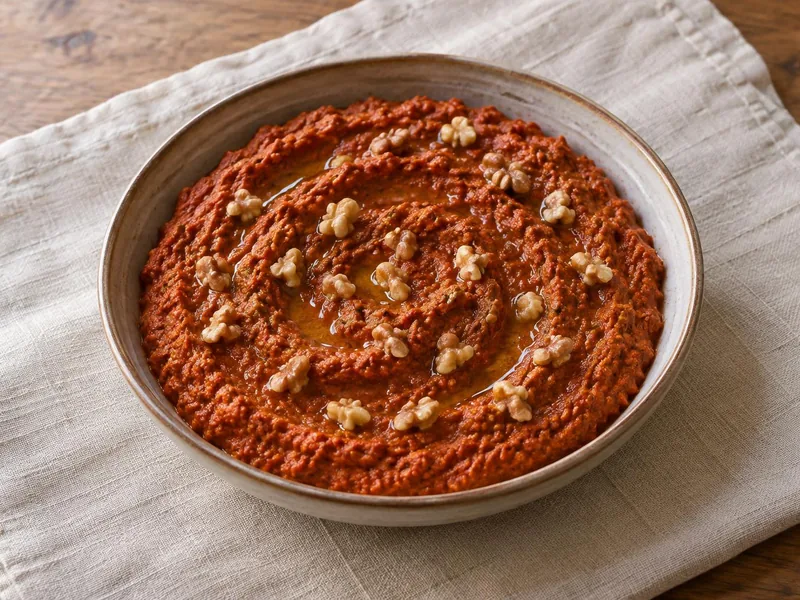 AI-generated image
Muhammara
A smoky red pepper and walnut dip with a sweet-sour edge from pomegranate molasses, best scooped up with warm bread.
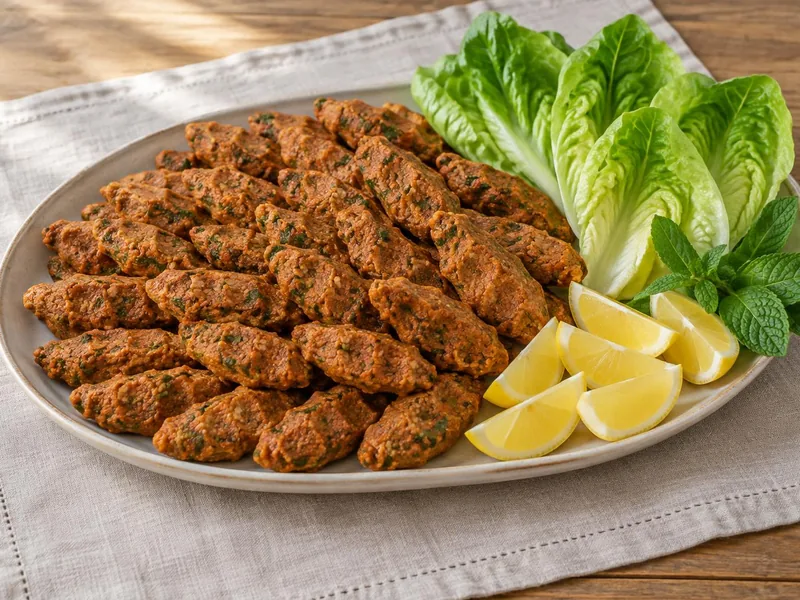 AI-generated image
Çiğ Köfte (Meatless Bulgur Köfte)
Fine bulgur softened in just-boiled water is kneaded with pepper paste, smoky isot pepper, onion and pomegranate molasses, then squeezed into small pieces to wrap in lettuce with lemon.
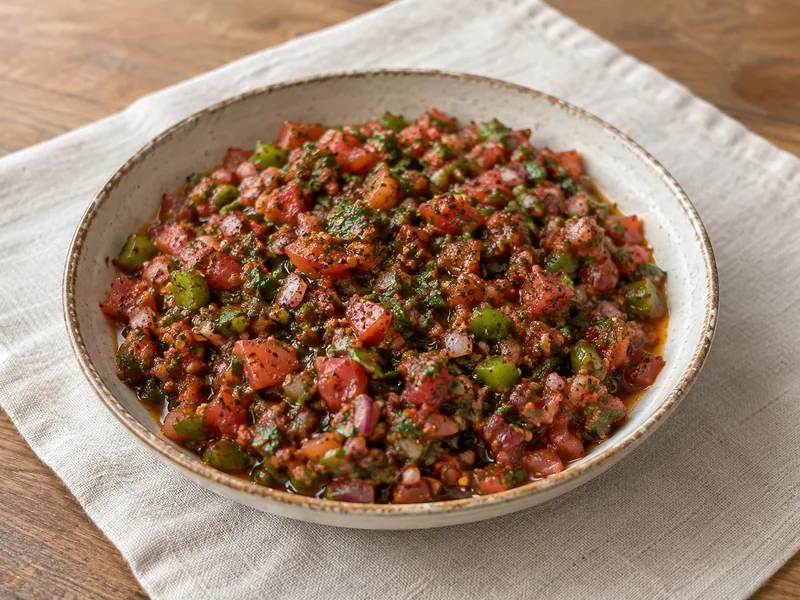 AI-generated image
Ezme (Turkish Spicy Tomato and Pepper Salad)
A finely chopped, tangy and gently fiery tomato and pepper salad that works as a meze, a spoonable relish or a topping for grilled food.