Çiğ Köfte (Meatless Bulgur Köfte)
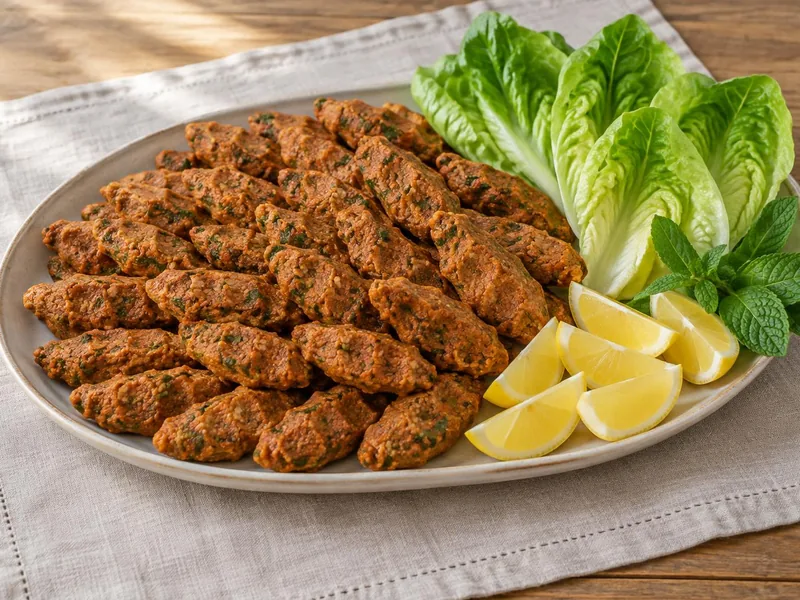
Fine bulgur softened in just-boiled water is kneaded with pepper paste, smoky isot pepper, onion and pomegranate molasses, then squeezed into small pieces to wrap in lettuce with lemon.
 AI-generated image
- 400 gfine bulgur
- 300 glittle gem or romaine lettuce leaves
- 120 gonion
- 80 gspring onions
- 70 glemon
Çiğ köfte is a spicy Turkish meze of fine bulgur kneaded with red pepper paste, isot pepper, onion and herbs until it becomes a soft, deep red mixture that holds its shape. The name means raw köfte. Versions made with raw minced meat also exist; this one contains no meat and is the kind widely made at home and sold in çiğ köfte shops in Turkey.
It is eaten cool or at room temperature, usually squeezed into small pieces that keep the marks of your fingers, then wrapped in a lettuce leaf with a squeeze of lemon. It turns up at gatherings, on meze tables and as a snack, often with extra pomegranate molasses and fresh mint alongside.
What makes this version work at home is the order of steps. The bulgur first soaks in just-boiled water with the tomato and pepper pastes, so every grain softens and colors evenly. It is then kneaded with grated onion, garlic and spices until smooth enough to hold together, and only after that are the oil, pomegranate molasses, lemon and herbs worked in. Kneading takes 10 to 15 minutes by hand, and food-safe gloves protect your skin from the chili.
Ingredients
Bulgur base
Spices
Onion and garlic
To finish the mixture
To serve
Preparation
- Step 01
Put the bulgur, tomato paste and pepper paste in a large heatproof bowl.
- Step 025 min
Bring a kettle of water to a boil (100 C / 212 F), weigh out 260 g and pour it over the bulgur. Stir with a spoon until the pastes have dissolved and no dry grains remain.
- Step 0320 min
Cover the bowl tightly with a plate or lid and leave for 20 minutes, until the water has been absorbed and the grains have softened.
- Step 04
While the bulgur soaks, grate the onion and garlic, chop the parsley, slice the spring onions, wash and dry the lettuce leaves, and cut the lemon for serving into 6 wedges.
- Step 05
Add the grated onion with its juice, the garlic, isot pepper, cumin, black pepper and 4 g of the salt to the bowl. Put on food-safe gloves if you have them, since the pepper paste and isot can sting.
- Step 0612 min
Knead firmly for 10 to 15 minutes, pressing the mixture against the bowl with the heel of your hand and folding it over, until it is smooth, evenly red and holds together in a firm ball when squeezed. Bite a few grains to check them: they should be tender, with no hard center.
- Step 07
If the mixture still crumbles or the grains are hard, add 15 g just-boiled water, cover for 5 minutes and knead again. Repeat if needed, using up to 60 g extra water in all.
- Step 083 min
Add the olive oil, pomegranate molasses and lemon juice and knead for 2 to 3 minutes, until they are absorbed and the mixture looks glossy.
- Step 092 min
Add the parsley and spring onions and knead for about 1 minute, just until evenly mixed. Taste, then add up to the last 1 g salt and a little more isot pepper if you like. It should taste tangy, savory and warm with chili.
- Step 1020 min
Cover the bowl and refrigerate for 20 minutes so the mixture firms up and the flavors settle.
- Step 1110 min
Lightly wet your hands. Take about 30 g of the mixture at a time (a heaped tablespoon), squeeze it firmly in your fist so it takes the shape of your fingers, and set it on a platter. You should get about 36 pieces.
- Step 12
Serve right away with the lettuce leaves, lemon wedges and mint sprigs, if using. To eat, wrap a piece in a lettuce leaf and squeeze over a little lemon. Do not leave it at room temperature for more than 2 hours in total.
Kitchen notes
- Timing: about 75 minutes, including 20 minutes of soaking and 20 minutes of chilling. Prepare the onion, herbs and lettuce while the bulgur soaks.
- Storage: refrigerate the shaped pieces or the mixture in a covered container within 2 hours of making, or within 1 hour if the room is above 32 C / 90 F. Keep at 4 C / 40 F or below and eat within 2 days. Store the lettuce and lemon separately.
- Make ahead: knead the mixture up to step 8 a day ahead and refrigerate it covered. On the day, knead in the parsley and spring onions, then shape and serve, so the herbs stay fresh and green.
- Food processor: after the soak, the bulgur, onion, garlic, spices and salt can be pulsed in 2 batches for 1 to 2 minutes each, until the mixture clumps into a ball, instead of kneading by hand. Work in the oil, molasses, lemon and herbs by hand from step 8. Avoid processing to a smooth paste.
- Heat level: isot pepper and hot pepper paste make it moderately spicy. For a milder version, use mild pepper paste and 8 g isot pepper. For more heat, add 2 g crushed red pepper flakes with the spices.
- Serving: in Turkey çiğ köfte is also rolled in thin flatbread such as lavash with lettuce, herbs and a drizzle of pomegranate molasses. Bread is not part of the ingredient list; check its label for wheat, milk, egg and sesame if these matter to you.
- Allergens: bulgur is made from wheat and contains gluten. Some cooks knead in 40 g finely chopped walnuts; if you do, the dish is no longer nut-free.
Diet and allergens
Suitable for: Vegan, Vegetarian, Dairy-free, Nut-free.
Contains: gluten (wheat).
Labels come from the ingredient list by fixed rules. If you cook for someone with an allergy, check the labels of packaged ingredients such as stock, spice blends, tahini and bread, since brands differ. How labels work.
Frequently asked questions
Is çiğ köfte raw?
The name means raw köfte, but this version contains no meat. Bulgur is wheat that has been parboiled and dried, and here it softens in just-boiled water, so nothing in the recipe needs cooking.
Which bulgur should I use?
Use the finest bulgur you can find: extra-fine bulgur sold for çiğ köfte (çiğ köftelik), or fine No. 1 bulgur. Medium and coarse bulgur stay grainy and will not bind into a smooth mixture.
Why is my mixture crumbly or sticky?
Crumbly usually means the bulgur needs more water or more kneading, so add just-boiled water 15 g at a time and knead again. If it is soft and sticky, knead in 1 to 2 tablespoons of dry fine bulgur, rest it for 10 minutes and knead again.
What can I use instead of isot pepper?
Isot, also called Urfa pepper, is dark and smoky with moderate heat. Aleppo pepper is the closest swap; otherwise use sweet paprika with crushed red pepper flakes and a little smoked paprika, as listed in the substitutes.
Do I need gloves?
They are a good idea. The pepper paste and isot pepper can sting your skin and eyes, so wear food-safe gloves, or wash your hands well with soap straight after kneading and avoid touching your face.
References and sources
- Nutrition: USDA FoodData Central records Fine bulgur (FDC 170688), Just-boiled water (FDC 173647), Tomato paste (FDC 2685580), Turkish red pepper paste (biber salçası) (FDC 2685580), Isot pepper (Urfa pepper flakes) (FDC 170932), Ground cumin (FDC 170923), Black pepper (FDC 170931), Salt (FDC 173468), Onion (FDC 170000), Garlic (FDC 1104647), Extra virgin olive oil (FDC 171413), Pomegranate molasses (FDC 167953), Lemon juice (FDC 167747), Spring onions (scallions) (FDC 170005), Flat-leaf parsley (FDC 170416), Little gem or romaine lettuce leaves (FDC 746769), Lemon (FDC 167746), Fresh mint sprigs (FDC 173475).
- Proportions: main ingredients and salt per serving were compared with the median of 3 published recipes for this dish. How we make recipes.
 AI-generated image
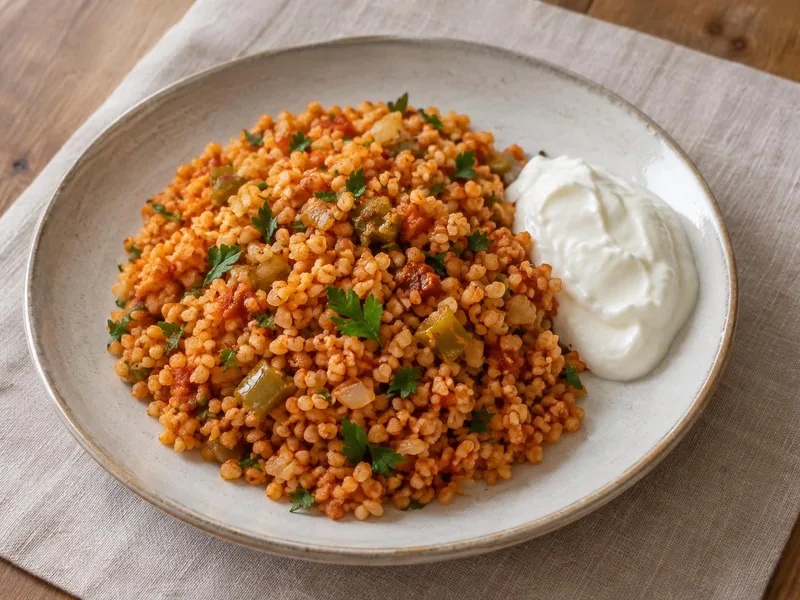
Bulgur Pilaf
A one-pot Turkish bulgur pilavı, built on softened onion, pepper and tomato, with fluffy grains that stay separate.
 AI-generated image
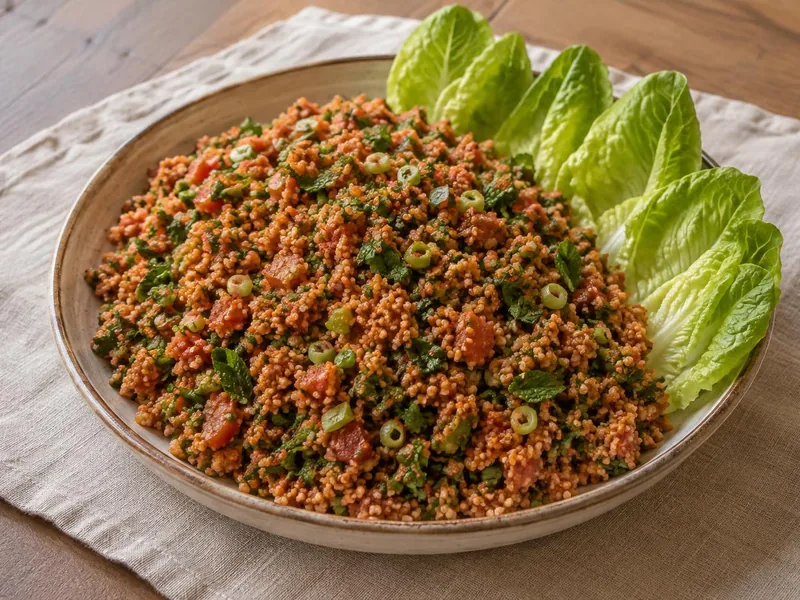
Kısır (Turkish Bulgur Salad)
Fine bulgur is steeped in tomato and pepper paste, then tossed with olive oil, lemon, pomegranate molasses and plenty of fresh herbs.
 AI-generated image
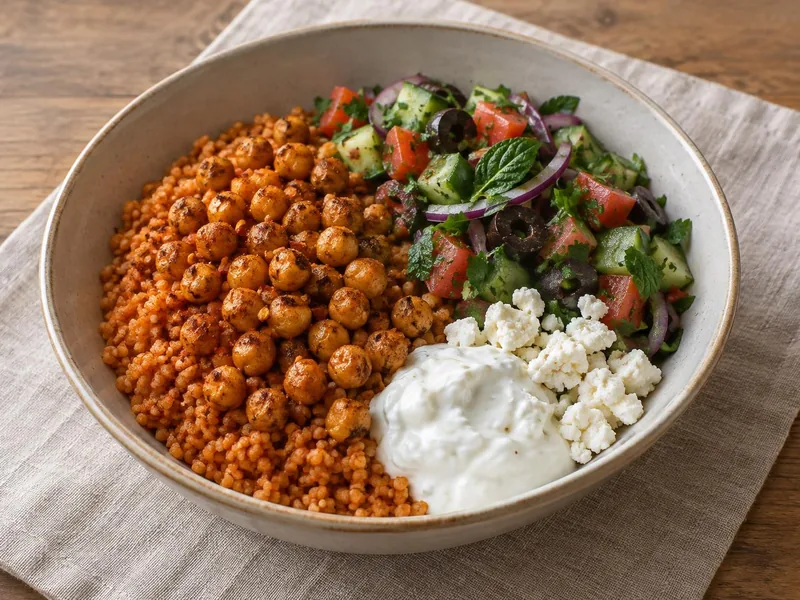
Mediterranean Chickpea and Bulgur Bowl
A warm tomato-scented bulgur pilaf topped with crisp spiced chickpeas, a fresh chopped salad and garlicky yogurt.