Kısır (Turkish Bulgur Salad)
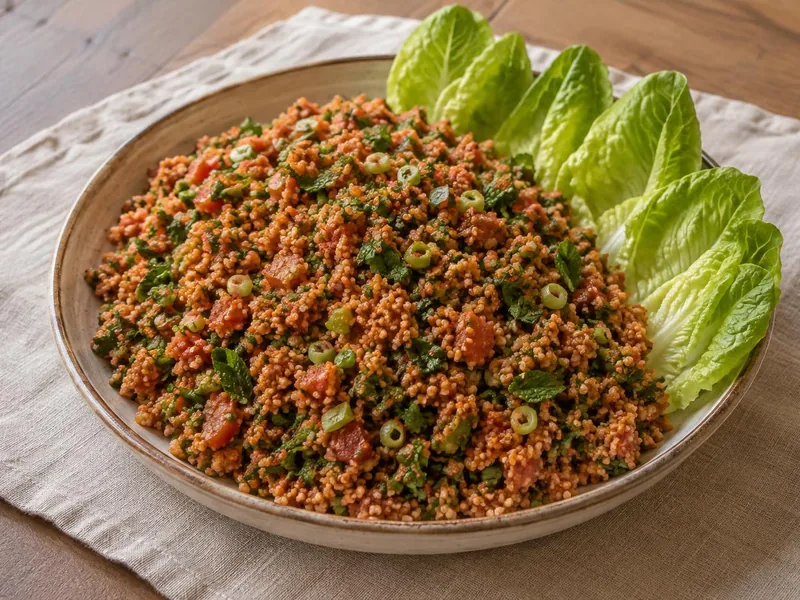
Fine bulgur is steeped in tomato and pepper paste, then tossed with olive oil, lemon, pomegranate molasses and plenty of fresh herbs.
 AI-generated image
- 180 gfine bulgur
- 100 glittle gem or romaine lettuce leaves
- 80 gripe tomato
- 70 ggreen pepper
- 60 gextra virgin olive oil
Kısır is a bulgur salad from Turkey, made with fine bulgur that is softened in hot water rather than boiled. Tomato paste and red pepper paste give the grains their brick-red color and a deep, savory flavor, while lemon and pomegranate molasses add a bright tang.
It is commonly made for gatherings, tea-time tables and meze spreads, and it is often scooped up and eaten in lettuce leaves by hand. It is served cool or at room temperature, which makes it a handy dish to bring along.
This version keeps the proportions balanced so the salad is moist but not wet. The key steps are steeping the bulgur covered until the water is fully absorbed, cooling it before adding the fresh ingredients, and mixing with your hands so the seasoning reaches every grain. Most of the tomato flavor comes from the paste, so only a little fresh tomato is added, and the herbs go in at the end to stay green and fragrant. Allow about an hour from start to finish, since most of that time is steeping, cooling and resting.
Preparation
- Step 01
Put the fine bulgur, salt, tomato paste and pepper paste in a large heatproof mixing bowl.
- Step 02
Bring the water to a boil (100 C / 212 F) and pour it over the bulgur. Stir well until the pastes dissolve and no dry patches remain.
- Step 0315 min
Cover the bowl tightly with a plate or lid and leave the bulgur to steep for 15 minutes, until the water is absorbed.
- Step 04
Bite a few grains to check them. They should be tender with no hard center. If any firmness remains, stir in 15 to 30 g (1 to 2 tablespoons) of freshly boiled water, cover again for 5 more minutes, and check again.
- Step 0515 min
Fluff the bulgur with a fork, then spread it on a wide plate or tray so it cools quickly. Let it cool to room temperature, about 15 minutes. Do not leave it out for more than 2 hours in total.
- Step 06
While the bulgur cools, seed and finely dice the tomato (discarding the excess juice), finely dice the green pepper, slice the spring onions thinly, and chop the parsley and fresh mint finely.
- Step 072 min
Return the cooled bulgur to the bowl. Add the olive oil, lemon juice, pomegranate molasses, pul biber, cumin and dried mint. Mix and gently knead with clean hands for 1 to 2 minutes, until the grains look glossy and evenly colored.
- Step 08
Fold in the tomato, green pepper, spring onions, parsley and fresh mint. Taste and adjust with a pinch more salt, a splash of lemon juice or molasses, or more chili as you like.
- Step 0920 min
Let the salad rest for 20 minutes so the flavors meld and the grains finish absorbing the dressing. If it seems dry, stir in a teaspoon or two of water or olive oil.
- Step 10
Serve at room temperature or lightly chilled, spooned into lettuce leaves or heaped on a platter with the leaves alongside.
Kitchen notes
- Timing: allow about 60 to 65 minutes in total, including boiling the water, steeping, cooling, mixing and the final rest. Chopping the vegetables while the bulgur cools saves time.
- Storage: refrigerate leftovers in a covered container within 2 hours of making, at 4 C / 40 F or below, and eat within 2 days. Let it sit out for 10 minutes before serving and freshen it with a squeeze of lemon.
- Make ahead: prepare the dressed bulgur up to a day ahead and keep it chilled. Stir in the chopped tomato, spring onions and herbs shortly before serving so they stay fresh and green.
- Variations: add finely diced cucumber, a handful of chopped walnuts, or a spoonful of cooked chickpeas. A small grated or minced garlic clove can also be added to the dressing.
- The salad should be moist and hold together when pressed, but not wet or pooling. If the tomato is very juicy, drain the diced tomato briefly in a sieve before folding it in.
- Bulgur is made from wheat and contains gluten. Check labels on pastes and molasses for added ingredients.
Diet and allergens
Suitable for: Vegan, Vegetarian, Dairy-free, Nut-free.
Contains: gluten (wheat).
Labels come from the ingredient list by fixed rules. If you cook for someone with an allergy, check the labels of packaged ingredients such as stock, spice blends, tahini and bread, since brands differ. How labels work.
Frequently asked questions
Do I need to cook the bulgur for kısır?
No. Fine bulgur is already parboiled and dried, so steeping it covered in boiling water for about 15 minutes is usually enough. If the grains still have a hard center, add a little more boiling water and steep for 5 more minutes.
What can I use if I cannot find pomegranate molasses?
It is sold in many supermarkets and Middle Eastern shops, and it is what gives kısır its characteristic tang. If you cannot find it, use extra lemon juice with a small pinch of sugar, though the flavor will be less deep.
Can I use coarse bulgur?
Fine bulgur gives the classic texture. If you only have medium or coarse bulgur, follow the package instructions to soak or simmer it until fully tender, then drain well and cool before dressing.
Is kısır served warm or cold?
It is usually served at room temperature or lightly chilled. Make sure the bulgur has cooled before adding the fresh vegetables and herbs.
References and sources
- Nutrition: USDA FoodData Central records fine bulgur (ince bulgur) (FDC 170688), tomato paste (FDC 2685580), boiling water (FDC 173647), fine salt (FDC 173468), extra virgin olive oil (FDC 171413), lemon juice (FDC 167747), Aleppo pepper or Turkish chili flakes (pul biber) (FDC 170932), ground cumin (FDC 170923), dried mint (FDC 172239), ripe tomato (FDC 170457), green pepper (FDC 170427), spring onions (scallions) (FDC 170005), flat-leaf parsley (FDC 170416), fresh mint leaves (FDC 173475), little gem or romaine lettuce leaves (FDC 746769).
- Not counted in nutrition (no matching USDA record): Turkish red pepper paste (biber salçası), pomegranate molasses.
- Proportions: main ingredients and salt per serving were compared with the median of 6 published recipes for this dish. How we make recipes.
 AI-generated image
Tabbouleh
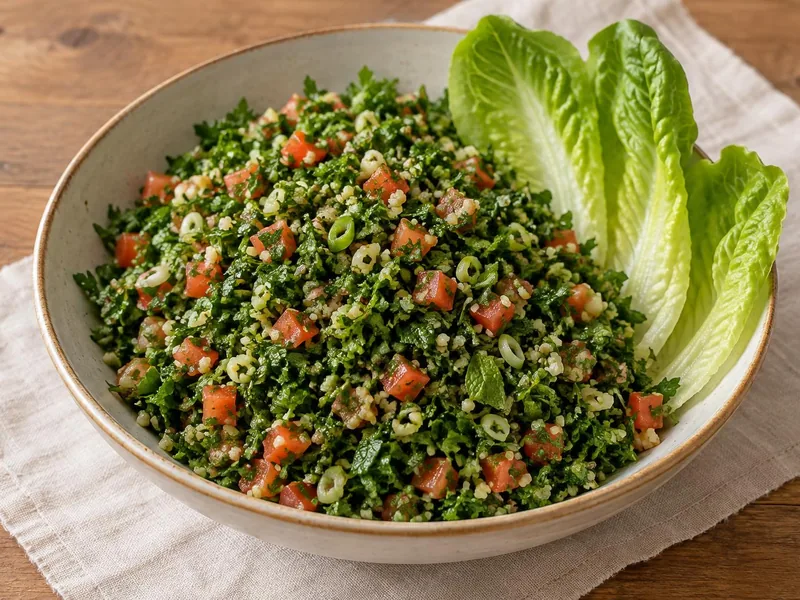
A bright, herb-heavy salad where parsley is the main green and fine bulgur is just a seasoning grain.
 AI-generated image
Çiğ Köfte (Meatless Bulgur Köfte)
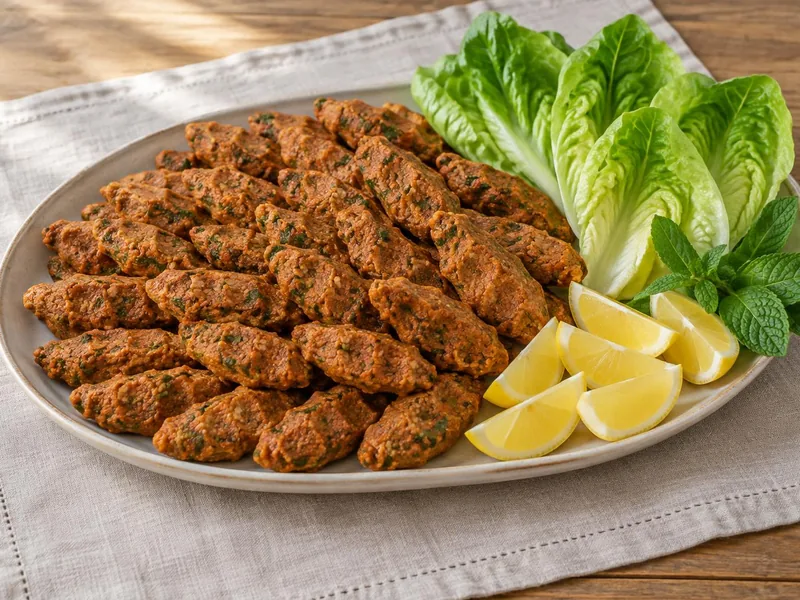
Fine bulgur softened in just-boiled water is kneaded with pepper paste, smoky isot pepper, onion and pomegranate molasses, then squeezed into small pieces to wrap in lettuce with lemon.
 AI-generated image
Bulgur Pilaf
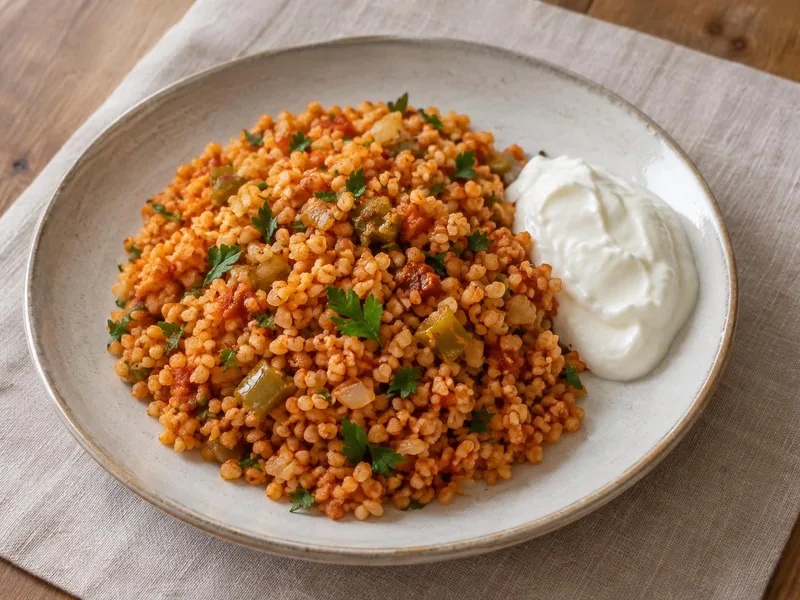
A one-pot Turkish bulgur pilavı, built on softened onion, pepper and tomato, with fluffy grains that stay separate.