Bulgur Pilaf
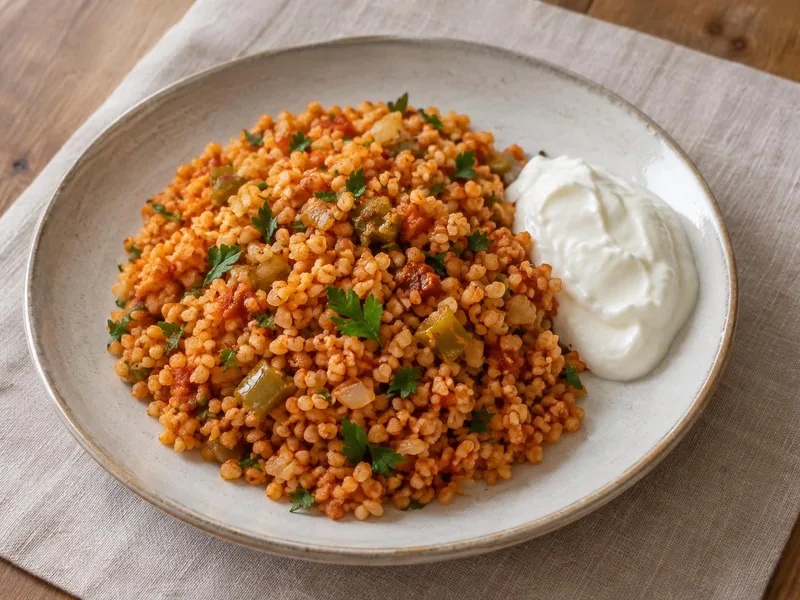
A one-pot Turkish bulgur pilavı, built on softened onion, pepper and tomato, with fluffy grains that stay separate.
 AI-generated image
- 250 gcoarse bulgur
- 200 gplain yogurt
- 150 gonion
- 150 gripe tomato
- 100 glong green pepper
Bulgur pilavı is an everyday Turkish side dish made with cracked wheat cooked in a tomato and pepper base. It is a close cousin of rice pilaf, but the grains are nuttier and chewier, and they soak up the savory base very well.
Versions of it are eaten across Turkey and the wider eastern Mediterranean, often next to grilled vegetables, stews, braised beans or a bowl of yogurt. It also works as a simple main with a salad.
This version relies on a few details. Cook the tomato paste until it darkens, use coarse bulgur with the right amount of hot water, and rest the covered pot off the heat with a towel under the lid. The result is tender, separate grains rather than a sticky mass.
Preparation
- Step 015 min
Boil a kettle of water and measure 450 g of it into a jug so it is hot when needed. Prepare the onion, pepper, garlic, tomato and parsley as described in the ingredient list.
- Step 022 min
Warm the olive oil and butter in a medium heavy-bottomed saucepan over medium heat, about 150 C (300 F), until the butter has melted and stopped foaming.
- Step 036 min
Add the onion with a pinch of the salt and cook, stirring often, until soft and translucent with only the faintest golden edges. Do not let it brown deeply.
- Step 043 min
Add the diced pepper and cook, stirring, until it has softened and brightened, about 3 minutes. Add the garlic and stir for 30 seconds, until fragrant.
- Step 052 min
Stir in the tomato paste and pepper flakes. Cook, stirring constantly, until the paste darkens to a deeper brick red and smells sweet and rich, 1 to 2 minutes.
- Step 064 min
Add the grated tomato and cook, stirring, until most of its liquid has evaporated and the mixture looks thick and jammy, 3 to 4 minutes.
- Step 071 min
Add the bulgur and stir for about 1 minute, until every grain is coated in the tomato base and smells slightly toasted.
- Step 083 min
Pour in the hot water and stir in the remaining salt and the black pepper. Raise the heat to high and bring to a boil, then stir once to level the surface.
- Step 0914 min
Cover with the lid, turn the heat to its lowest setting (about 90 C / 195 F in the pot) and cook without lifting the lid until the surface is dotted with small steam holes and the liquid is absorbed, 12 to 15 minutes. Tilt the pan slightly: no liquid should run to the edge.
- Step 1010 min
Remove the pan from the heat. Lay a clean tea towel over the pan, press the lid on top of it, and rest for 10 minutes so the grains finish steaming and firm up.
- Step 111 min
Remove the lid and towel, then fluff the bulgur gently with a fork, lifting from the bottom. The grains should be tender with a slight chew and separate from each other. Taste and adjust the salt.
- Step 12
Fold in the chopped parsley and serve warm, with a spoonful of yogurt alongside if you like.
Kitchen notes
- Use coarse bulgur for this ratio. Fine bulgur (as used for kısır or tabbouleh) cooks faster and needs much less liquid, so it turns mushy here.
- If the grains are still crunchy after resting and the pan is dry, sprinkle over 30 to 50 g of hot water, cover again and steam off the heat for 5 more minutes.
- Make-ahead and storage: cool leftovers within 2 hours of cooking, spread in a shallow container, and refrigerate at 4 C (40 F) or below for up to 3 days. Reheat with a splash of water until steaming hot all the way through, about 74 C (165 F).
- Variations: stir in 120 g of drained cooked chickpeas with the bulgur, or replace the tomato paste with Turkish red pepper paste for a deeper flavor. A small cinnamon stick added with the water gives a gentle warmth.
- For a vegan version, use all olive oil in place of the butter and serve without yogurt, or with a plant-based yogurt.
Diet and allergens
Suitable for: Vegetarian, Nut-free.
Contains: milk, gluten (wheat).
Labels come from the ingredient list by fixed rules. If you cook for someone with an allergy, check the labels of packaged ingredients such as stock, spice blends, tahini and bread, since brands differ. How labels work.
Frequently asked questions
What is the water ratio for coarse bulgur pilaf?
This recipe uses 250 g coarse bulgur to 450 g hot water, plus the juice from the grated tomato. That gives tender grains that are not wet. Different brands vary slightly, so use the rest-time check and a splash of hot water if needed.
Why is my bulgur pilaf sticky or mushy?
Usually there was too much liquid, the bulgur was too fine, or it was stirred during cooking. Keep the lid on, do not stir after the water goes in, and fluff with a fork only after resting.
Can I use fine bulgur?
Not with these quantities. Fine bulgur needs far less liquid and only a few minutes of cooking or soaking, so it is better suited to salads than to pilaf.
What do you serve with bulgur pilaf?
It goes well with yogurt, a simple tomato and cucumber salad, braised green beans or roasted vegetables. It can also be a light main with a salad and pickles.
References and sources
- Nutrition: USDA FoodData Central records Olive oil (FDC 171413), Unsalted butter (FDC 173430), Onion (FDC 170000), Long green pepper (FDC 170427), Garlic (FDC 1104647), Tomato paste (FDC 2685580), Aleppo-style or Turkish pepper flakes (pul biber) (FDC 170932), Ripe tomato (FDC 170457), Coarse bulgur (FDC 170688), Hot water (FDC 173647), Fine salt (FDC 173468), Black pepper (FDC 170931), Flat-leaf parsley (FDC 170416), Plain yogurt (FDC 2259793).
- Proportions: main ingredients and salt per serving were compared with the median of 3 published recipes for this dish. How we make recipes.
 AI-generated image
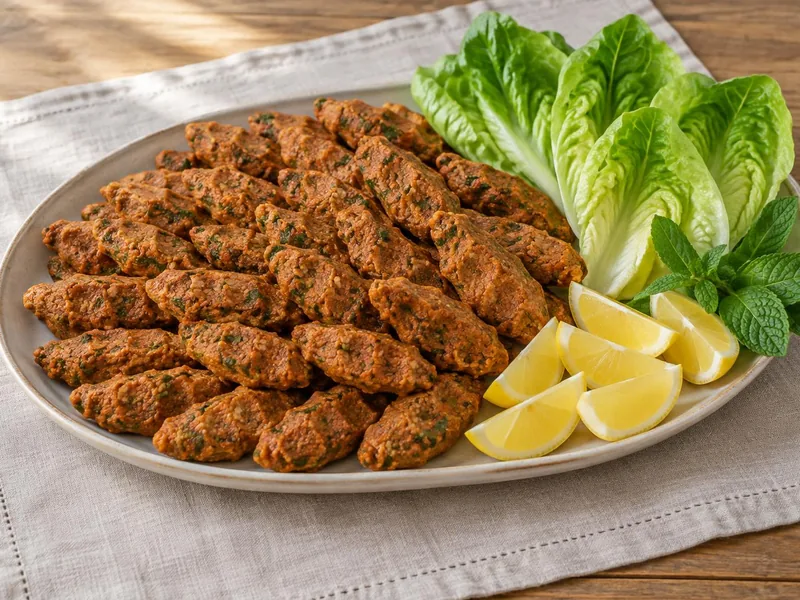
Çiğ Köfte (Meatless Bulgur Köfte)
Fine bulgur softened in just-boiled water is kneaded with pepper paste, smoky isot pepper, onion and pomegranate molasses, then squeezed into small pieces to wrap in lettuce with lemon.
 AI-generated image
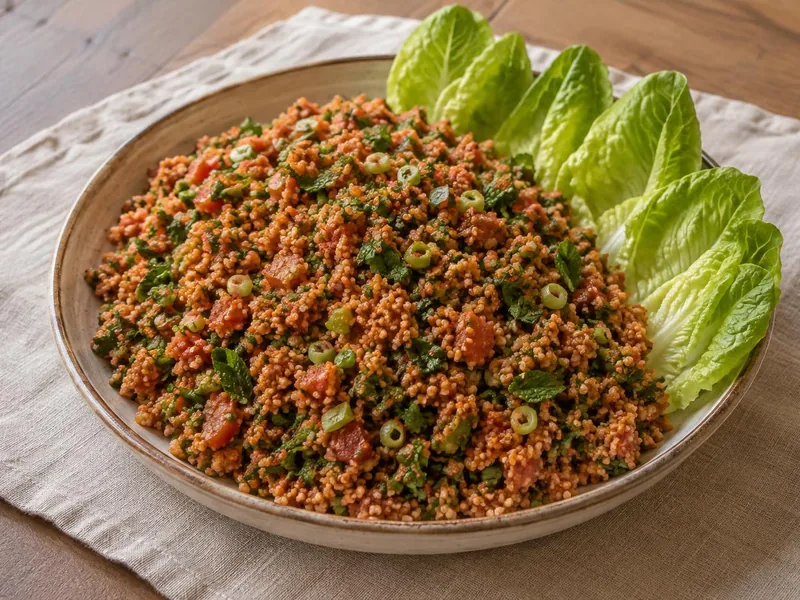
Kısır (Turkish Bulgur Salad)
Fine bulgur is steeped in tomato and pepper paste, then tossed with olive oil, lemon, pomegranate molasses and plenty of fresh herbs.
 AI-generated image
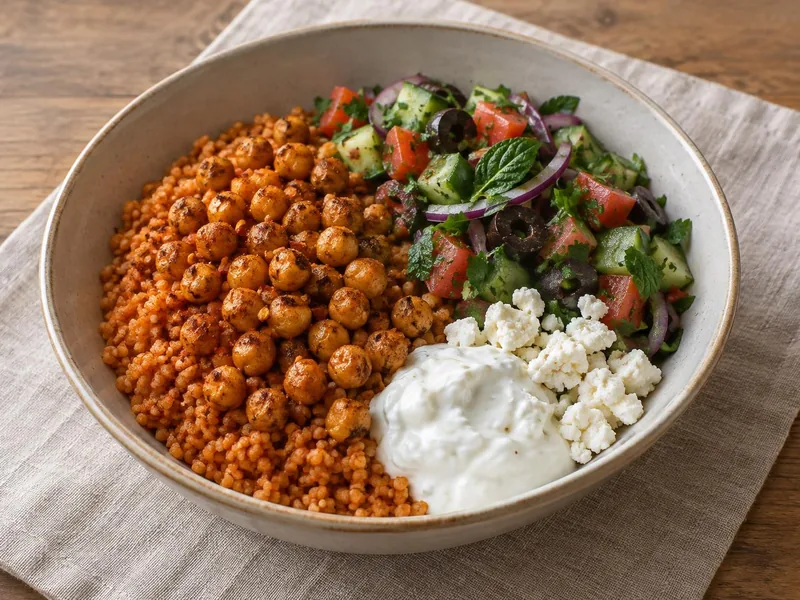
Mediterranean Chickpea and Bulgur Bowl
A warm tomato-scented bulgur pilaf topped with crisp spiced chickpeas, a fresh chopped salad and garlicky yogurt.