Menemen
Turkish scrambled eggs set softly in a jammy sauce of tomatoes and green peppers, made in one pan and scooped up with bread.
 AI-generated image
- 600 gripe tomatoes
- 300 glarge eggs
- 200 gcrusty bread
- 150 glong green peppers
- 100 gturkish white cheese or feta
Menemen is a Turkish skillet dish of eggs cooked in a sauce of tomatoes and green peppers. It is most often eaten for breakfast or a relaxed brunch, usually brought to the table in the pan it was cooked in, with crusty bread for scooping. The eggs stay soft and loose, closer to a thick, savory stew than to firm scrambled eggs.
This version builds the sauce first, with tomatoes as the main body and peppers as a supporting flavor. The peppers soften in olive oil, then the tomatoes cook down until most of their liquid has evaporated and the sauce looks jammy. That step matters: if the tomatoes are still watery when the eggs go in, the eggs turn pale and weepy instead of silky.
The eggs are stirred in gently over low heat, just until they are thick, creamy and cooked through, reaching 71 C (160 F) in the center of the pan. Pul biber (mild Turkish chili flakes) and a little butter with the olive oil give gentle warmth and a rounded flavor. Whether to add onion is a long-running debate, so there is an easy option in the notes.
Preparation
- Step 0110 min
Prepare the vegetables: cut the peppers into 1 cm (1/2 inch) pieces and dice the tomatoes, keeping any juices from the board. Beat the eggs lightly with a fork in a bowl, just until yolks and whites are combined, and set aside.
- Step 022 min
Warm the olive oil and butter in the skillet over medium heat until the butter melts and stops foaming.
- Step 036 min
Add the peppers and a pinch of the salt. Cook, stirring often, until they are soft and bright, with a few lightly golden spots and no raw crunch left.
- Step 042 min
Add the tomatoes with their juices, the remaining salt, the pul biber and the black pepper. Raise the heat to medium-high and bring to a lively simmer.
- Step 0510 min
Cook, stirring now and then, until the tomatoes collapse and the sauce is thick and jammy. When you drag the spoon across the pan, the line should stay open for a second. Taste and adjust the salt.
- Step 061 min
Turn the heat down to low, so the sauce stops bubbling vigorously and only steams or barely trembles. Pour the beaten eggs evenly over the sauce.
- Step 074 min
Let the eggs sit for 20 seconds, then stir gently and continuously, scraping the bottom so nothing sticks and folding the sauce through the eggs in slow, wide strokes. If using the cheese, scatter it over now.
- Step 081 min
Keep cooking until the eggs are thick, creamy and no longer runny, with no clear liquid pooling. Check the temperature in the center and in a few other spots with an instant-read thermometer: it should read at least 71 C (160 F) everywhere. If it is lower, cook and stir for another 30 seconds and check again.
- Step 09
Take the pan off the heat. Sprinkle with the parsley and a pinch of pul biber. Bring the pan straight to the table with the bread and eat while hot.
Kitchen notes
- Ripe, flavorful tomatoes make the biggest difference. In winter, use good canned whole tomatoes (about 500 g drained, chopped) and cook the sauce a few minutes longer to thicken.
- For the onion version, finely chop 150 g of onion and soften it in the oil for 6 to 8 minutes before adding the peppers.
- Eggs that are cooked to 71 C (160 F) are soft and creamy rather than dry. If you prefer them more set, keep stirring over low heat for another 30 to 60 seconds, but avoid high heat, which makes them rubbery and can scorch the bottom.
- To make ahead, cook the tomato and pepper base, then within 2 hours (within 1 hour if the room is above 32 C / 90 F) spread it in a shallow container and refrigerate at 4 C (40 F) or below. Use within 2 days. Reheat until it is simmering and steaming hot, then add the eggs as written.
- Leftover menemen should also go into shallow containers and into the fridge within 2 hours (1 hour if the room is above 32 C / 90 F), and keeps for up to 1 day. Reheat in a pan over low to medium heat, stirring, until it reaches 74 C (165 F) throughout. The eggs will be firmer than when first cooked.
- If using the optional cheese, choose one made with microbial or plant-based rennet or labeled vegetarian for vegetarian eating, as some white cheeses and feta use animal rennet. The cheese adds salt, so go easy when seasoning.
- Served with regular bread, this recipe contains gluten. To make it gluten-free, use certified gluten-free bread, and check the labels of the other products you use and the risk of cross-contact.
- Nutrition values are per serving (one quarter of the recipe) and are calculated from the full ingredient list, including the optional 100 g of cheese and the 200 g of crusty bread (about 50 g per serving). Without the cheese or the bread, the energy, fat and sodium values will be lower.
- For a spicier pan, add a chopped fresh hot green chili with the peppers, or serve with extra pul biber at the table.
Diet and allergens
Suitable for: Vegetarian, Nut-free.
Contains: milk, egg, gluten.
Labels come from the ingredient list by fixed rules. If you cook for someone with an allergy, check the labels of packaged ingredients such as stock, spice blends, tahini and bread, since brands differ. How labels work.
Frequently asked questions
Should menemen eggs be runny or firm?
Soft and creamy, with the texture of a loose, thick scramble, but cooked through. Keep stirring gently over low heat until there is no liquid egg left and the center reads at least 71 C (160 F).
Why is my menemen watery?
The tomatoes were probably not cooked down enough before the eggs went in. Simmer the sauce until it is thick and jammy, with very little free liquid, then add the eggs.
Can I make menemen without cheese?
Yes. The base recipe works without it, and the cheese is optional. If you add it, remember it is salty, so go easy when seasoning at the end.
Is menemen gluten-free?
The pan of menemen itself uses no gluten-containing ingredients, but it is usually served with bread, which contains gluten if it is regular wheat bread. Use certified gluten-free bread and check the labels of the other products you use.
What is the difference between menemen and shakshuka?
Menemen has the eggs beaten and gently stirred into the sauce, giving a soft scramble. Shakshuka usually has whole eggs poached in wells in the sauce and left unstirred.
References and sources
- Nutrition: USDA FoodData Central records Olive oil (FDC 171413), Unsalted butter (FDC 173430), Long green peppers (FDC 170427), Ripe tomatoes (FDC 170457), Fine salt (FDC 173468), Pul biber (Turkish chili flakes) (FDC 170932), Black pepper (FDC 170931), Large eggs (FDC 171287), Turkish white cheese or feta (FDC 173420), Flat-leaf parsley (FDC 170416), Crusty bread (FDC 172675).
- Proportions: main ingredients and salt per serving were compared with the median of 2 published recipes for this dish. How we make recipes.
 AI-generated image
Shakshuka
Eggs gently cooked in a thick, cumin and paprika scented tomato and pepper sauce, made in one pan and served with bread for scooping.
 AI-generated image
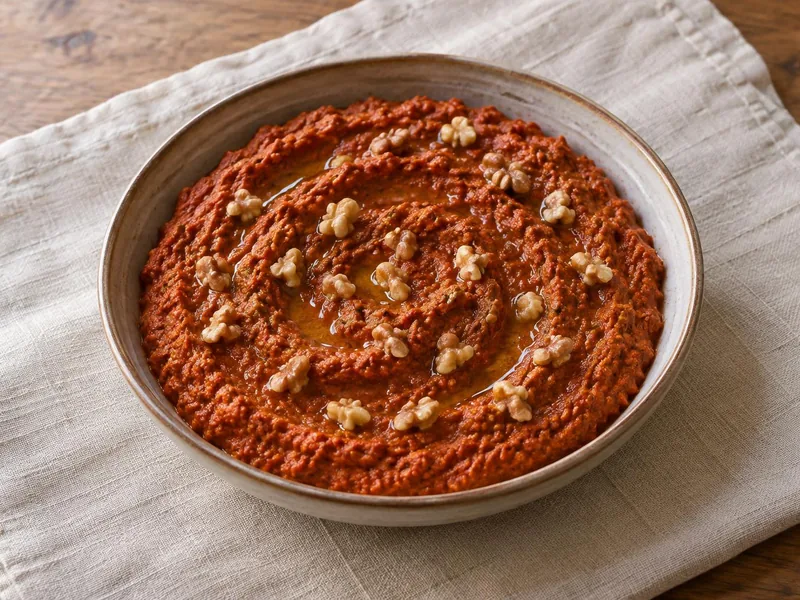
Muhammara
A smoky red pepper and walnut dip with a sweet-sour edge from pomegranate molasses, best scooped up with warm bread.
 AI-generated image
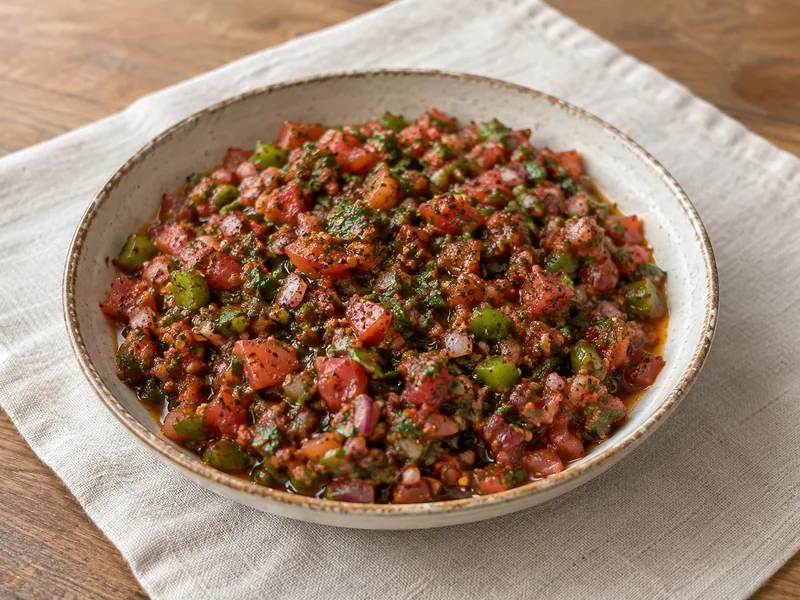
Ezme (Turkish Spicy Tomato and Pepper Salad)
A finely chopped, tangy and gently fiery tomato and pepper salad that works as a meze, a spoonable relish or a topping for grilled food.