Stuffed Grape Leaves (Olive Oil Dolma)
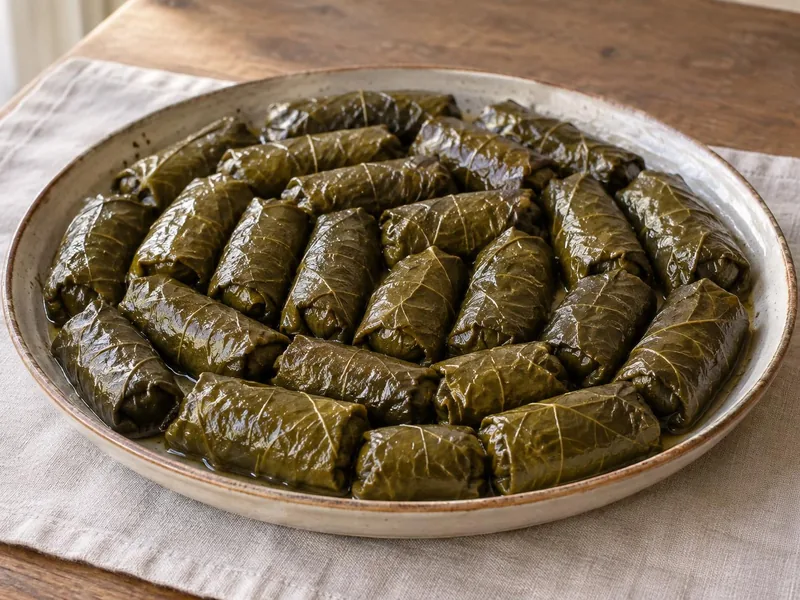
Tender jarred grape leaves wrapped around a spiced rice, herb and pine nut filling, then simmered in olive oil and lemon until soft and glossy.
 AI-generated image
- 200 gjarred grape leaves in brine
- 200 gyellow onions
- 150 gshort or medium-grain rice
- 60 gextra virgin olive oil
- 45 glemon juice
Olive oil dolma, called zeytinyağlı yaprak sarma in Turkish, are small rolls of grape leaves filled with seasoned rice and cooked gently in olive oil, water and lemon. Unlike meat-filled versions that are served hot, this one is meant to be eaten at room temperature or chilled, which makes it a natural fit for meze tables in Turkey, Greece, the Levant and the wider eastern Mediterranean.
This version uses jarred grape leaves, which are easy to find, and a filling built on slowly cooked onion, short-grain rice, pine nuts, currants, dill, parsley and a little allspice and cinnamon. The rice is partly cooked before rolling, so the filling is already flavorful and the rolls finish cooking without bursting. The batch makes 36 rolls, enough for 6 people as part of a meze spread (6 rolls each), or for 4 as a light main course (9 rolls each).
The keys are weighing the cooled filling and dividing it into 36 equal portions so every roll is the same size, rolling firmly but not tightly, packing the rolls snugly seam side down, and weighing them down with a plate for a long, gentle simmer with enough hot liquid to reach the top rolls. After a short rest in the pot, move the rolls to shallow containers and chill them promptly.
Preparation
- Step 013 min
Rinse the rice in a sieve under cold running water, swirling with your hand, until the water runs mostly clear. Drain well.
- Step 026 min
Unroll the grape leaves and place them in a heatproof bowl. Cover with freshly boiled water and leave for 3 minutes to remove the brine. Drain, rinse under cold water, and drain again. Taste a small piece of one leaf: if it is very salty, soak all the leaves in clean cold water for 10 minutes, then rinse and drain again. Snip off any hard stems and set aside 4 torn or damaged leaves for lining the pot.
- Step 0312 min
Warm 60 g olive oil in a large skillet or saucepan over medium-low heat. Add the chopped onions and cook, stirring often, for 10 to 12 minutes until soft, translucent and just starting to turn golden at the edges.
- Step 043 min
Add the pine nuts and cook for 2 minutes until lightly golden, then stir in the garlic for 30 seconds until fragrant.
- Step 053 min
Add the drained rice and stir for 2 minutes until the grains look glossy. Stir in the tomato paste and cook for 1 minute.
- Step 0610 min
Add the currants, 200 g hot water, the sugar, allspice, black pepper, cinnamon and 4 g salt (2 g if your leaves were still salty). Bring to a simmer, cover, and cook over low heat for about 10 minutes until the water is absorbed. The rice should be partly cooked: tender at the edges and still firm in the center.
- Step 0715 min
Remove from the heat and stir in the dill, parsley and dried mint. Spread the filling on a large plate and leave uncovered for about 15 minutes, until cool enough to handle. Taste a pinch and add a little salt only if needed.
- Step 082 min
Line the base of a wide heavy pot with the 4 reserved leaves and drizzle with 10 g of the pot olive oil.
- Step 0925 min
Scrape the cooled filling into a bowl set on a scale and note the total weight. Divide it by 36 to get the weight of one portion; expect about 18 to 20 g, a little more or less depending on how much moisture cooked off. Portion the filling into 36 equal mounds. Lay a grape leaf on a board, shiny side down, with the stem end toward you. Place one portion near the stem end, using slightly less on small leaves. Fold the stem end over the filling, fold in both sides, then roll up firmly but not tightly, since the rice will swell. Trim thick veins on very large leaves. Repeat to make 36 rolls.
- Step 105 min
Pack the rolls snugly, seam side down, in tight concentric circles in the lined pot, making a second layer if needed. Packing them closely keeps them from unrolling.
- Step 112 min
Mix the remaining 30 g olive oil with 45 g lemon juice and 350 g hot water. Pour it over the rolls and set an upside-down heatproof plate directly on top to weigh them down. Check the liquid: it should come up to about the level of the top rolls, just reaching the plate. If it does not, add more hot water until it does. A second layer of rolls usually needs more water than a single layer.
- Step 1245 min
Cover the pot and bring to a gentle simmer over medium heat, then reduce to low. Cook for 40 to 45 minutes. Check after 25 minutes, and if the pot looks nearly dry, add 50 to 60 g hot water at a time. At the end, taste one roll: the leaf should be tender and the rice fully soft with no firm center. If not, add 60 g hot water, cover and cook for 10 minutes more, repeating until both are completely tender. By the end most of the liquid should be absorbed.
- Step 1330 min
Turn off the heat and leave the rolls covered in the pot for about 30 minutes, no longer, so they absorb the remaining liquid.
- Step 14
Lift the plate and transfer the rolls in a single layer or shallow layers to wide, shallow containers, spooning over any remaining pot juices. Serve some at once at room temperature, with lemon wedges if you like, and refrigerate the rest, covered, within 2 hours of the end of cooking (within 1 hour if your kitchen is warmer than 32 C / 90 F). Do not wait for the rolls to cool fully to room temperature first. Chill until cold if you prefer to serve them chilled.
Kitchen notes
- Servings: the batch makes 36 rolls, which serves 6 as part of a meze table (6 rolls each) or 4 as a light main course (9 rolls each).
- Leaf size: each roll gets about 18 to 20 g of filling, so leaves about 12 cm / 5 in across or larger work best. Smaller leaves can be overlapped two together, or filled with a little less, using extra leaves from the jar for the leftover filling.
- Cooking liquid: 350 g is a starting amount. A wider pot with one layer needs less; a narrower pot with two layers needs more. The liquid should reach the top rolls when the plate is in place, and the pot should not be allowed to boil dry, so top up with small amounts of hot water if needed.
- Storage: keep in an airtight container in the refrigerator at 4 C / 40 F or below for up to 3 days. Brush with a little olive oil before serving. If you prefer them less cold, take them out 20 to 30 minutes ahead, and do not leave them at room temperature for more than 2 hours in total.
- Make ahead: dolma taste better after a few hours or the next day. They can be made a day ahead and kept chilled.
- Salt: brands of jarred leaves vary a lot, and how thoroughly you rinse them changes how much salt stays on them, so the sodium in any serving is only approximate. Tasting a rinsed leaf before you season the filling lets you adjust.
- Variations: add 1 teaspoon of ground cumin for a Levantine tilt, or replace the currants with chopped dried apricot. Omit the pine nuts for a nut-free version.
- Freezing: chilled cooked rolls can be frozen in a single layer, then boxed, for up to 2 months. Thaw in the refrigerator overnight.
- Serve as part of a meze spread with thick yogurt, olives, bread and sliced tomatoes.
Diet and allergens
Suitable for: Vegan, Vegetarian, Gluten-free, Dairy-free.
Contains: tree nuts.
Labels come from the ingredient list by fixed rules. If you cook for someone with an allergy, check the labels of packaged ingredients such as stock, spice blends, tahini and bread, since brands differ. How labels work.
Frequently asked questions
Why are my stuffed grape leaves bursting or unrolling?
They were probably rolled too tightly or packed loosely. Rice swells as it cooks, so roll firmly but leave a little room, and pack the rolls snugly seam side down under a weighted plate.
How many dolma does one person eat?
As part of a meze spread, about 6 rolls each is a generous share, so this batch of 36 serves 6. As a light main course, plan on about 9 rolls each.
How much filling goes in each roll?
Weigh the whole cooled filling and divide by 36. It usually comes to about 18 to 20 g per roll, which suits leaves about 12 cm / 5 in across or larger.
What if the pot dries out before the rice is tender?
Add 50 to 60 g hot water at a time, cover, and keep simmering gently until the leaves and rice are completely soft. The liquid should reach the top rolls at the start of cooking.
Can I use fresh grape leaves instead of jarred?
Yes. Blanch fresh leaves in boiling water for about 1 minute until pliable, then drain and roll as written. They are not brined, so the filling may need the full 4 g of salt or a little more.
Are olive oil dolma served hot or cold?
This style is eaten at room temperature or chilled, often as a meze or starter. Rest them in the pot for about 30 minutes, then move them to shallow containers and refrigerate promptly.
References and sources
- Nutrition: USDA FoodData Central records Jarred grape leaves in brine (FDC 169393), Short or medium-grain rice (FDC 168879), Yellow onions (FDC 790646), Extra virgin olive oil, for the filling (FDC 171413), Pine nuts (FDC 170591), Garlic (FDC 169230), Tomato paste (FDC 170459), Dried currants (FDC 168165), Hot water, for the filling (FDC 173647), Granulated sugar (FDC 169655), Ground allspice (FDC 171315), Black pepper, ground (FDC 170931), Ground cinnamon (FDC 171320), Fresh dill (FDC 172233), Fresh flat-leaf parsley (FDC 170416), Dried mint (FDC 172239), Fine salt (FDC 173468), Extra virgin olive oil, for the pot (FDC 171413), Lemon juice, freshly squeezed (FDC 167747), Hot water, for the pot (FDC 173647).
- Proportions: main ingredients and salt per serving were compared with the median of 3 published recipes for this dish. How we make recipes.
 AI-generated image
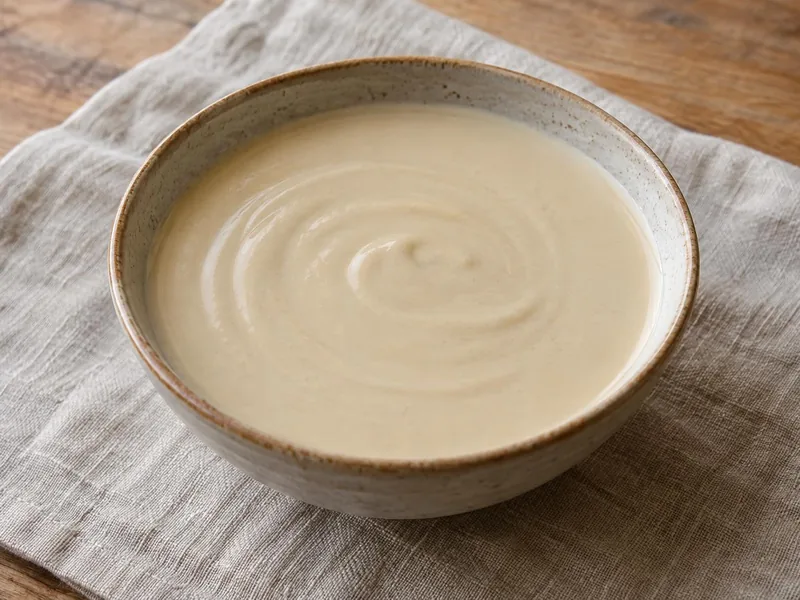
Tahini Sauce
A smooth, pourable lemon and garlic tahini sauce that comes together in ten minutes with a whisk and a bowl.
 AI-generated image
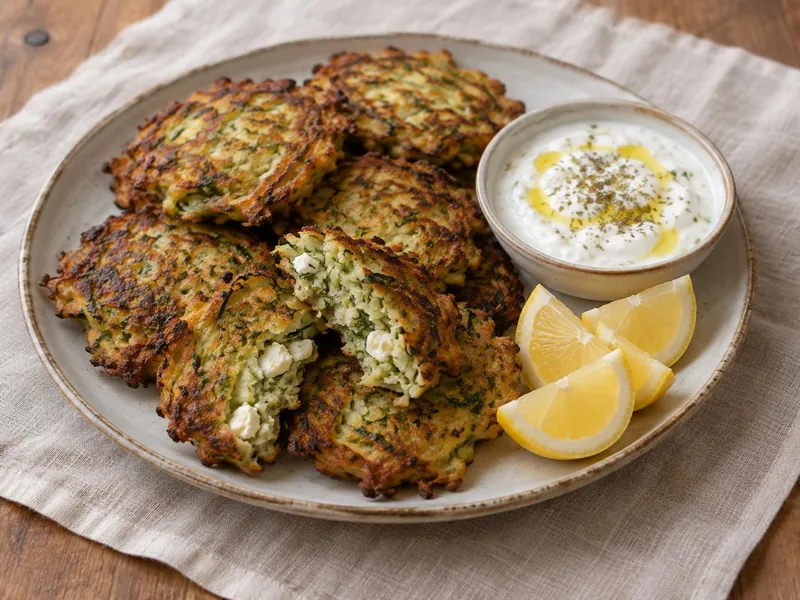
Zucchini Fritters (Turkish Mücver)
Crisp-edged, tender-centered zucchini fritters packed with dill, feta and spring onions, served with cool garlic yogurt.
 AI-generated image
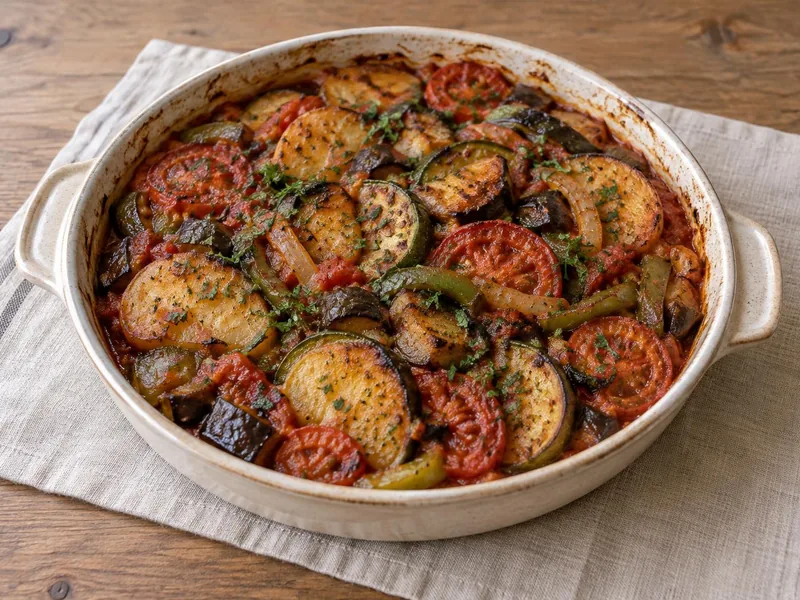
Briam (Greek Roasted Vegetables)
Potatoes, zucchini, eggplant, pepper and onion baked slowly in grated tomato and olive oil until soft, jammy and browned at the edges.