Briam (Greek Roasted Vegetables)
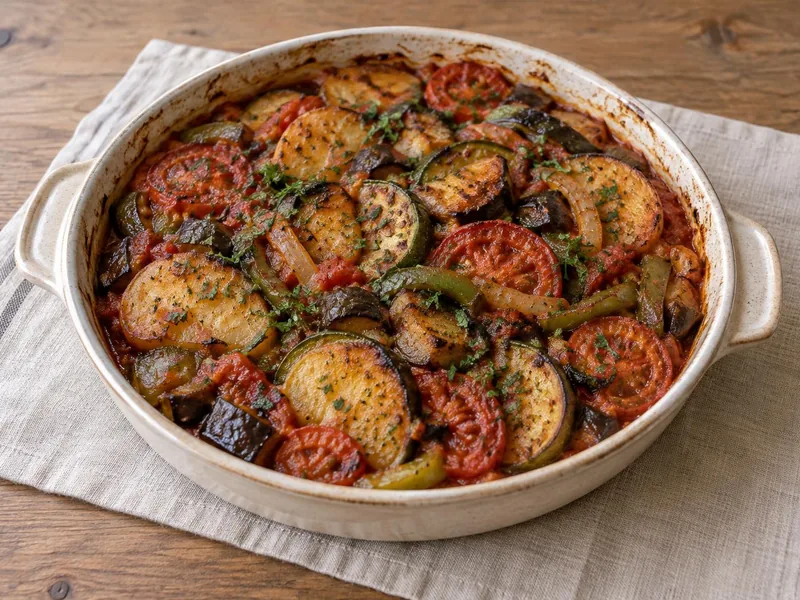
Potatoes, zucchini, eggplant, pepper and onion baked slowly in grated tomato and olive oil until soft, jammy and browned at the edges.
 AI-generated image
- 500 gpotatoes
- 500 gzucchini
- 400 gripe tomatoes
- 250 geggplant
- 200 gonions
Briam is a Greek oven dish of mixed summer vegetables baked in olive oil and tomato. It is one of the ladera, Greek vegetable dishes cooked with plenty of olive oil, and in Greece it is usually eaten as a main course with bread and a piece of feta. It also makes a generous side dish for 6.
The vegetables are cut so they finish cooking at the same time: the potatoes are sliced thin and the softer vegetables are left in bigger pieces. They bake under foil first, so they steam in their own juices and the grated tomato, then uncovered, so the liquid cooks down to a thick, oily sauce and the edges brown.
Plan on about 2 hours 30 minutes, most of it hands-off oven time. Briam is often served warm rather than hot, after a short rest, and it is just as good the next day.
Preparation
- Step 01
Heat the oven to 200 C (400 F) with a rack in the center.
- Step 025 min
Halve 2 of the tomatoes crosswise and grate the cut sides on the coarse side of the box grater into the large bowl, holding them by the skin. Stop when only the skin is left in your hand and discard it. Slice the remaining tomato into rounds about 5 mm (1/4 in) thick and set them aside.
- Step 035 min
Add the potatoes, zucchini, eggplant, onions, green pepper and garlic to the grated tomato. Add 80 g of the olive oil, the oregano, salt, black pepper and half of the parsley, and toss well with your hands or a large spoon until every piece is coated.
- Step 045 min
Tip everything into the roasting pan and spread it out evenly, tucking the potato slices down among the other vegetables so they sit in the juices rather than on top. The pan will be very full; the vegetables shrink as they cook. Pour the hot water around the edges, lay the tomato slices on top and drizzle with the remaining 20 g olive oil.
- Step 0545 min
Cover the pan tightly with foil and set it on the baking sheet to catch any drips. Bake for 45 minutes, until the vegetables have released plenty of liquid and the potatoes are starting to soften.
- Step 0660 min
Take off the foil carefully, as hot steam will escape. Gently turn the vegetables with a large spoon so the pieces from the bottom come to the top. Bake uncovered for 50 to 60 minutes more, turning them once more halfway through, until the potatoes are completely tender when pierced with a knife, the vegetables are soft and browned at the edges, and the liquid has cooked down to a thick, oily sauce with no watery pool. If the top browns before the potatoes are tender, cover it loosely with foil; if the pan looks dry, add 50 g hot water.
- Step 0715 min
Let the briam rest for 15 minutes, then scatter over the remaining parsley. Serve warm or at room temperature.
- Step 08
Refrigerate leftovers in a shallow covered container within 2 hours of baking, or within 1 hour if the room is above 32 C (90 F). Time on the table counts toward this limit.
Kitchen notes
- Serving: in Greece briam is usually eaten as a main course with crusty bread and a slab of feta. Both are extras: bread contains gluten and feta contains milk, and for a vegetarian meal choose a feta made with microbial or plant-based rennet.
- Oven temperatures are for a conventional oven. For a fan (convection) oven, set it 20 C (about 25 F) lower and check the potatoes a little early.
- Cut sizes matter: potatoes take longest, so they are sliced thin, while zucchini and eggplant soften quickly and are cut thicker. If your potato slices are thicker than 5 mm (1/4 in), allow extra time.
- Out of season: use one 400 g can of chopped tomatoes in place of the grated tomatoes, and leave out the sliced tomato on top.
- Storage: keep covered in the refrigerator at 4 C (40 F) or below for up to 3 days. To serve at room temperature, take it out about 30 minutes ahead and count that time toward the 2-hour limit; or reheat it in a 180 C (350 F) oven for 15 to 20 minutes, until hot throughout.
- Variations: add a handful of chopped dill or mint with the parsley, use a red pepper instead of the green one, or add a thinly sliced carrot with the potatoes.
Diet and allergens
Suitable for: Vegan, Vegetarian, Gluten-free, Dairy-free, Nut-free.
Contains: none of the allergens we track (sesame, tree nuts, peanuts, milk, egg, gluten, soy, celery, mustard, fish, crustaceans, molluscs, lupin).
Labels come from the ingredient list by fixed rules. If you cook for someone with an allergy, check the labels of packaged ingredients such as stock, spice blends, tahini and bread, since brands differ. How labels work.
Frequently asked questions
What is the difference between briam and ratatouille?
Both are summer vegetable dishes cooked with tomato and olive oil. Ratatouille is French and usually cooked on the stove, while briam is Greek, baked in the oven and usually includes potatoes, which gives it browned edges and a thick, oily sauce.
Why are my potatoes still hard?
They were probably sliced too thick or sat on top of the pan, out of the juices. Slice them 5 mm (1/4 in) thick, tuck them under the other vegetables, and keep baking until a knife slides in easily.
Why is my briam watery?
The vegetables need the uncovered baking time to cook off their juices. Keep baking uncovered until only a thick, oily sauce is left, and use a wide pan so the liquid can reduce.
Can I make briam ahead?
Yes. Bake it, cool it and refrigerate it within 2 hours. It keeps for up to 3 days and tastes just as good the next day, served at room temperature or reheated until hot.
Is briam a main or a side dish?
Both. In Greece it is usually a main course with bread and feta, and next to grilled food, beans or grains it makes a side dish for about 6.
References and sources
- Nutrition: USDA FoodData Central records Potatoes (FDC 170026), Zucchini (courgettes) (FDC 169291), Eggplant (aubergine) (FDC 2685577), Onions (FDC 170000), Green bell pepper (FDC 170427), Ripe tomatoes (FDC 170457), Garlic (FDC 1104647), Extra virgin olive oil (FDC 171413), Dried oregano (FDC 171328), Flat-leaf parsley (FDC 170416), Fine salt (FDC 173468), Black pepper (FDC 170931), Hot water (FDC 173647).
- Proportions: main ingredients and salt per serving were compared with the median of 6 published recipes for this dish. How we make recipes.
 AI-generated image
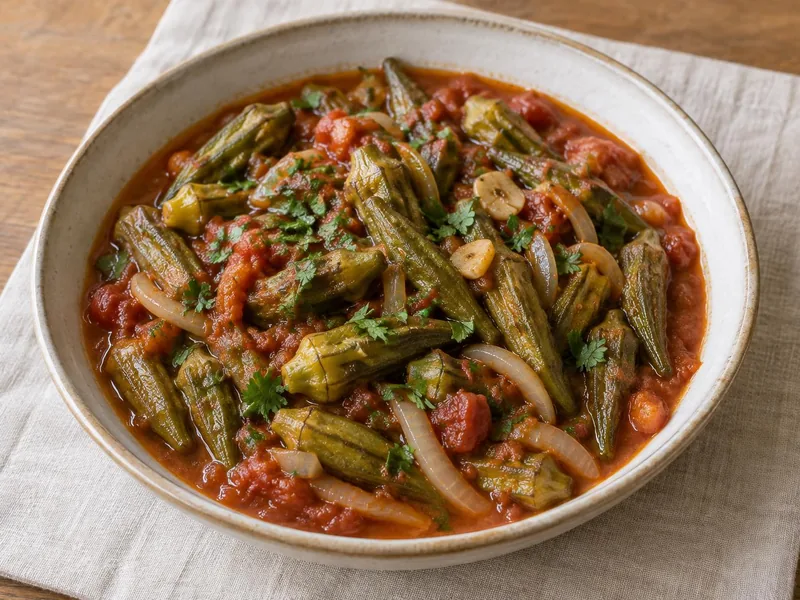
Okra in Tomato and Olive Oil (Bamya)
Whole okra pods are lightly browned, then braised gently in tomato and olive oil until tender, with a squeeze of lemon at the end.
 AI-generated image
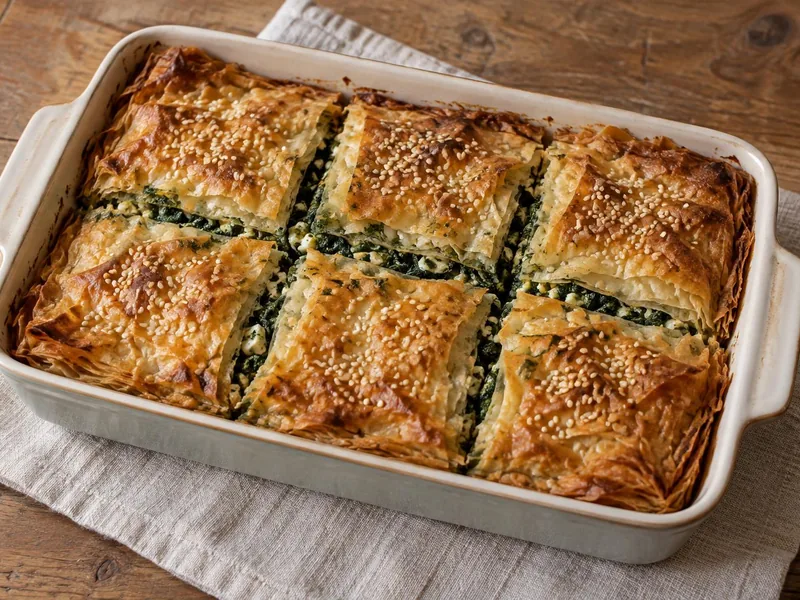
Spanakopita
A crisp, flaky phyllo pie filled with spinach, feta and plenty of dill, baked until deeply golden.
 AI-generated image
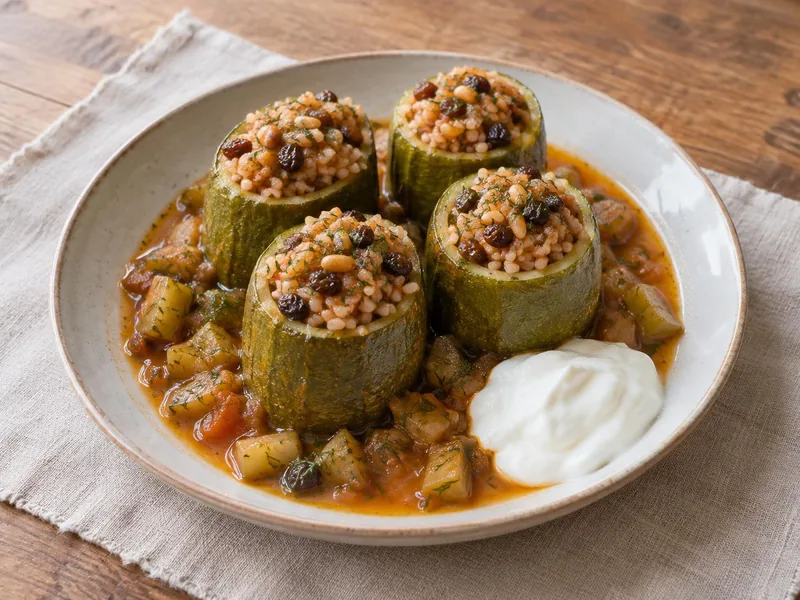
Stuffed Zucchini (Kabak Dolması)
Zucchini pieces are hollowed, filled with a fragrant olive oil rice and herb mixture, then braised upright on a bed of their own flesh until silky and tender.