Okra in Tomato and Olive Oil (Bamya)
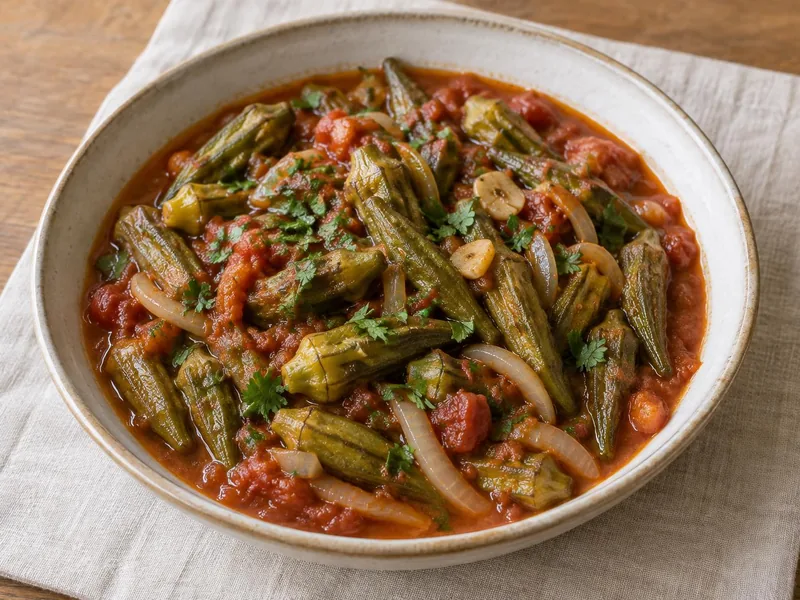
Whole okra pods are lightly browned, then braised gently in tomato and olive oil until tender, with a squeeze of lemon at the end.
 AI-generated image
- 500 gfresh okra
- 450 gripe tomatoes
- 150 gonion
- 60 golive oil
- 30 gwhite wine vinegar or apple cider vinegar
Bamya is a classic olive oil vegetable dish (zeytinyağlı) in Turkish home cooking, and okra braised with tomato is also common across the eastern Mediterranean and the Middle East. It is usually served warm or at room temperature as a main with bread or rice, or as part of a spread of meze.
Okra naturally contains a sticky mucilage, which is what people mean by slime. This version is prepared with whole pods to limit it. You trim the stem ends without cutting the pods open, rest them briefly in vinegar and dry them well, and brown them in a hot pan before they go into the sauce. Okra will always have some softness, but this approach keeps it modest.
The braise is gentle and mostly undisturbed, so the pods stay whole and tender rather than breaking down. A little lemon juice at the end brightens the tomato and olive oil sauce.
Preparation
- Step 0110 min
Wash the okra and dry it thoroughly. Trim the stem end of each pod by shaving off the tough cap in a thin cone, like sharpening a pencil, and leave the pod itself closed so the inside is not exposed.
- Step 0230 min
Put the trimmed okra in a bowl, pour over the vinegar and toss to coat. Leave at room temperature for 30 minutes. Meanwhile, slice the onion and garlic and grate or chop the tomatoes.
- Step 035 min
Rinse the okra briefly in a colander, then dry each pod well with a clean towel. Dry pods brown instead of steaming, which helps keep the texture clean.
- Step 04
Heat 20 g of the olive oil in a large wide pan over medium-high heat (about 200 C / 400 F surface heat) for 1 to 2 minutes, until it shimmers. Add the okra in a single layer, working in two batches if the pan is crowded and using the same oil for both.
- Step 0510 min
Cook the okra for 4 to 5 minutes per batch, turning occasionally, until the pods are bright green with a few light golden spots. Transfer to a plate and set aside. Allow about 10 minutes in total if you brown in two batches.
- Step 068 min
Reduce the heat to medium and add the remaining 40 g olive oil and the onion with 1 g of the salt. Cook for 7 to 8 minutes, stirring often, until soft and translucent with only a little color.
- Step 072 min
Add the garlic and cook for 1 minute until fragrant but not browned. Stir in the tomato paste and cook for 1 minute, stirring, until it darkens slightly.
- Step 085 min
Add the tomatoes, sugar, 3 g of the salt and the pepper. Cook for 4 to 5 minutes, stirring, until the tomatoes break down and the mixture looks like a thick sauce.
- Step 092 min
Pour in the hot water and bring to a gentle simmer, about 2 minutes. Lay the okra on top of the sauce in a single layer as much as possible, and spoon a little sauce over the pods.
- Step 1025 min
Cover and cook over low heat (a gentle simmer with small bubbles) for 20 to 25 minutes. Shake the pan occasionally rather than stirring, so the pods stay whole.
- Step 115 min
Check for doneness: a knife tip should slide into the thickest part of a pod with no resistance, and the sauce should be thick with a glossy layer of olive oil. If it is watery, uncover and simmer for 3 to 5 minutes more.
- Step 1210 min
Take the pan off the heat, drizzle over the lemon juice and taste. Add up to the last 1 g of salt or a little more lemon if needed. Let it rest uncovered for 10 minutes.
- Step 13
Scatter with parsley and serve warm or at room temperature, with bread, rice or bulgur pilaf.
Kitchen notes
- Timing: about 50 minutes of preparation (including the 30 minute vinegar rest) and about 65 minutes of cooking and resting. Browning in two batches and thickening the sauce at the end add a few minutes each, which the times above include.
- Small, young pods give the best texture. Large, woody pods stay tough, so choose ones that snap rather than bend.
- Do not cut the pods open or stir hard during braising, since this releases more of the mucilage that makes okra sticky.
- Frozen whole okra can be used if fresh is not available. Thaw it, pat it very dry and skip the vinegar rest, then brown it as in the recipe.
- The flavor improves after resting, so you can make it a day ahead and serve it at room temperature.
- Cool leftovers within 2 hours of cooking, then refrigerate in a covered container at 4 C / 40 F or below for up to 3 days. Reheat gently until steaming hot throughout.
- Variations: add a sliced green pepper with the onion, a pinch of chili flakes with the garlic, or a teaspoon of dried mint at the end.
Diet and allergens
Suitable for: Vegan, Vegetarian, Gluten-free, Dairy-free, Nut-free.
Contains: none of the allergens we track (sesame, tree nuts, peanuts, milk, egg, gluten, soy, celery, mustard, fish, crustaceans, molluscs, lupin).
Labels come from the ingredient list by fixed rules. If you cook for someone with an allergy, check the labels of packaged ingredients such as stock, spice blends, tahini and bread, since brands differ. How labels work.
Frequently asked questions
How do I keep okra from getting slimy?
You cannot remove the mucilage completely, but you can limit it. Trim the stems without opening the pods, rest them in vinegar, dry them very well and brown them in a hot pan before braising. Avoid stirring while it simmers.
Can I serve bamya cold?
Yes. It is often served at room temperature, and it can also be eaten chilled from the refrigerator. Add a squeeze of lemon just before serving.
Can I use canned tomatoes instead of fresh?
Yes. Use one 400 g can of chopped tomatoes, with their juices, in place of the fresh tomatoes. You may need a little less water if the can is very juicy.
What should I serve with okra in tomato and olive oil?
Crusty bread, rice or bulgur pilaf, and a spoonful of thick yogurt all go well. It also works as part of a meze spread with salads and dips.
References and sources
- Nutrition: USDA FoodData Central records fresh okra, small young pods (FDC 169260), white wine vinegar or apple cider vinegar (FDC 172237), olive oil (FDC 171413), onion (FDC 170000), garlic (FDC 1104647), tomato paste (FDC 170459), ripe tomatoes (FDC 170457), granulated sugar (FDC 746784), fine salt (FDC 173468), black pepper (FDC 170931), hot water (FDC 173647), lemon juice (FDC 167747), flat-leaf parsley (FDC 170416).
- Proportions: main ingredients and salt per serving were compared with the median of 3 published recipes for this dish. How we make recipes.
 AI-generated image
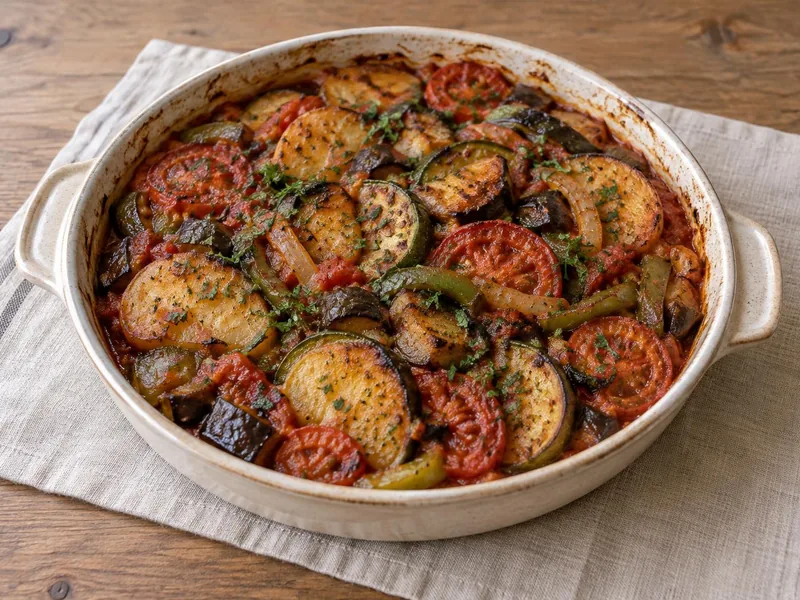
Briam (Greek Roasted Vegetables)
Potatoes, zucchini, eggplant, pepper and onion baked slowly in grated tomato and olive oil until soft, jammy and browned at the edges.
 AI-generated image
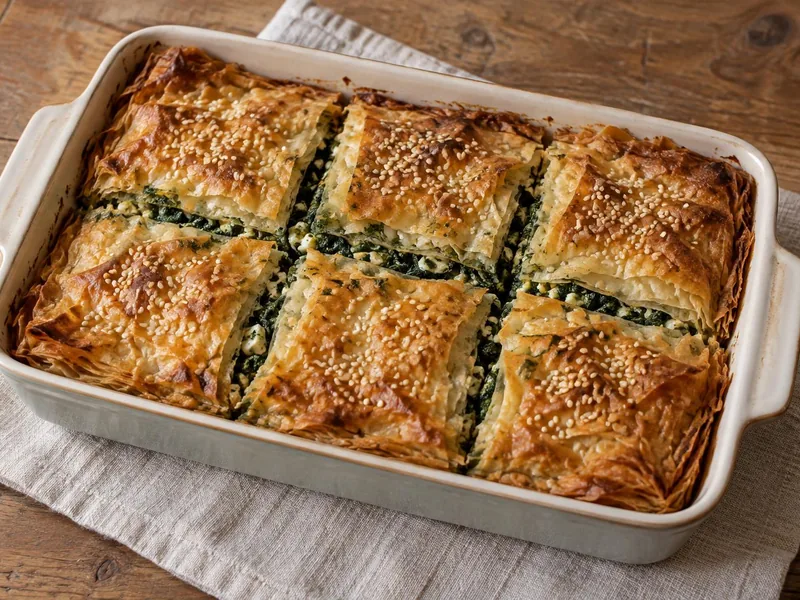
Spanakopita
A crisp, flaky phyllo pie filled with spinach, feta and plenty of dill, baked until deeply golden.
 AI-generated image
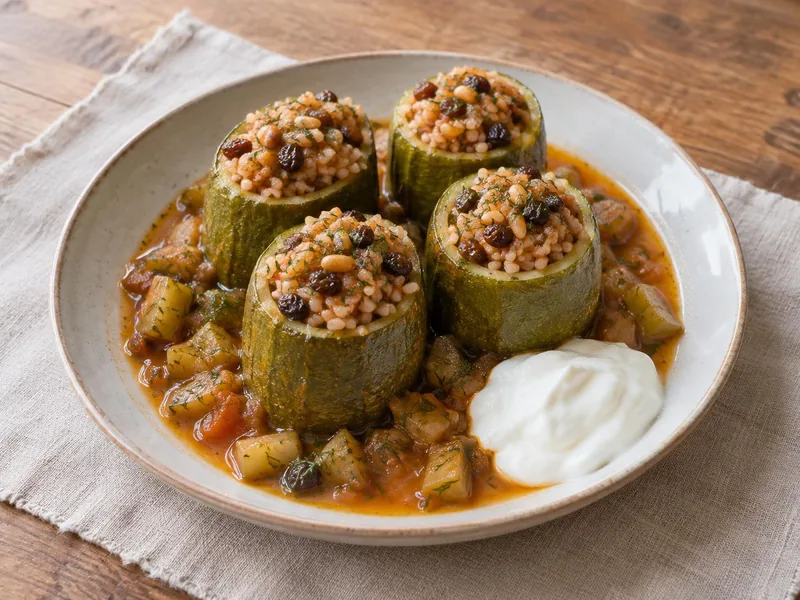
Stuffed Zucchini (Kabak Dolması)
Zucchini pieces are hollowed, filled with a fragrant olive oil rice and herb mixture, then braised upright on a bed of their own flesh until silky and tender.