Walnut Tarator Sauce
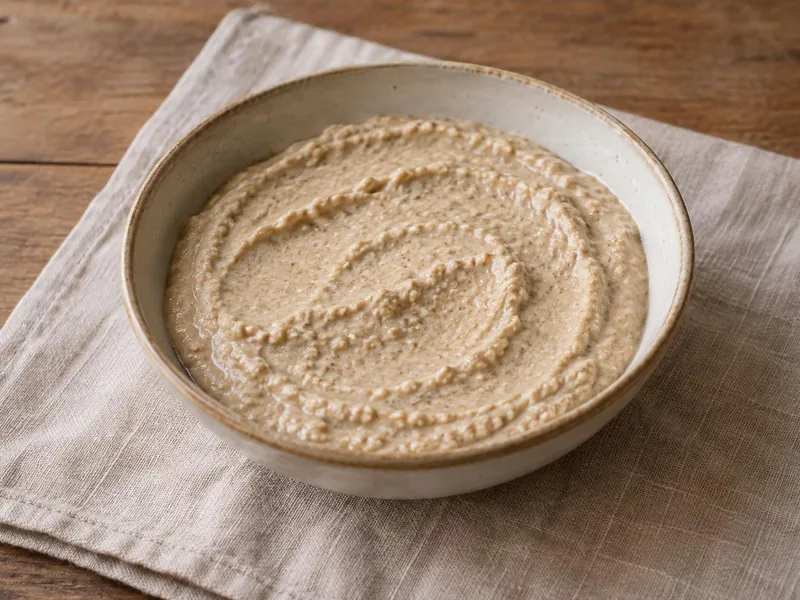
Toasted walnuts, lemon and garlic blend into a smooth, spoonable Turkish sauce for vegetables, grains and warm bread.
 AI-generated image
- 120 gwalnut halves or pieces
- 60 gextra virgin olive oil
- 50 gvegan and dairy-free white bread
- 45 glemon juice
- 6 ggarlic
Walnut tarator is a thick, garlicky preparation made by blending walnuts with bread, lemon and olive oil. In Turkey, sauces of this kind can accompany cooked or fried vegetables, appear on a meze table or be served simply with bread.
Toasting the walnuts briefly brings out their flavor, while soaked bread gives the sauce body without making it heavy or pasty. Adding the oil gradually helps create a glossy, cohesive mixture.
Adding the water in stages makes the consistency easy to control. A short rest before serving allows the bread to hydrate fully, leaving a sauce that is smooth with a little fine walnut texture.
Preparation
- Step 016 min
Put the walnuts in a dry frying pan over medium-low heat. Cook for 5 to 7 minutes, stirring often, until fragrant and slightly darker, with no scorched patches, then tip them onto a plate.
- Step 025 min
Leave the walnuts to cool for 5 minutes. Meanwhile, put the bread and 80 g of the cold water in a small bowl, press the bread beneath the surface and leave it until completely soft.
- Step 032 min
Put the cooled walnuts and garlic in a food processor. Pulse until the walnuts form fine, even crumbs, stopping before they become oily or clump into a paste.
- Step 042 min
Add the soaked bread and all its soaking liquid, followed by the lemon juice, salt and another 60 g of the water. Blend until mostly smooth, scraping down the bowl once; a little fine walnut texture should remain.
- Step 052 min
With the motor running, pour the olive oil through the feed tube in a slow, steady stream. Add the final 40 g of water gradually, blending after each addition, until the sauce is glossy and spoonable and falls slowly from a spoon; very fresh bread may not need all of the water.
- Step 0610 min
Spoon the sauce into a serving bowl and leave it for 10 minutes so the bread can fully hydrate. Stir well; if it looks grainy or split, blend it again for 15 to 30 seconds until cohesive, then serve at room temperature.
Kitchen notes
- Refrigerate leftovers in an airtight container within 2 hours of making and use within 3 days. Keep the sauce at 4 C / 40 F or below, and do not leave it at room temperature for more than 2 hours in total.
- The sauce can be made up to 24 hours ahead. It thickens as it stands and chills; for a looser consistency, stir in 5 g cold water at a time until spoonable.
- Serve with roasted cauliflower, carrots, green beans, boiled potatoes, grain bowls or warm bread.
- For a coarser texture, reserve 20 g of the toasted walnuts before blending. Chop them and fold them through the finished sauce just before serving.
Diet and allergens
Suitable for: Vegan, Vegetarian, Dairy-free.
Contains: tree nuts, gluten (wheat).
Labels come from the ingredient list by fixed rules. If you cook for someone with an allergy, check the labels of packaged ingredients such as stock, spice blends, tahini and bread, since brands differ. How labels work.
Frequently asked questions
Is walnut tarator a dip or a sauce?
It can be either. Serve it thick with bread or raw vegetables, or spoon it over cooked vegetables and potatoes. Its consistency also becomes firmer after chilling.
Can I use walnut pieces instead of walnut halves?
Yes, provided they weigh 120 g. Smaller pieces can toast quickly, so stir frequently and remove them from the heat as soon as they smell fragrant and look slightly darker.
Why did my tarator become bitter or pasty?
Scorched walnuts can make the sauce bitter, so toast them gently and avoid dark patches. Processing the nuts for too long before adding the liquid can also make them oily and heavy; stop when they reach fine crumbs.
Can I make it without a food processor?
A blender works if you stop regularly to scrape down the sides. You can also pound the cooled walnuts and garlic in a large mortar, mash in the soaked bread and lemon juice, then work in the oil and water gradually.
References and sources
- Nutrition: USDA FoodData Central records Walnut halves or pieces (FDC 2346394), Vegan and dairy-free plain white bread (FDC 325871), Cold water (FDC 173647), Extra virgin olive oil (FDC 171413), Lemon juice (FDC 167747), Garlic (FDC 1104647), Fine salt (FDC 173468).
- Proportions: main ingredients and salt per serving were compared with the median of 4 published recipes for this dish. How we make recipes.
 AI-generated image
Stuffed Grape Leaves (Olive Oil Dolma)
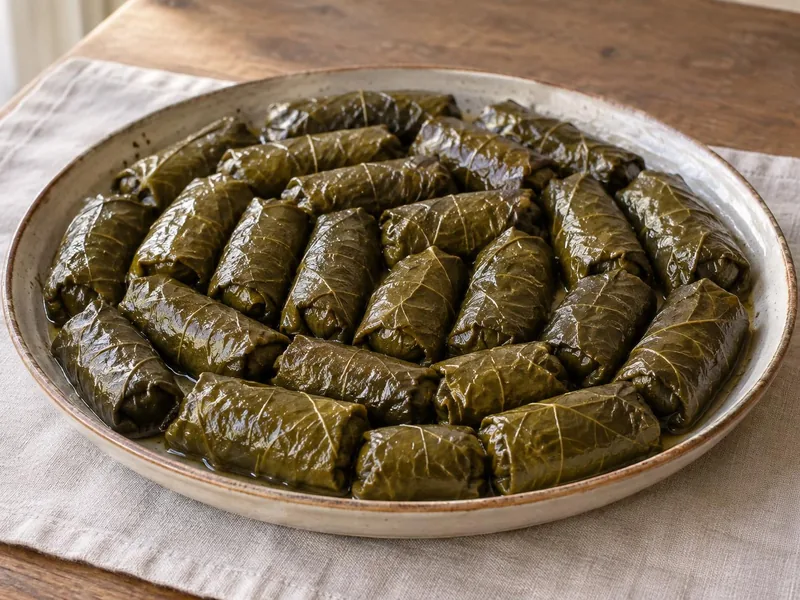
Tender jarred grape leaves wrapped around a spiced rice, herb and pine nut filling, then simmered in olive oil and lemon until soft and glossy.
 AI-generated image
Tahini Sauce
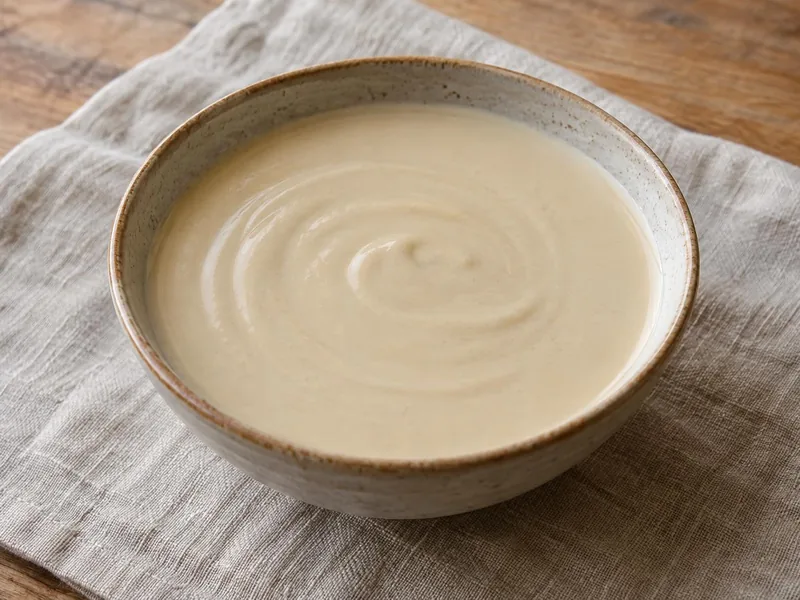
A smooth, pourable lemon and garlic tahini sauce that comes together in ten minutes with a whisk and a bowl.
 AI-generated image
Zucchini Fritters (Turkish Mücver)
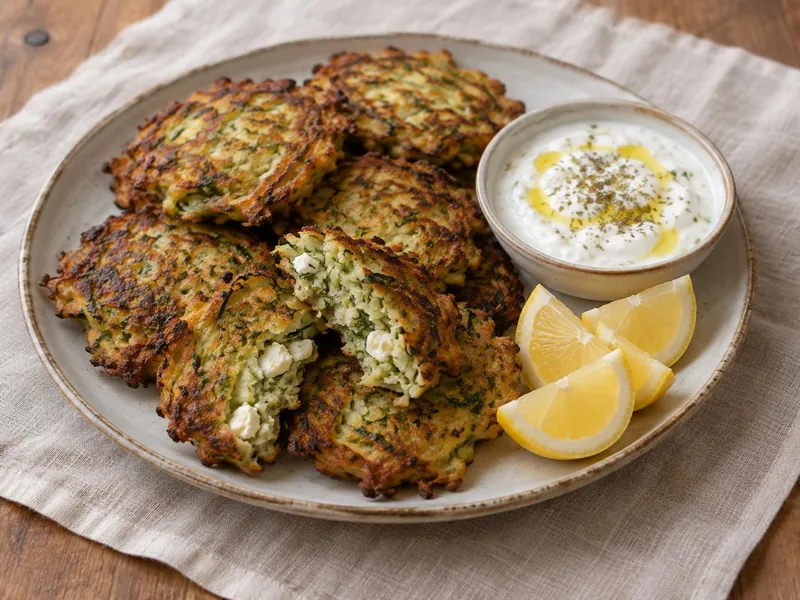
Crisp-edged, tender-centered zucchini fritters packed with dill, feta and spring onions, served with cool garlic yogurt.