A Plant-Forward Mediterranean Pantry: What to Buy
A practical list of what to stock, what to look for on the label, and how to store it, so quick plant-forward dinners are always within reach.
- Stock good extra virgin olive oil, plain canned tomatoes, and a lemon or vinegar for acid.
- Keep both dried and canned legumes, and soak dried ones covered in the refrigerator.
- Buy tahini, olives, and harissa with simple labels, and choose the heat level you like.
- Store nuts in the fridge or freezer, and replace dried herbs within six to 12 months of opening.
- Keep homemade pesto refrigerated and use it within a few days, or freeze it.
Start with oil, tomatoes and something sour
Olive oil is described as the single most common ingredient across Mediterranean countries and the backbone of the cuisine [4]. Extra-virgin olive oil is recommended for the best flavor [4]. A good bottle should smell fresh and slightly grassy, with a faint peppery finish [1]. Look for a harvest date on the label, ideally within the past year [2].
Extra virgin olive oil suits cooking at moderate heat, drizzling over vegetables, and making salad dressings [2]. It can also be used as a cooking fat or as a finishing oil for pasta, dips, and salads [6].
For canned tomatoes, choose cans whose only ingredient is tomatoes [4]. Look for versions with no added sugar [2]. Canned tomatoes are often the base of pasta sauces, stews, casseroles, and breakfast dishes like shakshuka [6]. One source suggests keeping at least four cans on hand at all times [1]. Sun-dried tomatoes have a more intense flavor than canned tomatoes and add textural variety to pasta, rice, or bean dishes [3].
For acidity, lemon is arguably the most common citrus in Mediterranean cuisine [4]. Vinegar can be used in place of fresh lemon juice in almost any dish [3].
Legumes and grains: the dinner backbone
Dried legumes soaked overnight cook in about an hour and keep for months [1]. Dried beans require soaking and boiling, while canned beans are more convenient [3]. Keep soaking beans covered in the refrigerator, not on the counter.
Dried chickpeas for patties are soaked overnight or for eight hours, then simmered until soft [3]. That takes about one hour for hulled chickpeas and about two for the common supermarket variety [3]. Brining dried beans helps them hold their shape and reduces blowouts during cooking [5].
Canned beans do not require soaking or extended cooking, and they hold their shape well in salads and quicker soups [5]. Canned legumes should be rinsed to reduce sodium [2]. Cool cooked beans and grains and refrigerate them within 2 hours.
Farro and barley cook in thirty minutes and hold up well in salads [1]. Farro is best cooked like pasta in a large amount of water, while finer-grained bulgur only needs to be rehydrated [5]. Pearl couscous grains are larger than regular couscous and are toasted rather than dried, which gives them a nutty flavor [5].
For pasta, choose durum wheat semolina that is bronze-drawn and slow-dried [1]. Whole-wheat pasta has an earthy flavor [5]. Trahana is bulgur or cracked wheat cooked with milk, buttermilk or yogurt and dried into granules [3]. It takes just a few minutes to cook and turns into creamy soups and porridges [3].
Jars, pastes and the freezer
Buy olives from the refrigerated section, because jarred shelf-stable ones tend to be saltier [5]. If you have time, unpitted olives are less mushy than prepitted ones [5]. Popular varieties include Nicoise, Beldi, Kalamata, and Castelvetrano [6]. Taggiasca olives are small, mild, and buttery [1].
Salt-packed capers have more depth than brine-packed ones and should be rinsed well [1].
Buy tahini made only of sesame seeds so you can use it in multiple applications [4]. Whisked with lemon juice, vinegar, and salt, tahini makes a creamy, nutty sauce [6]. Pomegranate molasses is a tangy syrup used in muhammara and in fattoush dressing [6].
Harissa is a Tunisian red chile paste with garlic, cumin, lemon, olive oil, and warm spices [6]. It is often found in the international aisle of supermarkets [4]. US grocery stores sell it at various heat levels, as a paste or a sauce [6]. Milder brands can sometimes be found in specialty food stores [4].
Frozen vegetables taste better than canned ones for stocking a Mediterranean pantry [3]. Paximadia, Greek rusks, keep for years if stored in a cool, dark, well-sealed place [3].
Spices, herbs and garlic
Za'atar is an eastern Mediterranean blend of wild thyme, sumac, sesame seeds, and salt used as both a seasoning and a condiment [5]. It can be sprinkled onto cheese, flatbreads, salads, and dips [6]. Ground sumac is a dried, ground berry with a lemony flavor, often sprinkled on salads [6]. Ras el hanout is a Moroccan spice mix that combines cinnamon, cumin, ginger, turmeric, cardamom, and more [6].
Greek oregano is more intensely flavored and sweeter than Mexican oregano [3]. Fresh basil is the one herb that really needs to be used fresh, while oregano, thyme, and rosemary dry well [1]. Dried herbs lose potency six to 12 months after opening, so replace them frequently [5].
Fresh herbs wilt quickly, so buy them to cook within a day or two [4]. If washed and stored correctly, most will keep for a week or longer [5]. Rinse and dry them, roll them loosely in paper towels, seal the roll in a zipper-lock bag, and keep it in the crisper drawer [5].
Only one clove of garlic is needed to make an impact in cooking [4]. Garlic can be roasted whole for dips, or sauteed as a base for stews and sauces [6].
Dairy, butter and nuts
Feta is a brined cheese with a pretty long shelf life [3]. It pairs well with vegetable or bean casseroles and even pasta [3]. Strong salty cheeses such as goat cheese, feta, or Bulgarian sirene can be sprinkled on salads or stuffed in pastry [6].
Clarified butter is pure butterfat with the water and milk solids removed, which gives it a nuttier taste than regular butter [4]. Ghee, also known as samna or samneh, has a nutty flavor [6].
Buy nuts raw or dry-roasted without added oils or sugar [2]. Store them in the fridge or freezer to prevent rancidity [2]. Pistachios and almonds last longer than walnuts, which are oilier and go rancid faster [3].
Quick meals from the shelf
A well-stocked Mediterranean pantry makes dinner possible in twenty minutes or less [1]. Spaghetti alla Nerano uses four ingredients and takes twenty minutes [1]. Genoese pesto takes ten minutes to make [1]. Raw garlic is often essential in Italian pesto and is part of what makes Greek tzatziki tasty [4]. A layer of oil does not make homemade pesto safe to keep longer, so keep it refrigerated, use it within a few days, and freeze it for longer storage.
Shakshuka starts from canned tomatoes [6]. Salting eggplant before cooking helps remove its bitterness [4]. For roasted cauliflower, preheat the oven to 375F and roast for about 35 minutes until tender but al dente [3].
| Staple | What to look for |
|---|---|
| Extra virgin olive oil | A harvest date, ideally within the past year [2] |
| Canned tomatoes | Tomatoes as the only ingredient [4] |
| Tahini | Made only of sesame seeds [4] |
| Olives | Refrigerated section, unpitted if you have time [5] |
| Nuts | Raw or dry-roasted, no added oils or sugar [2] |
| Pasta | Durum wheat semolina, bronze-drawn and slow-dried [1] |
Frequently asked questions
Should I buy dried or canned beans?
Dried beans require soaking and boiling, while canned beans are more convenient [3]. Canned beans work well in salads and quicker soups [5]. If you soak dried beans, keep them covered in the refrigerator.
Where should I keep nuts?
Store nuts in the fridge or freezer to prevent rancidity [2]. Walnuts go rancid faster than pistachios and almonds [3].
Do I need fresh herbs, or are dried enough?
Dried herbs are fine, but fresh ones offer more volatile oils and flavor [2]. Basil is the one herb that really needs to be used fresh [1].
Can I find mild harissa?
US grocery stores sell harissa at various heat levels [6]. Milder brands can sometimes be found in specialty food stores [4].
How long do dried herbs last?
Dried herbs lose potency six to 12 months after opening [5].
Sources
- The Mediterranean Pantry: What to Buy in May and June - The Mediterranean Pantry: What to Buy in May and June (giallozafferano.com)
- Mediterranean Diet Staples | Learn With Superpower - Mediterranean Diet Staples: Pantry Essentials (superpower.com)
- Plant-Forward PANTRY PERFECT GREEK! (dianekochilas.com)
- 12 Essential Mediterranean Ingredients, Explained - Tasting Table - 12 Essential Mediterranean Ingredients, Explained (tastingtable.com)
- americastestkitchen.com (americastestkitchen.com)
- 13 Mediterranean Pantry Staples Worth Stocking Up On - AOL - 13 Mediterranean Pantry Staples Worth Stocking Up On (aol.co.uk)
Recipes that use this
 AI-generated image
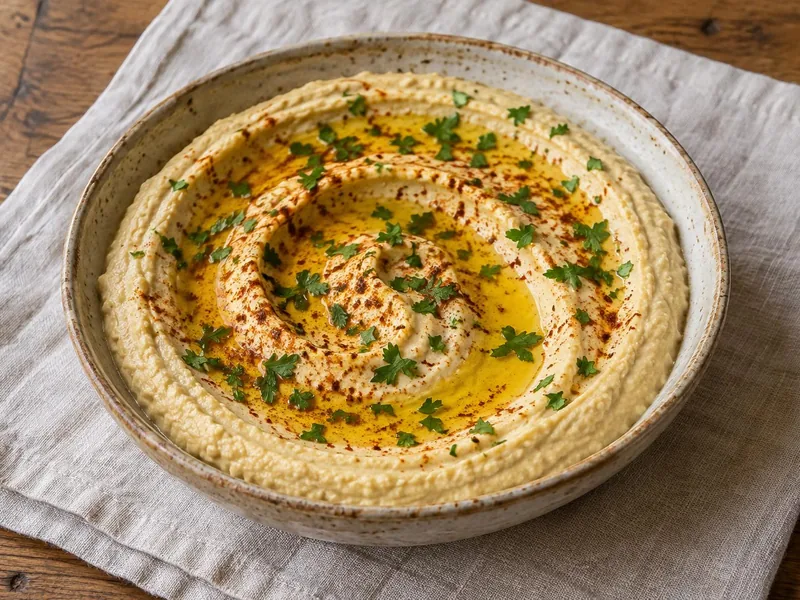
Hummus
Soft-cooked chickpeas, a tahini and lemon base whipped with ice water, and a few minutes in the food processor give a silky, spoonable hummus.
 AI-generated image
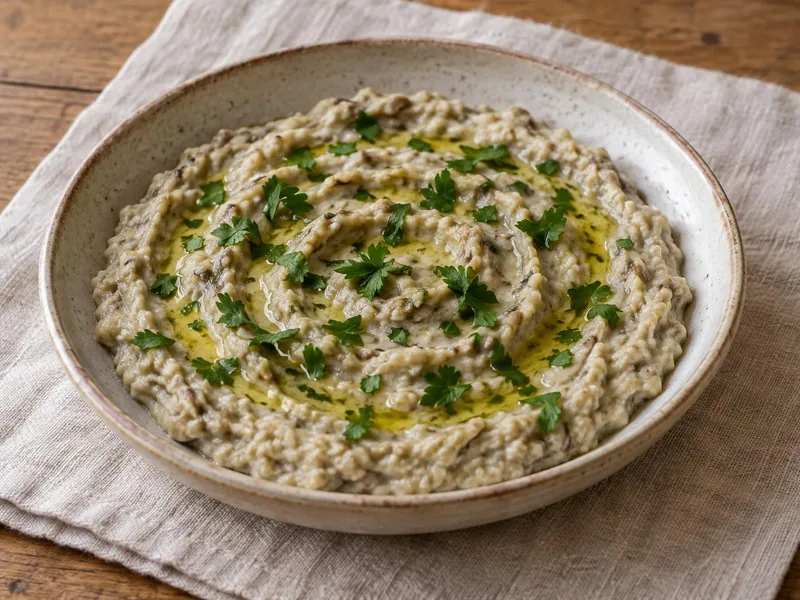
Baba Ganoush
A spoonable roasted eggplant dip with a lemony tahini base, made in the oven for deep roasted flavor or over open flame for a clearly smoky taste.
 AI-generated image
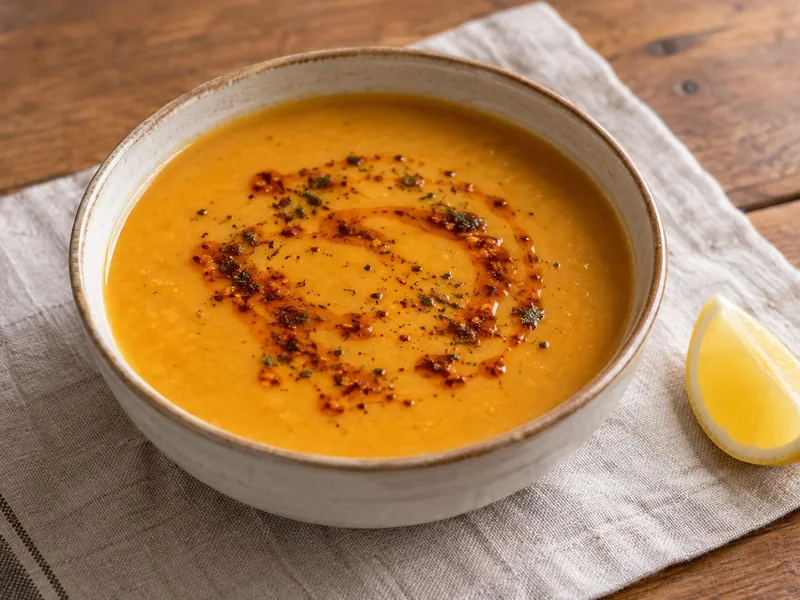
Red Lentil Soup (Turkish Mercimek Çorbası)
A silky, gently spiced red lentil soup made from pantry staples, finished with lemon and a sizzling mint and chili oil.