Hummus
Soft-cooked chickpeas, a tahini and lemon base whipped with ice water, and a few minutes in the food processor give a silky, spoonable hummus.
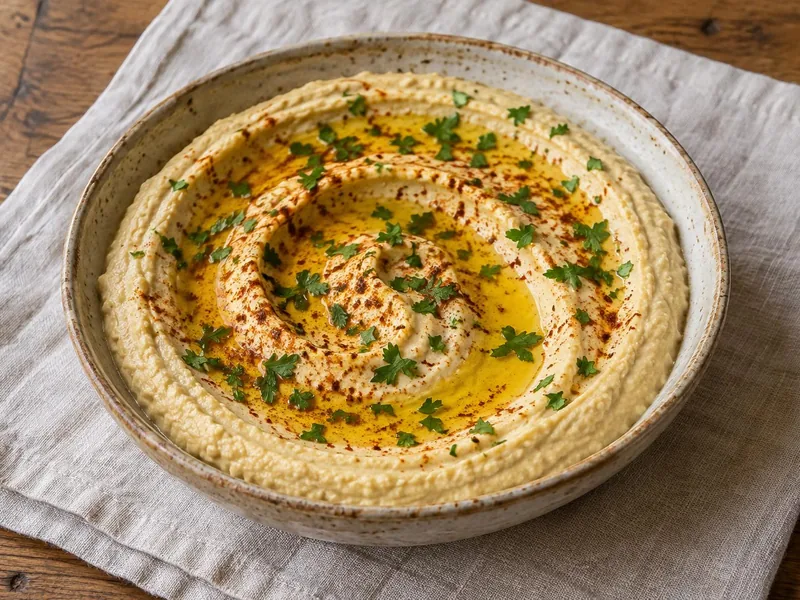 AI-generated image
- 130 gdried chickpeas
- 100 gtahini
- 30 glemon juice
- 20 gextra virgin olive oil
- 6 ggarlic
Hummus is a dip of mashed chickpeas, tahini, lemon juice and garlic. It is eaten across the Levant, Turkey and much of the wider Mediterranean, usually as part of a meze spread with warm flatbread, olives, pickles and fresh vegetables. It also works as a spread in sandwiches or as a base under roasted vegetables.
The texture depends on three things. First, the chickpeas are cooked until they are completely soft, and a little baking soda helps the skins break down. Second, the tahini, lemon juice and garlic are whipped together before the chickpeas go in. Third, ice water is added to the tahini, which makes it pale and fluffy.
This recipe starts from dried chickpeas, which gives the best flavor and a creamy result. It makes about 550 to 600 g of hummus, depending on how much cooking water you add, which is enough for four people as a meze or snack at roughly 140 to 150 g each. Plan to soak the chickpeas in the refrigerator overnight.
Preparation
- Step 01
Put the dried chickpeas in a large bowl with the soaking water and 2 g of the baking soda. Stir, cover, and soak in the refrigerator at 4 C (40 F) or below for 8 to 12 hours. The chickpeas should roughly double in size and look plump.
- Step 023 min
Drain the soaked chickpeas in a sieve, discard the soaking water, and rinse the chickpeas under cold running water. Tip them into a medium saucepan with the 900 g fresh water and the remaining 2 g baking soda.
- Step 038 min
Bring to a boil over high heat, 100 C (212 F). Skim off any foam from the surface, then reduce the heat to low so the water is just simmering. Partly cover the pan.
- Step 0450 min
Simmer for 40 to 50 minutes, topping up with hot water if the chickpeas are no longer covered. They are done when a chickpea mashes to a paste with very little pressure between your fingers and the skins are starting to loosen. If they are still slightly firm in the center, keep cooking and check every 10 minutes.
- Step 0510 min
Drain the chickpeas, keeping about 100 g of the cooking water in a cup. Set aside about 15 g of whole chickpeas for garnish. Let the rest cool for 10 minutes so they are warm, not hot. Note today as the cooking day, because the cooked chickpeas and the hummus made from them share one storage clock that starts now. If you are not blending the chickpeas right away, spread them in a shallow container with some cooking liquid and refrigerate within 2 hours.
- Step 062 min
While the chickpeas cool, put the tahini, lemon juice, garlic and salt in the food processor. Process for 1 minute, scraping down the sides once. The mixture will first thicken and look stiff, which is normal.
- Step 071 min
With the machine running, pour in the ice water in a slow stream. Process for 1 more minute, until the tahini mixture is pale, smooth and noticeably fluffier.
- Step 084 min
Add the remaining warm chickpeas and the cumin. Process for 3 to 4 minutes, stopping to scrape down the bowl twice, until the hummus is completely smooth with no grainy bits.
- Step 092 min
If the hummus is thicker than you like, add the reserved cooking water 1 tablespoon (about 15 g) at a time, processing for 20 seconds after each. It should fall from a spoon in a soft ribbon and hold its shape on a plate. Taste and add a pinch more salt or a little more lemon juice if needed.
- Step 102 min
Spoon the hummus onto a shallow plate or into a bowl. Use the back of the spoon to make a swirl in the center. Fill the swirl with the olive oil, scatter over the reserved chickpeas, then dust with paprika and parsley. Serve with warm flatbread (use gluten-free flatbread if you need a gluten-free meal) and raw vegetables.
- Step 11
Move any hummus you are not serving into a shallow covered container and refrigerate at 4 C (40 F) or below. Count all time out of the refrigerator, including serving time: hummus should be chilled within 2 hours of making, or within 1 hour if the room is above 32 C (90 F). Label the container with the day the chickpeas were cooked.
Kitchen notes
- Yield: the recipe makes about 550 to 600 g, depending on how much cooking water you stir in. Four servings are roughly 140 to 150 g each.
- Storage: cool the hummus in a shallow covered container and refrigerate at 4 C (40 F) or below within 2 hours of making, or within 1 hour if the room is above 32 C (90 F). Time on the table while serving counts toward this limit. Add the olive oil, paprika and parsley just before serving. Hummus can sit out for 15 minutes to take the chill off. Discard any hummus that has been out of the refrigerator for more than 2 hours in total, or more than 1 hour in total if the room is above 32 C (90 F), and include serving and warming time in that total.
- Storage clock: making chickpeas into hummus does not restart their storage time. Count from the day the chickpeas were cooked, and eat the chickpeas and hummus together within 4 days of that day. If you blend the hummus on the same day you cook the chickpeas, it keeps up to 4 days. If the chickpeas were cooked and refrigerated 2 days earlier, eat the finished hummus within 2 days of making it.
- Make ahead: the chickpeas can be cooked up to 2 days ahead. Spread them with some cooking liquid in a shallow container and refrigerate at 4 C (40 F) or below within 2 hours of cooking. Warm them gently before blending, as warm chickpeas blend smoother. Follow the storage clock above for how long the finished hummus keeps.
- Using canned chickpeas: weigh out 300 g drained chickpeas rather than counting cans, because the drained weight of a can varies by brand and size. Simmer them in water with 1 g baking soda for 15 minutes, then drain and blend as in the recipe. Canned chickpeas are often salted, so start with 2 g salt and add more to taste. The result is a little less creamy but still good. Follow the use-by date on the can, and keep the finished hummus up to 4 days.
- Smoother hummus: for the silkiest texture, peel the cooked chickpeas by pinching off the loosened skins before blending. This takes extra time and is optional.
- Garlic strength: raw garlic gets stronger as hummus stands. For a milder dip, use 1 clove or soak the cloves in the lemon juice for 10 minutes before blending.
- Nutrition values are estimates based on the ingredient weights, including the olive oil for serving. All 3 g of added salt goes into the hummus and stays in it. The 4 g of baking soda is used in the soaking and cooking water, and the sodium figure of 611 mg per serving counts all of that baking soda as if it were eaten. In practice much of it is discarded with the water, so the figure is a high estimate and the real amount varies.
- Dietary labels (vegan, vegetarian, gluten-free, dairy-free, nut-free) apply to the base hummus as written. For a gluten-free meal, serve it with gluten-free flatbread or raw vegetables, because regular pita and flatbread contain gluten. For a nut-free meal, leave out the pine nut topping. The hummus contains sesame.
- Variations: blend in 80 g roasted red pepper, or top with cooked spiced chickpeas or a spoonful of chili flakes sizzled in olive oil. Toasted pine nuts also work as a topping, but they are not suitable if you are serving a nut-free meal.
Diet and allergens
Suitable for: Vegan, Vegetarian, Gluten-free, Dairy-free, Nut-free.
Contains: sesame.
Labels come from the ingredient list by fixed rules. If you cook for someone with an allergy, check the labels of packaged ingredients such as stock, spice blends, tahini and bread, since brands differ. How labels work.
Frequently asked questions
How long does homemade hummus keep?
Count from the day the chickpeas were cooked: the chickpeas and hummus together keep up to 4 days in the refrigerator at 4 C (40 F) or below. If you cooked the chickpeas 2 days before blending, eat the hummus within 2 days.
Why is my hummus grainy?
The chickpeas were most likely undercooked or blended while cold. Cook them until they mash very easily, blend them while warm, and process for the full 3 to 4 minutes.
Why add ice water?
Ice-cold water whipped into the tahini makes the mixture pale, light and creamy. Add it slowly while the machine is running.
Why soak the chickpeas in the refrigerator?
Soaking in the refrigerator at 4 C (40 F) or below keeps bacteria from multiplying in warm kitchens during the long soak. The chickpeas hydrate just as well, so drain and rinse them before cooking.
Why does my hummus taste bitter?
Bitterness usually comes from old or low-quality tahini, or from too much raw garlic. Taste your tahini on its own first and use a fresh jar that has been stirred well.
Can I make hummus without tahini?
You can blend chickpeas with olive oil, lemon and garlic, but the flavor and texture will be different. Tahini gives hummus its nutty taste and creamy body.
References and sources
- Nutrition: USDA FoodData Central records Dried chickpeas (FDC 173756), Cold water, for soaking (FDC 173647), Baking soda (FDC 175040), Fresh water, for cooking (FDC 173647), Tahini (FDC 169410), Lemon juice (FDC 167747), Garlic (FDC 169230), Fine salt (FDC 173468), Ice-cold water (FDC 173647), Ground cumin (FDC 170923), Extra virgin olive oil (FDC 748608), Sweet paprika (FDC 171329), Flat-leaf parsley (FDC 170416).
- Proportions: main ingredients and salt per serving were compared with the median of 2 published recipes for this dish. How we make recipes.
 AI-generated image
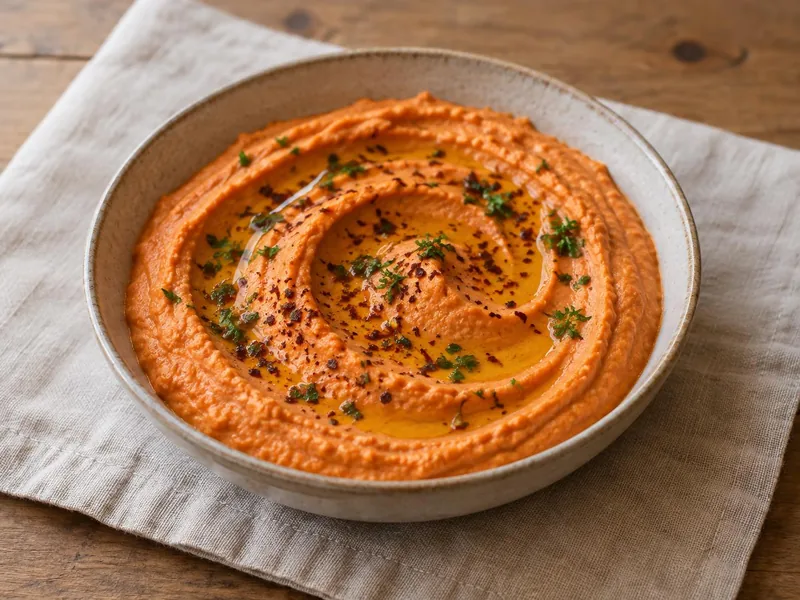
Roasted Red Pepper Hummus
Soft-cooked chickpeas and charred sweet red peppers blend into a silky, blush-colored dip with a gentle smoky sweetness.
 AI-generated image
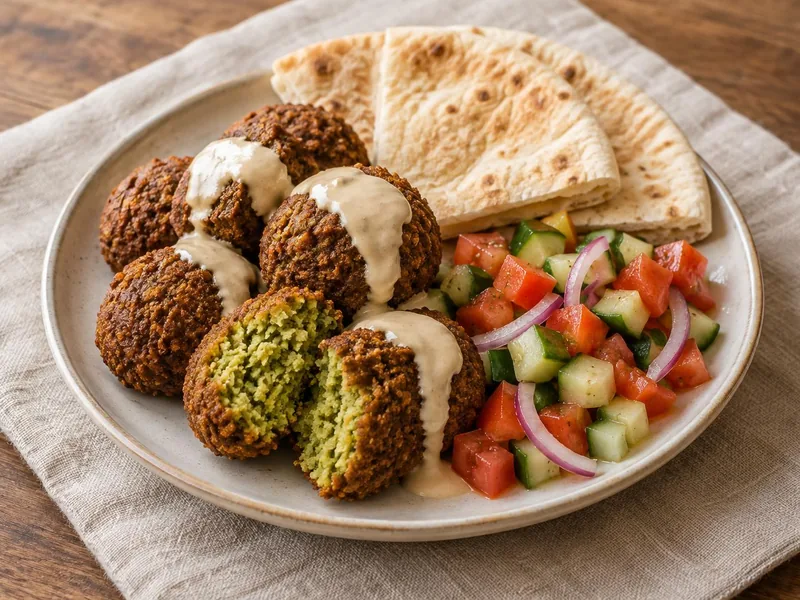
Falafel
Soaked raw chickpeas and a lot of fresh herbs give falafel a shatter-crisp crust and a tender, green, fluffy middle.
 AI-generated image
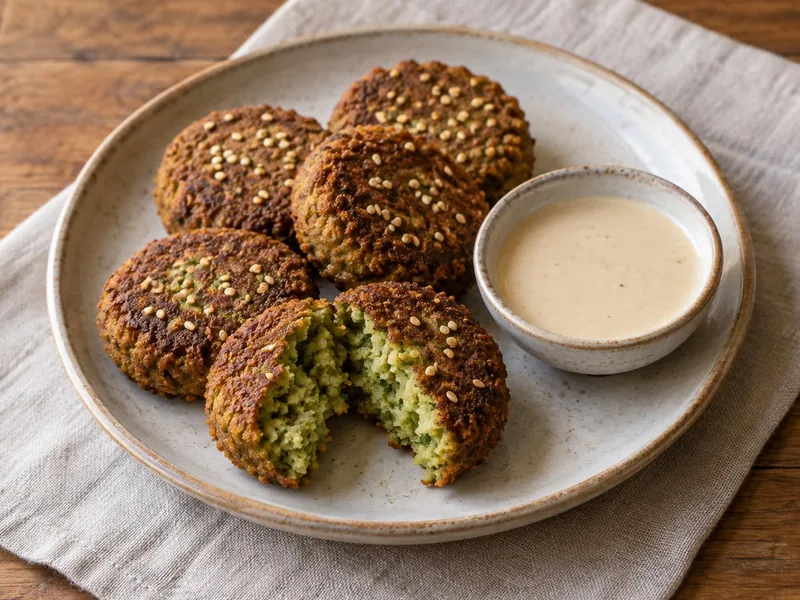
Baked Falafel
Soaked raw chickpeas, plenty of fresh herbs and a hot, oiled tray give falafel patties a crisp golden crust and a tender green middle, with no frying.