Fasolada (Greek White Bean Soup)
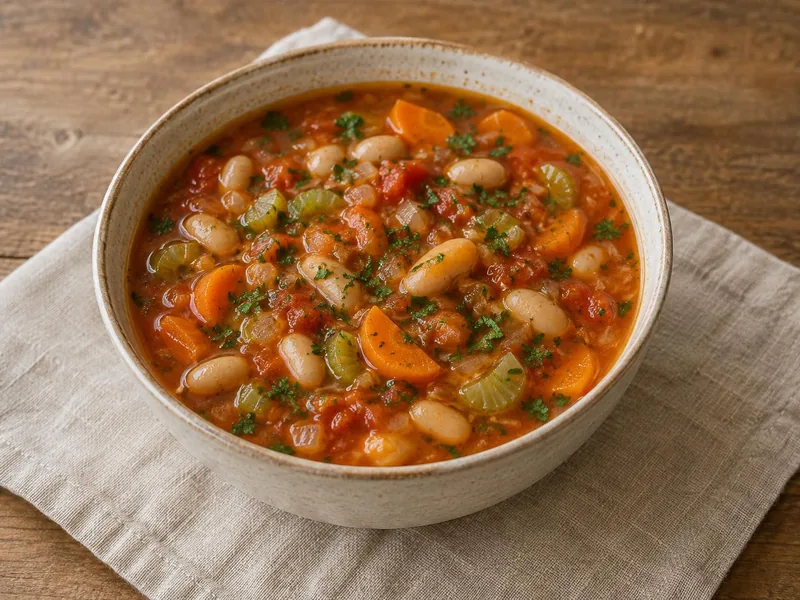
Dried white beans simmer slowly with softened onion, carrot and celery, then tomato and a final pour of raw olive oil make the broth thick, glossy and orange-red.
 AI-generated image
- 500 gdried white beans
- 400 gtomatoes
- 200 gyellow onion
- 200 gcarrots
- 120 gcelery
Fasolada is a Greek soup of dried white beans cooked slowly with onion, carrot and celery in a tomato broth enriched with olive oil. It is an everyday dish in Greek homes, usually eaten as a main course with bread, olives and a simple salad, and it contains no meat or dairy.
This version builds flavor in stages. The beans are soaked in the refrigerator, boiled hard for 10 minutes in fresh water and drained, then simmered with vegetables that were first softened in olive oil. The tomatoes go in only once the beans are tender, because acidic tomato slows their softening, and most of the salt is added at the same time so you can judge it as the broth reduces. A final pour of raw olive oil, stirred in off the heat, gives the soup its glossy, fruity finish.
Plan ahead: the beans need 8 to 12 hours of soaking in the refrigerator, which is not included in the 2 hours 35 minutes of preparation and cooking. Older beans can take longer to soften. The soup thickens as it stands and often tastes even better the next day.
Preparation
- Step 01
Put the beans in a large bowl or container and pour over the 2000 g cold water. Cover and refrigerate at 4 C / 40 F or below for 8 to 12 hours. Do not soak at room temperature. The soaking time is not included in the total time.
- Step 022 min
Drain the beans in a colander, discard the soaking water and rinse the beans well under cold running water.
- Step 0320 min
Put the beans in the large pot with the 2000 g fresh water for the first boil. Bring to a boil over high heat, then keep at a full rolling boil (100 C / 212 F) for 10 minutes, skimming off the foam that rises.
- Step 04
While the beans boil, finely chop the onion, slice the carrots and celery, and thinly slice the garlic.
- Step 053 min
Drain the beans in the colander and discard this water. Rinse out the pot.
- Step 0610 min
Set the pot over medium heat and add the 75 g olive oil. Add the onion, carrots, celery and 1 g of the salt and cook, stirring often, for 8 to 10 minutes, until the onion is soft and translucent and the vegetables smell sweet. Turn the heat down if they start to brown.
- Step 071 min
Add the garlic and cook for 1 minute, stirring, until fragrant.
- Step 0810 min
Add the drained beans, the bay leaves and the 2000 g water for the soup. Bring to a boil over high heat.
- Step 0965 min
Reduce the heat to low so the soup simmers gently, with small bubbles breaking the surface, and partly cover the pot. Simmer for 50 to 80 minutes, stirring every 15 minutes or so, until the beans are tender: a bean should crush easily against the side of the pot and be creamy inside, with no chalky center. If the liquid drops below the level of the beans, add hot water a little at a time. Older beans can take longer, so keep simmering and check every 10 minutes.
- Step 102 min
Stir in the tomato paste until it dissolves, then add the tomatoes with their juice, the pepper flakes if using, the black pepper and 4 g of the salt.
- Step 1130 min
Simmer uncovered for 25 to 30 minutes, stirring now and then so nothing catches on the bottom, until the broth has turned orange-red and thickened slightly and a few beans have begun to split.
- Step 122 min
For a creamier broth, crush a ladleful of beans against the side of the pot with the back of a spoon and stir them in. The soup should be thick but still spoonable; if it is too thick, stir in a little hot water.
- Step 1310 min
Take the pot off the heat and remove the bay leaves. Stir in the 45 g olive oil to finish and most of the parsley. Taste and add up to the remaining 2 g salt if needed, then cover and leave to rest for 10 minutes.
- Step 14
Ladle into warm bowls and scatter over the remaining parsley. Serve hot, with lemon wedges for squeezing if you like, and refrigerate any leftovers within 2 hours of cooking.
Kitchen notes
- Timing: about 2 hours 35 minutes of preparation and cooking, much of it hands-off simmering, plus 8 to 12 hours of soaking in the refrigerator beforehand. Very old beans can need 30 minutes or more of extra simmering, so allow some spare time.
- Storage: to cool the soup quickly, divide it among shallow containers. Refrigerate within 2 hours of cooking, or within 1 hour if the room is above 32 C / 90 F, and keep covered at 4 C / 40 F or below for up to 4 days. Reheat until steaming hot throughout (74 C / 165 F), adding a splash of water, since the soup thickens as it stands.
- Freezing: freeze in portions for up to 3 months. Thaw in the refrigerator, then reheat until steaming hot throughout.
- Make ahead: the soup can be made up to 2 days ahead. Reheat it as above, then stir in the parsley and a little fresh olive oil just before serving.
- Using canned beans: replace the dried beans with about 1200 g drained, rinsed canned white beans (roughly five 400 g cans; drained weights vary, so check the labels). Skip the soaking and the first boil, cut the water for the soup to 1000 g, and simmer the beans with the softened vegetables for 15 minutes before adding the tomatoes. The beans will be softer.
- Serving: fasolada is usually eaten as a main course with crusty bread, olives and a simple salad or pickled vegetables. A little crumbled feta on the side is a common addition for those who eat dairy. Bread, olives and feta are not part of the ingredient list.
- Variations: for a version without tomato, leave out the tomato paste and tomatoes and finish the soup with the juice of 1 lemon. A diced potato can also go in with the vegetables.
- Allergens: this soup contains celery, a common allergen. To avoid it, leave the celery out and use an extra carrot.
Diet and allergens
Suitable for: Vegan, Vegetarian, Gluten-free, Dairy-free, Nut-free.
Contains: celery.
Labels come from the ingredient list by fixed rules. If you cook for someone with an allergy, check the labels of packaged ingredients such as stock, spice blends, tahini and bread, since brands differ. How labels work.
Frequently asked questions
Do I have to soak the beans?
Yes, for this recipe. Soaking for 8 to 12 hours helps the beans cook evenly and keeps the simmering time reasonable. Always soak them covered in the refrigerator, then drain and rinse them before cooking.
Why boil the beans hard and then drain them?
Raw and undercooked dried beans can upset the stomach, so they need a hard boil at the start of cooking and must be simmered until fully tender. Doing the first boil in separate water and pouring it away also removes the foam and gives a cleaner-tasting broth.
Why do the tomatoes go in after the beans are tender?
Acid from the tomatoes slows softening, so beans that go into a tomato broth too early can stay firm however long they cook. Simmering them with just the vegetables and water first avoids this.
Why are my beans still hard after 80 minutes?
Old dried beans and very hard water can both slow softening. Keep simmering with enough liquid to cover the beans and check every 10 minutes until they are creamy inside, then add the tomatoes.
Can I make fasolada in a slow cooker?
Yes, but give the soaked beans their 10 minute hard boil on the stove first, because a slow cooker may not get hot enough to make raw dried beans safe. Then cook them with the softened vegetables and water until tender before adding the tomatoes.
References and sources
- Nutrition: USDA FoodData Central records Dried white beans (FDC 175202), Cold water, for soaking (FDC 173647), Fresh water, for the first boil (FDC 173647), Extra virgin olive oil (FDC 171413), Yellow onion (FDC 170000), Carrots (FDC 170393), Celery (FDC 2346405), Garlic (FDC 1104647), Bay leaves (FDC 170917), Water, for the soup (FDC 173647), Tomato paste (FDC 2685580), Tomatoes (FDC 170051), Red pepper flakes (FDC 170932), Fine salt (FDC 173468), Black pepper (FDC 170931), Extra virgin olive oil, to finish (FDC 171413), Flat-leaf parsley (FDC 170416), Lemon (FDC 167746).
- Proportions: main ingredients and salt per serving were compared with the median of 3 published recipes for this dish. How we make recipes.
 AI-generated image
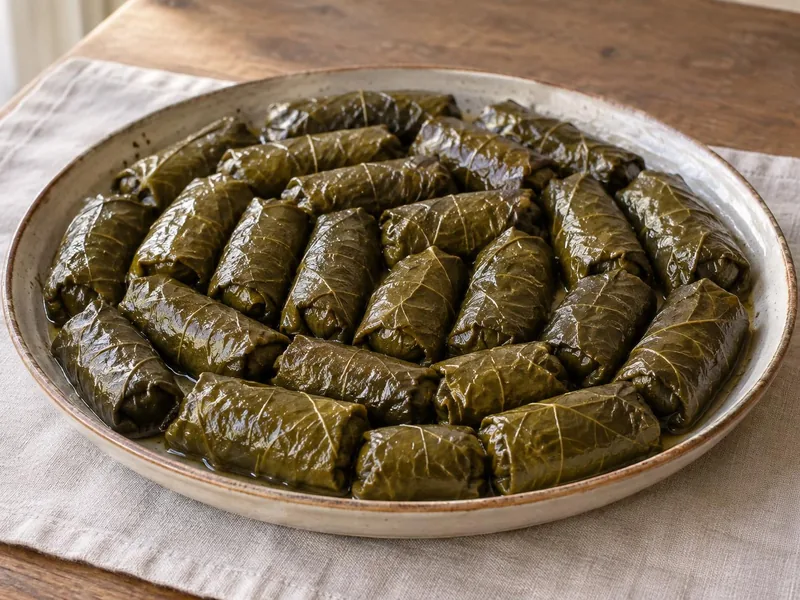
Stuffed Grape Leaves (Olive Oil Dolma)
Tender jarred grape leaves wrapped around a spiced rice, herb and pine nut filling, then simmered in olive oil and lemon until soft and glossy.
 AI-generated image
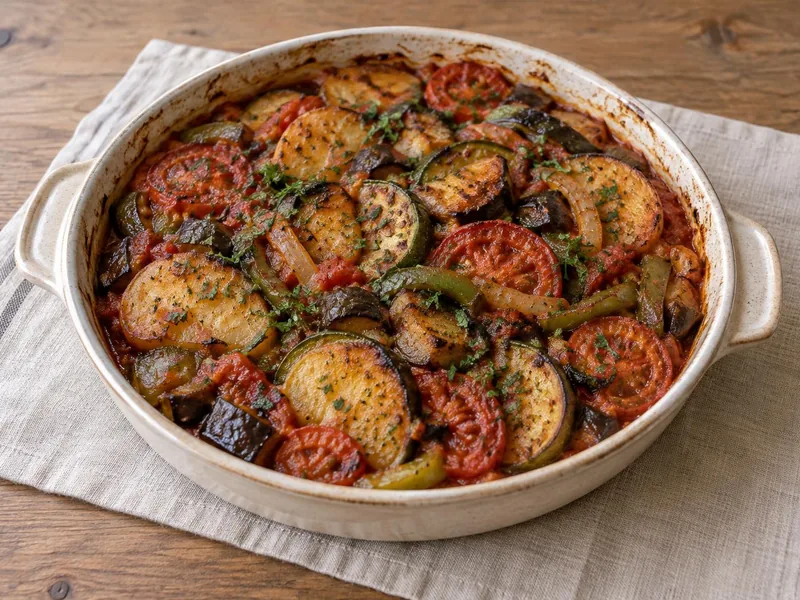
Briam (Greek Roasted Vegetables)
Potatoes, zucchini, eggplant, pepper and onion baked slowly in grated tomato and olive oil until soft, jammy and browned at the edges.
 AI-generated image
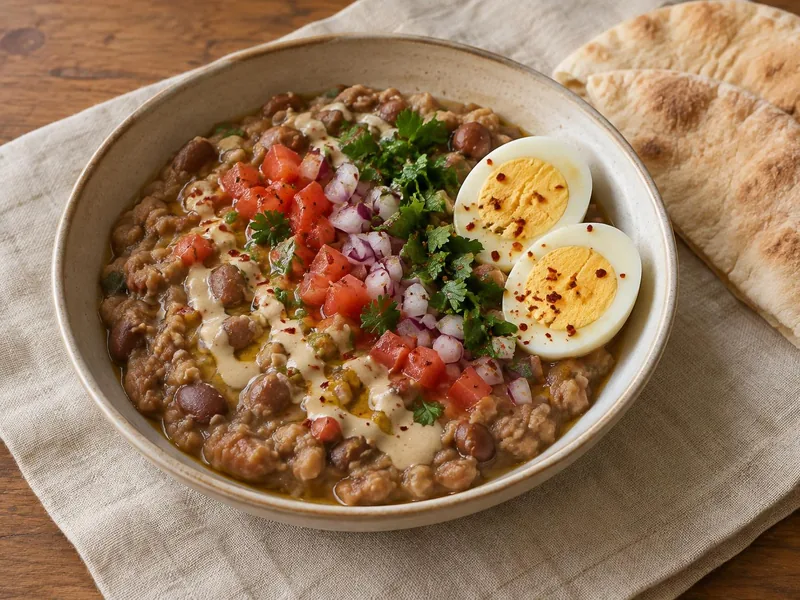
Ful Medames
Slow-simmered fava beans, roughly mashed with garlic, lemon and cumin, served warm with fresh tomato, parsley and good olive oil.