Green Beans in Olive Oil (Zeytinyağlı Taze Fasulye)
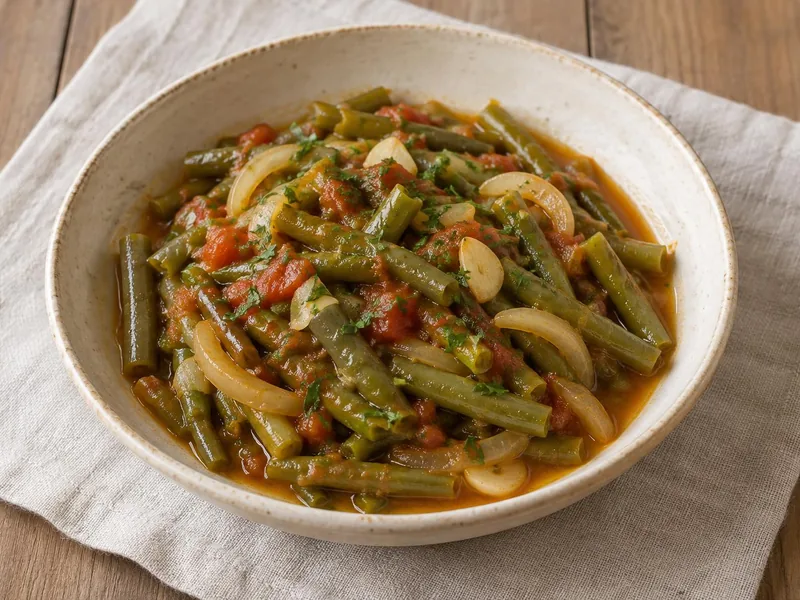
Green beans sweated, then braised slowly with onion, garlic and tomato in olive oil until silky, and served at room temperature with lemon.
 AI-generated image
- 700 ggreen beans
- 300 gripe tomatoes
- 150 gyellow onion
- 70 gextra virgin olive oil
- 30 glemon juice
Zeytinyağlı taze fasulye is a Turkish dish of green beans cooked slowly in olive oil with onion and tomato. It belongs to the family of zeytinyağlılar, vegetable dishes cooked in olive oil and usually served cool or at room temperature rather than hot.
It is commonly eaten as part of a meze spread or as a light main with bread, and it is a familiar dish in home cooking around Turkey and the wider eastern Mediterranean. Unlike green beans that are cooked briefly to stay crisp, these are cooked until fully soft, sweet and glossy.
This version builds flavor in stages. The onion is softened well in the oil, then the beans are sweated, covered, until they turn from bright green to olive green, and only then braised with grated fresh tomato and a little water. The sauce reduces to a light, oily coating, and a squeeze of lemon at the end brightens the finished dish, with chopped parsley as an optional garnish.
Preparation
- Step 0110 min
Trim the beans: snap off the stem ends, pull away any tough strings, and cut the beans into 4 to 5 cm (1.5 to 2 inch) pieces. Rinse and drain them.
- Step 0210 min
Slice the onion into thin half-moons and the garlic into thin slices. Grate the tomatoes on the large holes of a box grater down to the skin and discard the skins.
- Step 037 min
Warm the olive oil in a wide, heavy pot over medium heat. Add the onion and a pinch of the salt and cook, stirring often, for 6 to 8 minutes, until soft and translucent with only a little color.
- Step 041 min
Add the garlic and cook for 1 minute, until fragrant but not browned.
- Step 0510 min
Add the beans and stir for 1 to 2 minutes so every piece is coated in oil. Cover the pot and reduce the heat to medium-low, so the beans sizzle softly without browning or sticking. Sweat for 8 to 10 minutes, stirring occasionally and lowering the heat if anything starts to scorch, until the beans change from bright green to a dull olive green and have released some moisture.
- Step 063 min
Add the grated tomato, the remaining salt, the sugar and the water. Stir and bring to a gentle simmer.
- Step 0735 min
Reduce the heat to low so the liquid barely bubbles, cover with the lid and cook for 30 to 40 minutes, stirring gently every 10 minutes. The beans are done when they are completely tender, collapse slightly when pressed with a spoon, and have lost their squeaky, raw texture. If the pot looks dry before then, add about 3 tablespoons (50 g) of water.
- Step 083 min
Remove the lid and, if there is more than a few spoonfuls of thin liquid, simmer uncovered for 3 to 5 minutes until the sauce is reduced, glossy and oily. Taste and add salt if needed.
- Step 0930 min
Take the pot off the heat and let the beans cool in the pot until warm or at room temperature, about 30 minutes, which lets the flavors settle.
- Step 10
Serve warm or at room temperature with the lemon juice squeezed over, or with lemon wedges at the table, and scatter over the parsley if you like. Bread is an optional accompaniment for soaking up the oil; use gluten-free bread if serving the dish gluten-free.
- Step 11
Divide any leftovers among shallow covered containers and refrigerate them within 2 hours of cooking, or within 1 hour if the room is above 32 C (90 F). There is no need to wait until they are completely cool.
Kitchen notes
- Storage: shallow containers let the beans cool quickly in the refrigerator, so do not wait for them to reach room temperature first. Refrigerate within 2 hours of cooking at 4 C (40 F) or below and keep for up to 4 days. The flavor is often better the next day.
- Serving: this is traditionally eaten warm or at room temperature rather than piping hot. If you chill it, let it stand for 20 to 30 minutes before serving so the olive oil loosens, and count that time toward the 2-hour limit.
- Out-of-season tomatoes: classic versions use fresh tomatoes only. If your tomatoes are pale and watery, stir 15 g (1 tablespoon) tomato paste in with the garlic and cook it for 1 minute before adding the beans.
- Make ahead: the dish can be made a day in advance. Add the lemon and parsley just before serving so they stay fresh.
- Variations: add 1 diced potato (about 200 g) with the beans for a heartier dish, or a pinch of chili flakes with the garlic. A little chopped fresh dill instead of parsley is also common.
- Bean choice: flat Romano-type beans suit this dish especially well because they turn tender and silky, but regular green beans work well too. Frozen cut green beans can be used straight from the freezer, but reduce the water to 100 g, sweat them for only 5 minutes, and check the beans for tenderness after 20 to 25 minutes of covered cooking.
Diet and allergens
Suitable for: Vegan, Vegetarian, Gluten-free, Dairy-free, Nut-free.
Contains: none of the allergens we track (sesame, tree nuts, peanuts, milk, egg, gluten, soy, celery, mustard, fish, crustaceans, molluscs, lupin).
Labels come from the ingredient list by fixed rules. If you cook for someone with an allergy, check the labels of packaged ingredients such as stock, spice blends, tahini and bread, since brands differ. How labels work.
Frequently asked questions
Why are the green beans cooked so long?
This style aims for fully tender, silky beans that absorb the olive oil, onion and tomato flavors, not crisp-tender ones. They are ready when they yield easily and no longer squeak against your teeth.
Why sweat the beans before adding the tomato and water?
Cooking the beans covered in the oil first lets them soften and turn olive green before the acidic tomato goes in. This gives a deeper flavor and a silkier texture.
Can I use canned tomatoes?
Yes. Use 300 g of canned chopped tomatoes with their juice in place of the fresh grated tomatoes. You may need to simmer uncovered a few minutes longer at the end to reduce the sauce.
Is it served hot or cold?
It is usually served at room temperature or slightly warm, often as part of a meze spread or alongside bread. It can also be eaten cool from the refrigerator after standing briefly.
Can I use less olive oil?
You can reduce it somewhat, but the oil is part of the sauce and the traditional character of the dish. With much less, the beans may stick, so add a splash more water and watch the pot.
References and sources
- Nutrition: USDA FoodData Central records Green beans (flat Romano-type or regular) (FDC 2346400), Yellow onion (FDC 170000), Garlic (FDC 1104647), Extra virgin olive oil (FDC 171413), Ripe tomatoes (FDC 170457), Water (FDC 173647), Fine salt (FDC 173468), Granulated sugar (FDC 746784), Lemon juice (FDC 167747), Flat-leaf parsley (FDC 170416).
- Proportions: main ingredients and salt per serving were compared with the median of 4 published recipes for this dish. How we make recipes.
 AI-generated image
Leeks in Olive Oil (Zeytinyağlı Pırasa)
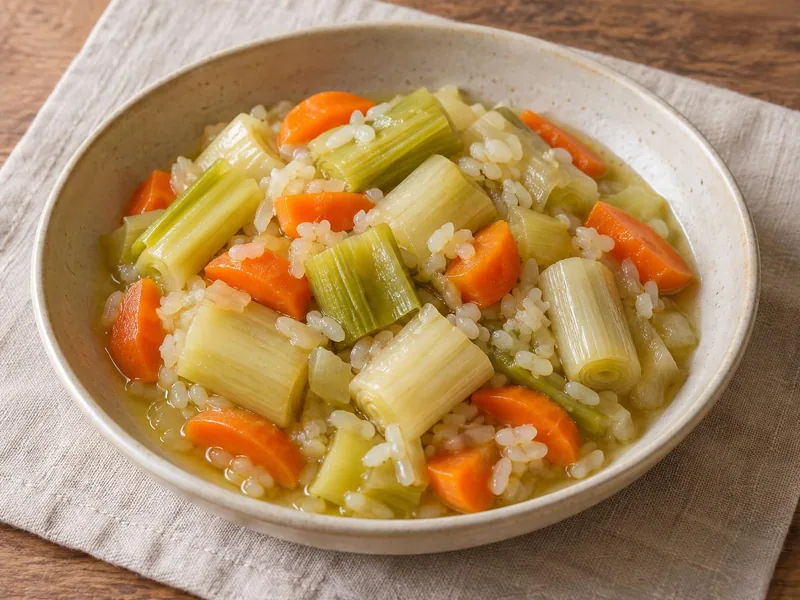
Tender leeks and carrots braised slowly in olive oil with a spoonful of rice, brightened with lemon and served warm or at room temperature.
 AI-generated image
Stuffed Grape Leaves (Olive Oil Dolma)
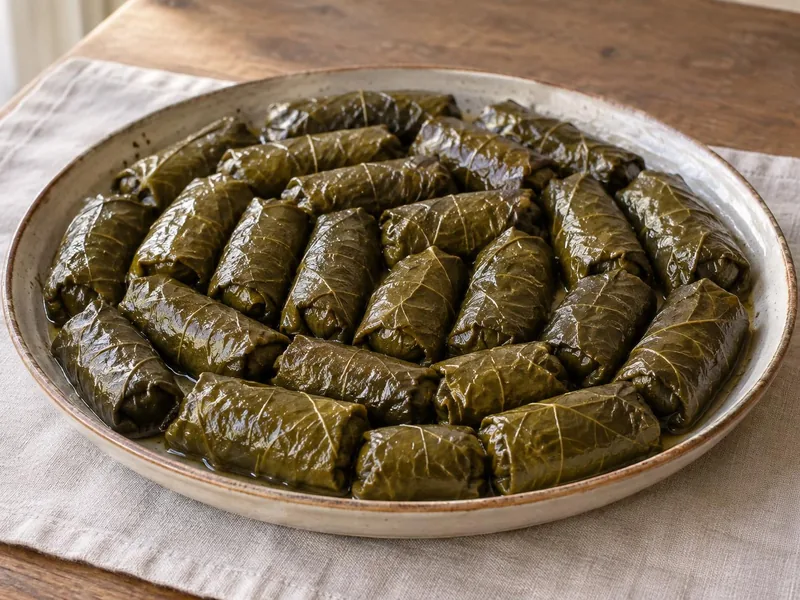
Tender jarred grape leaves wrapped around a spiced rice, herb and pine nut filling, then simmered in olive oil and lemon until soft and glossy.
 AI-generated image
Briam (Greek Roasted Vegetables)
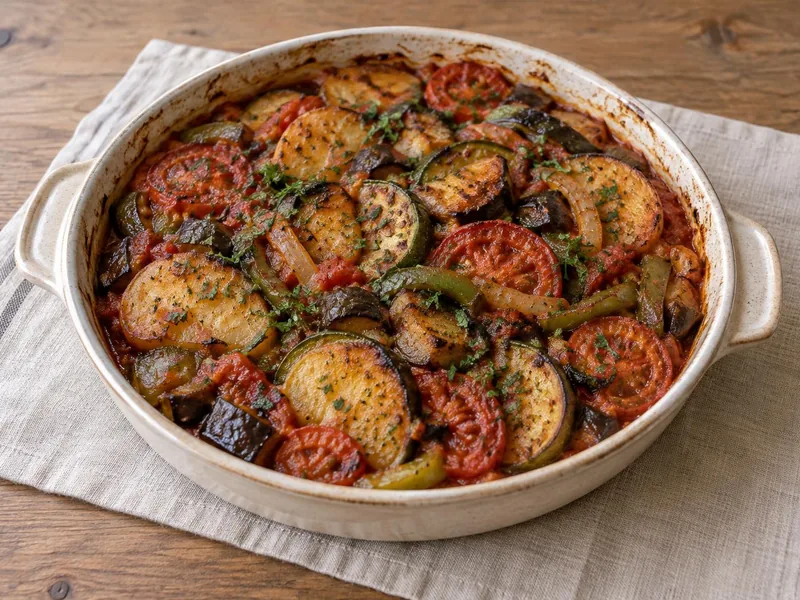
Potatoes, zucchini, eggplant, pepper and onion baked slowly in grated tomato and olive oil until soft, jammy and browned at the edges.