Semolina Halva
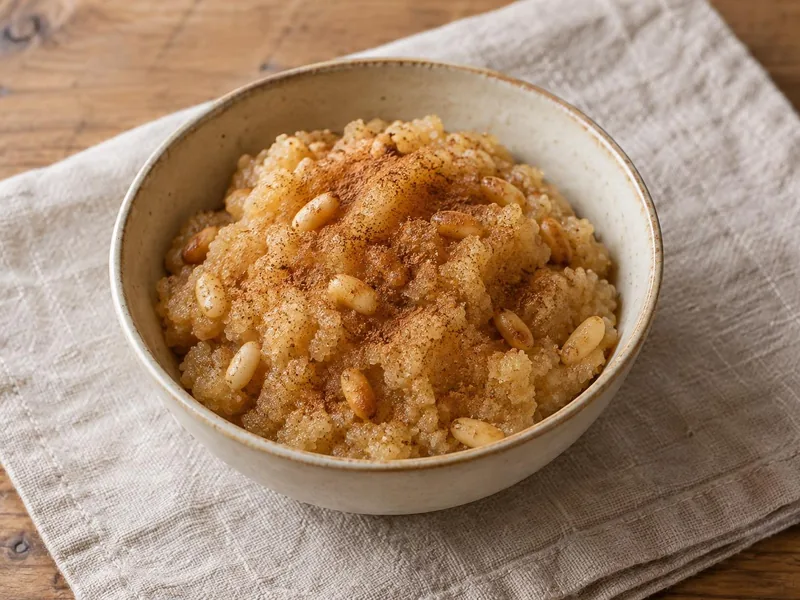
Golden toasted semolina, pine nuts and cinnamon make a soft, spoonable Turkish halva with olive oil and a simple hot syrup.
 AI-generated image
- 180 gfine semolina
- 180 ggranulated sugar
- 90 gmild olive oil
- 30 gpine nuts
- 1 gground cinnamon
İrmik helvası is a Turkish semolina sweet with a soft, spoonable consistency. Semolina is toasted with pine nuts, then cooked with sugar syrup until the grains swell and the mixture comes together. It is served warm or at room temperature, often in small portions after a meal or at shared gatherings.
This version uses olive oil and water instead of butter and milk. Removing the pine nuts once they are lightly golden prevents them from darkening too much while the semolina toasts. Adding the hot syrup gradually controls sputtering, and a full 10-minute covered rest helps the grains finish tender.
Preparation
- Step 014 min
Put the water, sugar and salt in the small saucepan. Heat over medium-low, stirring, for 3 to 4 minutes, until the sugar has completely dissolved and the syrup is steaming; there is no need to boil it. Cover and keep warm over the lowest heat.
- Step 022 min
Warm the olive oil in the large saucepan over medium heat. Add the pine nuts and cook, stirring constantly, for 1 to 2 minutes, just until they turn pale golden. Immediately transfer them to the small plate with a slotted spoon, leaving the oil in the pan.
- Step 0312 min
Add the semolina to the oil, reduce the heat to medium-low and cook for 10 to 12 minutes, stirring constantly and scraping the base. Continue until the semolina is evenly golden with no pale patches and smells nutty, but not scorched.
- Step 04
Return the pine nuts to the pan and stir them through the toasted semolina until evenly distributed.
- Step 052 min
Take the pan off the heat. Standing back, slowly pour in about one third of the hot syrup and stir until the vigorous steaming subsides. Add the remaining syrup in two additions, stirring well after each one; the mixture will sputter and look loose at first.
- Step 066 min
Return the pan to low heat and cook for 4 to 6 minutes, stirring often, until the semolina has absorbed the syrup, no liquid pools around the edges and a spoon drawn through the centre leaves a brief trail.
- Step 0710 min
Cover the pan, remove it from the heat and leave it to rest for 10 minutes. Uncover and fluff with a fork; the grains should be tender and the halva should hold a soft mound without being dry or stiff.
- Step 08
Spoon into small bowls, or pack lightly into a cup and turn out onto plates. Dust with the cinnamon and serve warm or at room temperature.
Kitchen notes
- Cool leftovers and refrigerate in a covered container at 4 C / 40 F or below within 2 hours of cooking. Keep for up to 3 days; the halva will firm up as it chills.
- To reheat, cover a portion and warm it in the microwave in short bursts, fluffing with a fork between bursts, until piping hot throughout. Do not leave cooked halva at room temperature for more than 2 hours.
- The halva can be made a day ahead and refrigerated promptly. For a softer serving consistency without reheating, let only the portions you need stand at room temperature for up to 20 minutes, then fluff with a fork.
- For individual shaped servings, pack the warm halva lightly into a small bowl or cup and turn it out onto a plate. Omit the pine nuts if preferred, keeping all other quantities the same.
Diet and allergens
Suitable for: Vegan, Vegetarian, Dairy-free.
Contains: tree nuts, gluten (wheat).
Labels come from the ingredient list by fixed rules. If you cook for someone with an allergy, check the labels of packaged ingredients such as stock, spice blends, tahini and bread, since brands differ. How labels work.
Frequently asked questions
What should the toasted semolina look like?
It should be evenly golden, with no pale patches, and have a nutty aroma. Colour and aroma are better guides than the clock; lower the heat if it begins to darken too quickly or unevenly.
Why remove the pine nuts before toasting the semolina?
Pine nuts colour much faster than semolina. Taking them out while pale golden and returning them just before the syrup is added helps prevent them from becoming too dark or bitter.
Why is my halva grainy?
It may need a longer covered rest for the grains to finish softening. If liquid is still pooling after the rest, return the pan to low heat and stir for 1 to 2 minutes, then cover and rest it again.
Why is the syrup added gradually?
Hot syrup steams vigorously when it meets the hot semolina and oil. Taking the pan off the heat and adding the syrup in three additions controls sputtering and makes the mixture easier to stir smooth.
Can I make semolina halva without pine nuts?
Yes. Leave them out and add the semolina directly to the warmed olive oil, then follow the same method. The cinnamon can also be omitted.
References and sources
- Nutrition: USDA FoodData Central records Fine semolina (FDC 2003589), Mild olive oil (FDC 171413), Pine nuts (FDC 170591), Water (FDC 173647), Granulated sugar (FDC 746784), Fine salt (FDC 173468), Ground cinnamon (FDC 171320).
- Proportions: main ingredients and salt per serving were compared with the median of 6 published recipes for this dish. How we make recipes.
 AI-generated image
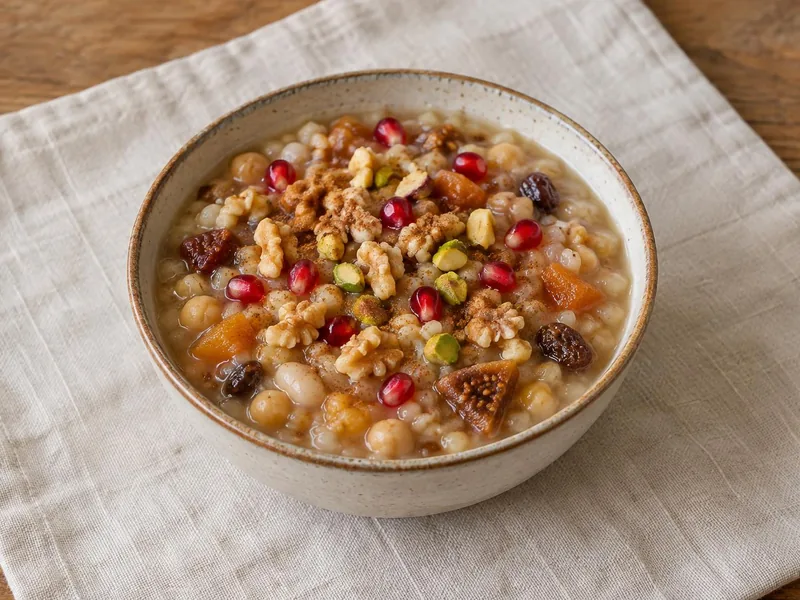
Aşure (Noah's Pudding)
A fragrant Turkish pudding of wheat, legumes and dried fruit, chilled until softly spoonable and finished with pomegranate and nuts.
 AI-generated image
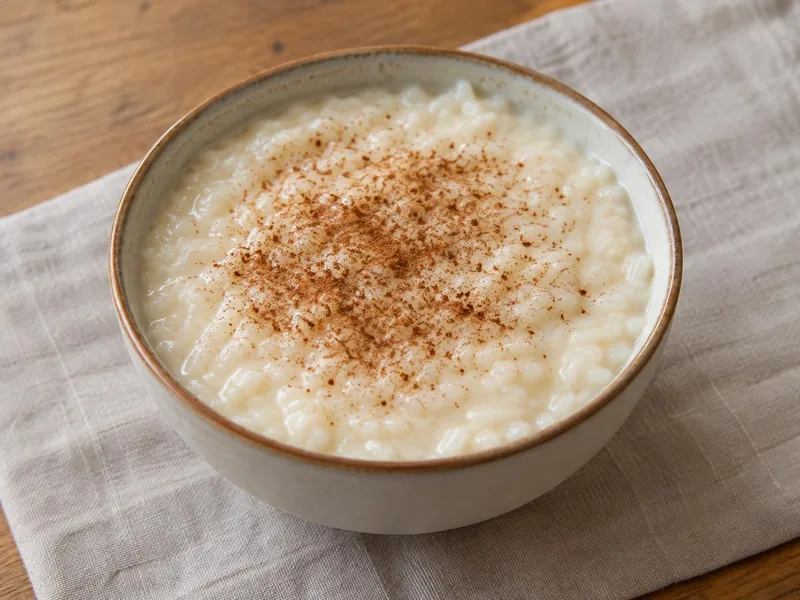
Turkish Rice Pudding (Sütlaç)
A creamy stovetop sütlaç with tender short-grain rice, whole milk and a light cinnamon finish.
 AI-generated image
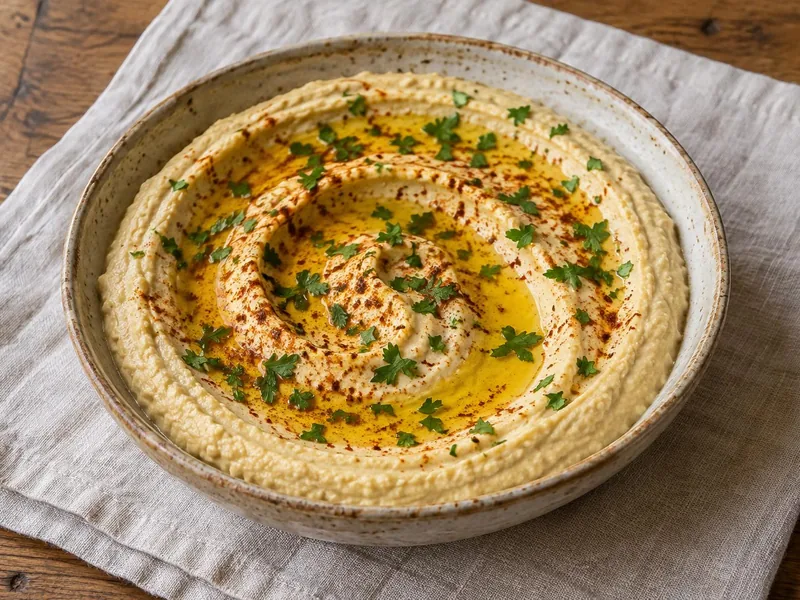
Hummus
Soft-cooked chickpeas, a tahini and lemon base whipped with ice water, and a few minutes in the food processor give a silky, spoonable hummus.