Aşure (Noah's Pudding)
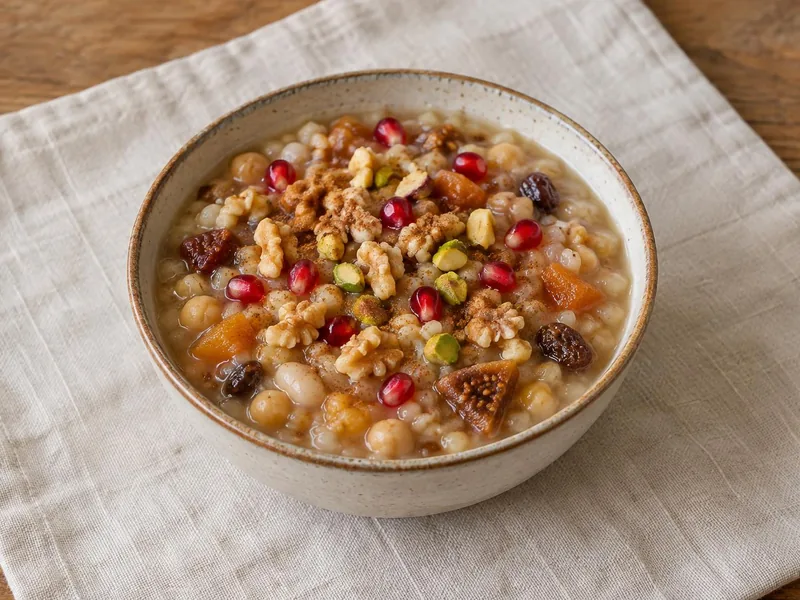
A fragrant Turkish pudding of wheat, legumes and dried fruit, chilled until softly spoonable and finished with pomegranate and nuts.
 AI-generated image
- 250 ggranulated sugar
- 200 gwheat berries
- 120 gpomegranate arils
- 100 gdried chickpeas
- 100 gdried white beans
Aşure is a Turkish sweet pudding with wheat, chickpeas, white beans and dried fruit in every spoonful. It is cooked in home kitchens and shared in small bowls, particularly during Muharram, though it is not limited to one occasion.
Aşurelik buğday or soft white wheat gives the tenderest texture, and cooking the wheat and legumes separately lets each one soften without crushing the beans. A small amount of short-grain rice cooks with the wheat, giving the liquid enough body to suspend the fruit and legumes.
This version uses water rather than milk, with orange zest and cinnamon for fragrance. It goes into the bowls while still loose, then chills to a soft, spoonable consistency before the pomegranate and nuts are added.
Preparation
- Step 01480 min
The day before, put the wheat berries, chickpeas and white beans in separate bowls. Add 800 g water to the wheat and 600 g water to each bowl of legumes. Cover and refrigerate at 4 C (40 F) for 8 to 12 hours.
- Step 025 min
Drain each bowl, discard the soaking water and rinse the wheat and legumes under cold running water. Keep them separate.
- Step 035 min
Put the chickpeas in one medium saucepan, the wheat in the large pot and the beans in the second medium saucepan. Add 1000 g water to the chickpeas, 1400 g to the wheat and 1200 g to the beans. Reserve 1400 g water for the pudding and 400 g for topping up the pans.
- Step 0410 min
Bring all three pans to a boil over high heat, skimming any foam from the legumes. Reduce the heat under the wheat and chickpeas to maintain a gentle simmer and partly cover those pans. Keep the beans at a vigorous boil.
- Step 05120 min
Boil the beans vigorously in their fresh cooking water for a full 30 minutes, keeping them submerged; do not shorten this stage, especially for cannellini or other white kidney beans. Then reduce the beans to a gentle simmer and partly cover. Top up any pan as needed with reserved water that you have first brought to a boil. Start checking the beans after 15 minutes of gentle simmering, and the chickpeas and wheat after 60 minutes of gentle simmering. The beans are ready when completely tender and creamy through the center, the chickpeas crush easily between your fingers, and the wheat has no hard center and some grains have split. Allow 50 to 75 minutes total for the beans, including the vigorous boil, and 60 to 90 minutes total for the chickpeas and aşurelik buğday or soft white wheat. Unpearled hard red winter wheat berries can need 105 to 120 minutes of gentle simmering.
- Step 0615 min
While the pans simmer, cut the apricots and figs into 1 cm pieces, finely grate the orange zest, and chop the walnuts and pistachios.
- Step 075 min
Drain each pan as its contents become tender and discard the cooking water. Do not rinse the cooked wheat or legumes, and keep the wheat separate from the chickpeas and beans.
- Step 0825 min
Return the drained wheat to the large pot and add the rice and reserved 1400 g water. Bring to a boil, then simmer uncovered over low heat for 20 to 25 minutes, stirring occasionally, until the rice is completely soft and the liquid looks lightly starchy.
- Step 0920 min
Stir in the chickpeas, beans, apricots, figs, raisins, sugar and salt. Simmer gently for 15 to 20 minutes, stirring often and scraping the base of the pot, until the dried fruit is plump and the mixture resembles loose porridge.
- Step 102 min
Stir in the orange zest and 2 g of the cinnamon and cook for 2 minutes more. A spoonful should fall slowly back into the pot; stop while the pudding is still looser than you want it after chilling.
- Step 1130 min
Divide the pudding among 12 small bowls and leave at room temperature until lukewarm, about 30 minutes. Refrigerate within 2 hours of removing the pot from the heat.
- Step 12120 min
Cover and refrigerate at 4 C (40 F) or below for at least 2 hours, until cold and softly set but still spoonable.
- Step 135 min
Just before serving, divide the walnuts, pistachios, pomegranate arils and remaining 2 g cinnamon among the bowls.
Kitchen notes
- Total time is rounded and assumes the minimum 8 hour soak, the longest 120 minute wheat cooking time and 2 hours of chilling. The 15 minutes of chopping happen while the pans simmer. Aşurelik buğday or soft white wheat often finishes sooner, while older dried legumes can take longer; cook them until fully tender.
- Refrigerate leftovers in covered containers within 2 hours of cooking and use within 3 days. Do not leave the pudding at room temperature for more than 2 hours in total.
- Store the pomegranate and chopped nuts separately and garnish only the bowls you plan to serve, so the toppings stay fresh and crisp.
- To work ahead, cook and drain the wheat and legumes up to 1 day in advance. Cool them in shallow containers, cover and refrigerate within 2 hours.
- Pomegranate is seasonal. When it is unavailable, simply omit it and finish the bowls with the nuts and cinnamon.
Diet and allergens
Suitable for: Vegan, Vegetarian, Dairy-free.
Contains: tree nuts, gluten (wheat).
Labels come from the ingredient list by fixed rules. If you cook for someone with an allergy, check the labels of packaged ingredients such as stock, spice blends, tahini and bread, since brands differ. How labels work.
Frequently asked questions
Which wheat works best for aşure?
Aşurelik buğday, the husked or peeled wheat sold for this pudding, or soft white wheat berries gives the tenderest result. Unpearled hard red winter wheat berries also work, but allow 105 to 120 minutes of simmering and check that the centers are completely soft.
Why cook the wheat and legumes separately?
They soften at different rates. Separate pans let you drain each one when tender, keeping the white beans intact while the wheat and chickpeas finish cooking.
How thick should aşure be before chilling?
It should resemble loose porridge, and a spoonful should fall slowly back into the pot. The wheat and rice continue absorbing liquid as it cools, so do not reduce it until stiff.
Can I change the dried fruit?
Yes. Keep the combined weight of apricots, figs and raisins at 240 g, and cut any larger fruit into small pieces so it distributes evenly through the bowls.
Can I serve aşure warm?
Yes. Let it stand for 10 minutes and serve it lukewarm, though it will be looser than the chilled version. Refrigerate anything not being served within 2 hours of cooking.
References and sources
- Nutrition: USDA FoodData Central records Water (FDC 173647), Wheat berries (FDC 169720), Dried chickpeas (FDC 173756), Dried white beans (FDC 175202), Short-grain white rice (FDC 168931), Dried apricots (FDC 173941), Dried figs (FDC 746768), Raisins (FDC 168165), Granulated sugar (FDC 746784), Fine salt (FDC 173468), Orange zest (FDC 169103), Ground cinnamon (FDC 171320), Walnut halves (FDC 170187), Shelled pistachios (FDC 2515379), Pomegranate arils (FDC 169134).
- Proportions: main ingredients and salt per serving were compared with the median of 5 published recipes for this dish. How we make recipes.
 AI-generated image
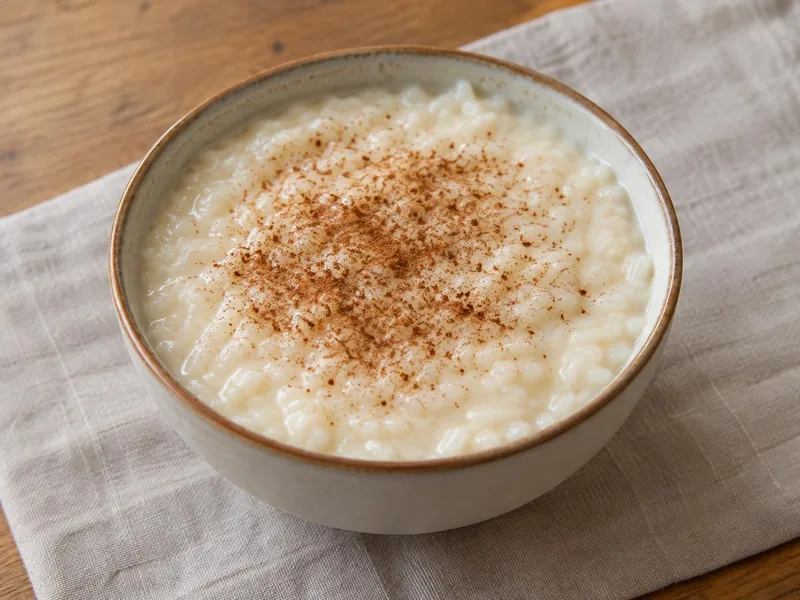
Turkish Rice Pudding (Sütlaç)
A creamy stovetop sütlaç with tender short-grain rice, whole milk and a light cinnamon finish.
 AI-generated image
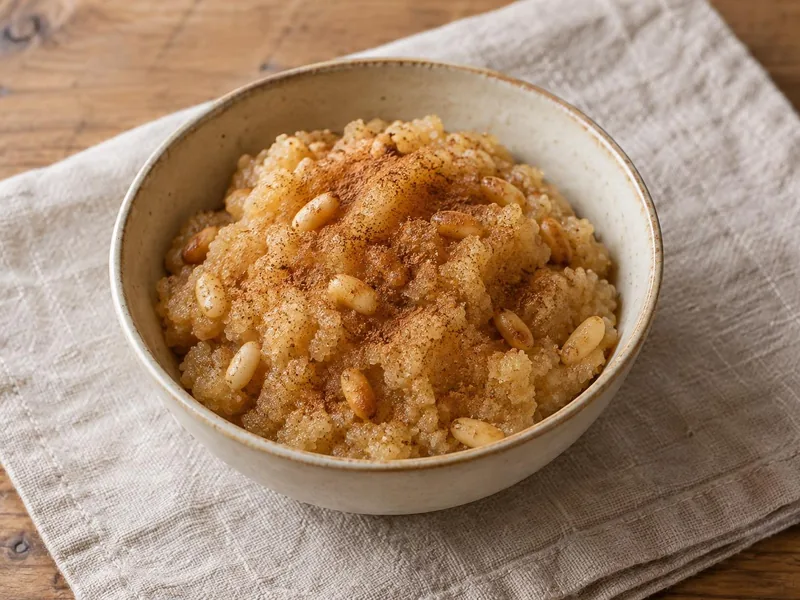
Semolina Halva
Golden toasted semolina, pine nuts and cinnamon make a soft, spoonable Turkish halva with olive oil and a simple hot syrup.
 AI-generated image
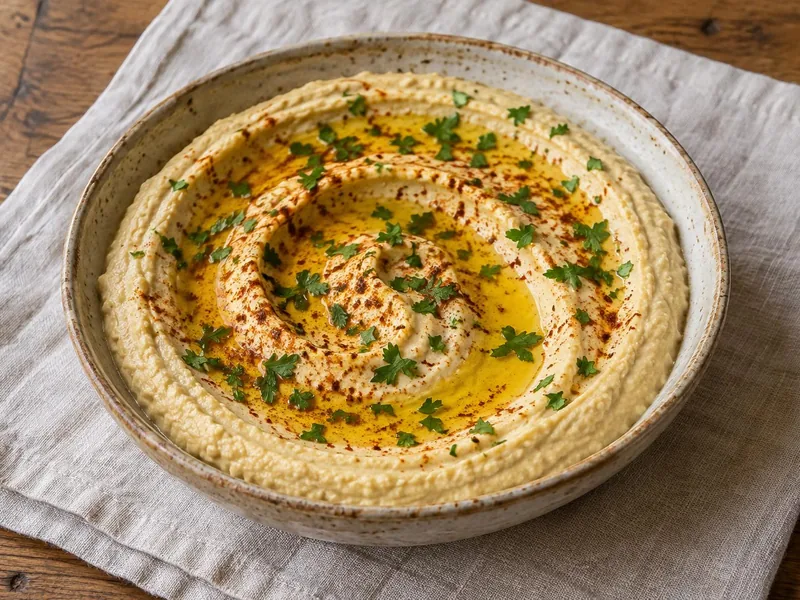
Hummus
Soft-cooked chickpeas, a tahini and lemon base whipped with ice water, and a few minutes in the food processor give a silky, spoonable hummus.