Bulgur: Fine vs Coarse, How to Cook It and What to Substitute
Fine bulgur is usually soaked and coarse bulgur is usually simmered, so matching the grade to the method is the key to good texture.
- Fine bulgur is soaked in liquid, while coarse bulgur is simmered. [2][3]
- Coarse bulgur ratios range from 1½ to 2 cups of liquid per cup, so use enough to hydrate the center of the grain. [1][4][5]
- Use cool or room-temperature liquid for fine bulgur to avoid mushiness. [2][4]
- Coarse bulgur can be ground to fine in a spice grinder. [3][6]
- Medium bulgur works as a close rice substitute by volume. [4]
What bulgur is and how the grades differ
Bulgur is made from par-cooked whole wheat grains that are dried and then cracked. [2] It has a nutty flavor and a chewy texture. [2] Because of the par-cooking, it takes less time to cook than other whole grains. [2] It is sold in four grades, from fine to coarse. [3]
Fine bulgur makes a light and fluffy pilaf texture, while medium to coarse bulgurs are more substantial, with a springy bite. [2] Fine bulgur is typically used for tabbouleh and kibbeh and hydrates quickly in cool to warm water. [3] Larger-grained bulgur needs a quick simmer to cook through, which makes it suited to hearty pilafs or stews. [3]
Medium bulgur is the most versatile grind, suitable for pilaf and as a rice substitute. [4] Coarse bulgur is the grade for bulgur pilaf, stuffed peppers and meaty one-pot dishes. [5] If you have a choice at the shop, pick the grade to suit the recipe. [2]
Cooking coarse bulgur on the hob (stovetop)
Sources give slightly different liquid ratios for coarse bulgur, so treat the figures below as a range. One source uses 1½ cups of water or stock per cup of coarse bulgur. [1] Another uses 1 cup of bulgur to 1½ cups of water in a tomato pilaf. [3] A third gives a ratio of 1:1.75 for pilaf-style coarse bulgur. [4] A fourth uses 1 cup of bulgur to 2 cups of hot water or stock. [5]
Too little liquid can leave a hard, floury core in the middle of large grains, and extra cooking time will not fix that. [4] If your coarse bulgur still tastes hard in the center, the ratio is the likely cause. [4]
The boil method works like this:
- Rinse the bulgur under cold running water. [1]
- Bring the water or stock to the boil and add the bulgur. [1]
- Stir and cover with a lid. [1]
- Simmer for 20 minutes for coarse bulgur, or 15 minutes for cracked bulgur. [1]
- Drain away any remaining water and let the bulgur stand for 10 minutes. [1]
- Separate the grains with a fork. [1]
Absorption method and pilaf
For the absorption method, bring the liquid to the boil, put the lid on, then take the pan off the heat. [1] Leave it to sit for 20 minutes, with coarse bulgur needing a little longer. [1] Drain off any remaining liquid and fluff the grains with a fork. [1]
For a pilaf, one classic method is to saute a chopped onion in butter or oil and stir in a spoon of pepper or tomato paste. [5] Add 1 cup of bulgur and 2 cups of hot water or stock and season. [5] Then simmer covered on the lowest heat for 12 to 15 minutes and rest for 10. [5] In a tomato pilaf with 1 cup of coarse bulgur and 1½ cups of water, the simmer is 12 to 15 minutes once the liquid has boiled. [3] That version stands covered for 5 minutes afterwards. [3]
Toasting adds flavor. You can stir bulgur in a dry skillet over medium heat for about 5 minutes, until it smells toasty and picks up color. [3] Another approach is to toast it in hot fat for just 60 to 90 seconds before adding liquid. [4]
Whichever method you use, taste a few grains to see if the texture suits you. [2] Afterwards, drain any excess water, fluff the grain and let it rest covered so it hydrates fully. [2]
Preparing fine bulgur without boiling
Fine bulgur is never boiled in one guide, and finely ground bulgur can be prepared simply by soaking in liquid. [5][2] To do this, put the grains in a bowl, cover them with your chosen liquid and drain after about 10 minutes. [2] Another source soaks fine bulgur for tabbouleh in an equal amount of cold water or lemon juice for 20 to 30 minutes. [4]
Soaking instead of boiling keeps the grains distinct and firm, which is the texture tabbouleh needs. [4] Fine bulgur softens with room-temperature liquid, and hot water can make it too mushy. [2] Boiling water on fine bulgur for no-cook tabbouleh also makes it mushy, so cold or room-temperature liquid is the better choice. [4] One source does pour hot water over extra fine bulgur at a 1:1 ratio and covers it for 15 minutes for kisir or tabbouleh-style salads. [5]
Because soaking needs no heat, you can use flavorful liquids that might not heat well, such as juices. [2] Chicken or vegetable broth suits a savory salad with nuts and dried fruits. [2] For tabouli, you can save the water from your tomatoes and cucumbers and add it to lemon juice to soak the grain. [2] Another approach is to deliberately underhydrate fine bulgur in tabbouleh so it absorbs the juices of chopped tomatoes. [6]
Fine bulgur can also be softened in the liquid of other ingredients. In one kibbeh recipe, ½ cup of fine bulgur is stirred with grated onion and 2 teaspoons of salt and set aside for 10 minutes. [3] During that time the bulgur absorbs the onion liquid and becomes slightly softened. [3]
If you only have coarse bulgur
Larger ground bulgur can be soaked, but the liquid should be hot and it can take up to an hour. [2] To speed things up, boil coarse bulgur for 10 or 15 minutes instead of soaking it. [2]
For a recipe that needs fine bulgur, such as tabbouleh, you can grind coarse bulgur down. [3] Pulse it in a spice grinder in 1-second bursts until it is light and fluffy, about 6 to 10 pulses in total. [3][6] Shake the grinder between pulses to keep the grind even. [3]
Substitutes
Medium bulgur is a very close substitute for rice by volume in pilafs and grain bowls, and it cooks faster. [4] More generally, bulgur can be used anywhere you might use rice, with a little butter or olive oil and generous seasoning of salt and coarse pepper. [3]
If a recipe calls for bulgur and you only have cracked wheat, expect to roughly double the cooking time and add more water. [4] Coarse bulgur can stand in for fine once it is ground. [3][6] Because bulgur is pre-cooked, it prepares faster than rice. [5]
One source recommends keeping both fine and coarse bulgur in the pantry. [6] Store bags airtight and away from light, and bulgur keeps for a year or more. [5]
| Grade | Typical use | Preparation |
|---|---|---|
| Fine | Tabbouleh and kibbeh [3] | Soak in liquid rather than boil [2][5] |
| Medium | Pilaf and as a rice substitute [4] | Simmer covered for 12 to 15 minutes, then rest covered for 5 to 10 minutes [4] |
| Coarse | Pilaf, stuffed peppers and meaty one-pot dishes [5] | Simmer in measured liquid until absorbed, or boil and drain [1][3] |
Frequently asked questions
Do I need to rinse bulgur before cooking?
For the boil method, one source says to rinse the bulgur under cold running water before cooking. [1]
Can I use hot water to soak fine bulgur?
Sources disagree. Two warn that hot or boiling water can make fine bulgur mushy, and they recommend cold or room-temperature liquid. [2][4] One source uses hot water at a 1:1 ratio, covered for 15 minutes, for kisir or tabbouleh-style salads. [5]
How do I know when bulgur is done?
Taste a few grains to see if the texture suits you. [2] After cooking, drain excess water, fluff the grain and let it rest covered. [2]
Can I make tabbouleh with coarse bulgur?
You can grind coarse bulgur down to fine in a spice grinder with about 6 to 10 one-second pulses. [3][6]
How long does dry bulgur keep?
If you store the bags airtight and away from light, bulgur keeps for a year or more. [5]
Sources
- How to cook bulgur wheat (bbc.co.uk)
- The Crucial Step You Should Never Skip When Making Bulgur Salad - Tasting Table - The Crucial Step You Should Never Skip (tastingtable.com)
- How to Cook Bulgur (and What to Make with It) | Christopher Kimball’s Milk Street | Recipes, TV and Cooking Tips (prod.177milkstreet.com)
- How to Cook Bulgur: Coarse, Fine, and No-Cook Methods (mycookingcalendar.com)
- Duru Bulgur Guide: Types & How to Cook Each (turkishonlinemarket.co.uk)
- Why You Should Make Big Batches of Bulgur Right Now (and What to Make with It) (archive.177milkstreet.com)
Recipes that use this
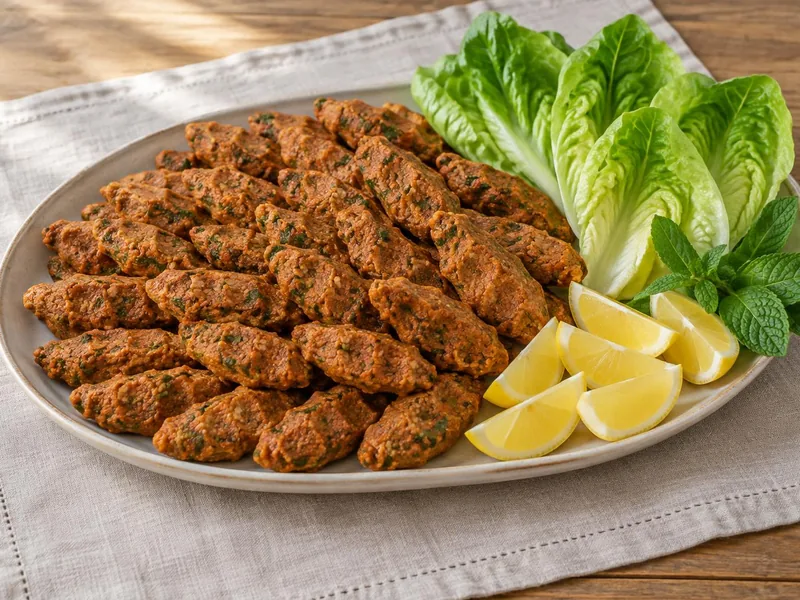 AI-generated image
Çiğ Köfte (Meatless Bulgur Köfte)
Fine bulgur softened in just-boiled water is kneaded with pepper paste, smoky isot pepper, onion and pomegranate molasses, then squeezed into small pieces to wrap in lettuce with lemon.
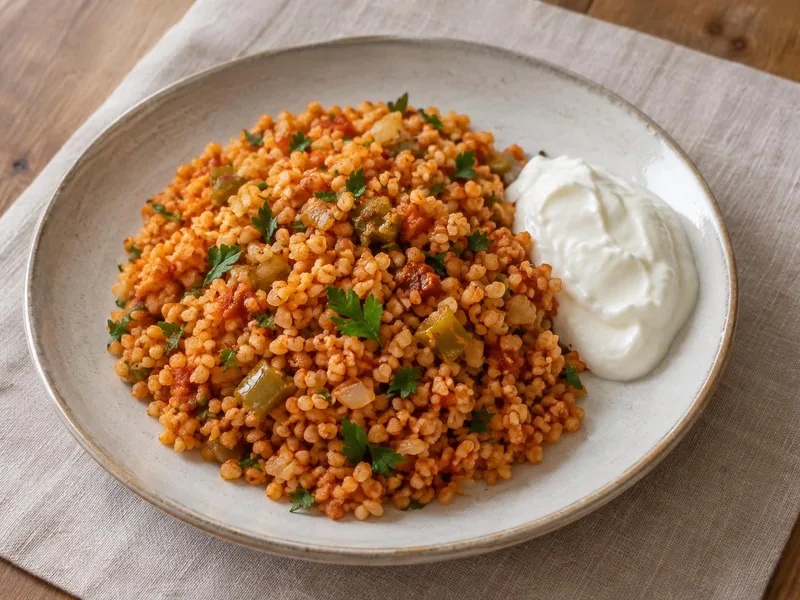 AI-generated image
Bulgur Pilaf
A one-pot Turkish bulgur pilavı, built on softened onion, pepper and tomato, with fluffy grains that stay separate.
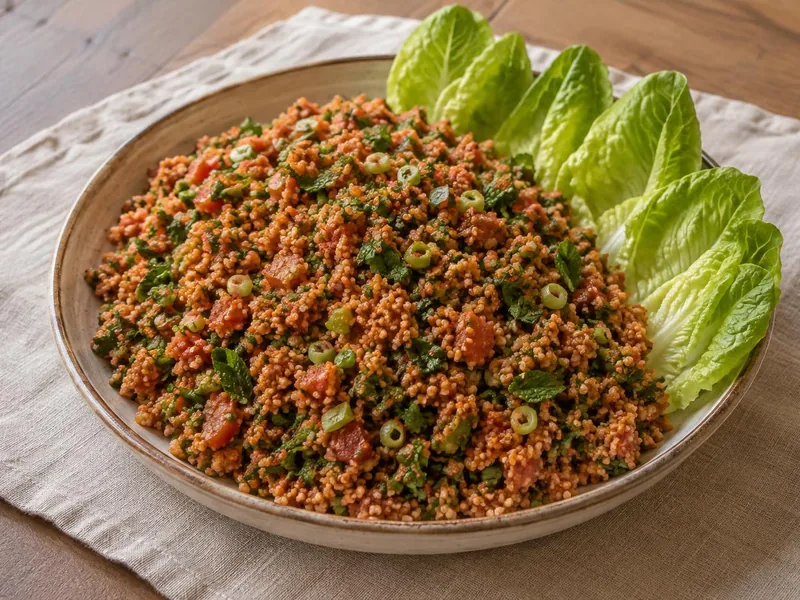 AI-generated image
Kısır (Turkish Bulgur Salad)
Fine bulgur is steeped in tomato and pepper paste, then tossed with olive oil, lemon, pomegranate molasses and plenty of fresh herbs.