Simit (Turkish Sesame Bread Rings)
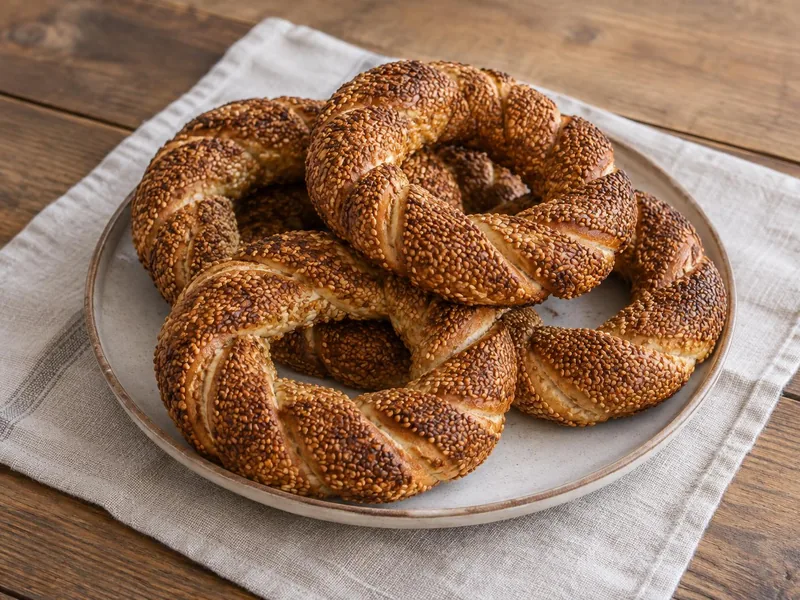
Crisp on the outside and light within, these twisted Turkish bread rings are dipped in diluted grape molasses and coated generously with toasted sesame.
 AI-generated image
- 500 gbread flour
- 150 gsesame seeds
- 60 ggrape molasses
- 30 golive oil
- 10 ggranulated sugar
Simit is a ring-shaped bread with a crisp sesame crust and a light, slightly chewy crumb. In Turkey it is sold by bakeries and street vendors and eaten at breakfast, with tea, or as a snack.
This version uses a simple bread flour dough and a coating of diluted grape molasses, known as pekmez. The coating helps the sesame adhere and gives the baked rings their deep golden color.
Toasting the seeds first builds flavor, while shaping the dough into twisted ropes creates the familiar look without special equipment. The rings are baked, not boiled, until firm and crisp.
Preparation
- Step 017 min
Toast the sesame seeds in a large dry frying pan over medium heat for 5 to 7 minutes, stirring often, until evenly golden and fragrant. Immediately spread them on a wide plate and leave to cool completely.
- Step 025 min
Stir the flour, yeast, sugar and salt together in a large bowl or the bowl of a stand mixer. Add the lukewarm water and olive oil, then mix until no dry flour remains.
- Step 0312 min
Knead with the dough hook on low speed for 7 to 8 minutes, or by hand on a clean work surface for 10 to 12 minutes. The dough is ready when it is smooth, elastic and only slightly tacky, and pulls away cleanly from the bowl or work surface.
- Step 0460 min
Shape the dough into a ball, return it to the bowl and cover. Leave at room temperature for 60 to 75 minutes, until doubled in size; a lightly pressed fingertip should leave a dent that slowly fills partway in.
- Step 0515 min
Line two large baking trays with baking parchment. Divide the dough into 8 equal pieces, about 107 g each, and shape each into a smooth ball. Cover and let rest for 10 minutes so the dough relaxes and becomes easier to roll.
- Step 0612 min
Working with one ball at a time and keeping the rest covered, roll it into an even rope about 60 cm (24 in) long. Fold the rope in half and twist the two strands around each other. Shape the twisted rope into a ring about 14 cm (5 1/2 in) across, pinch the join firmly and tuck the seam underneath. Repeat with the remaining dough.
- Step 075 min
Heat the oven to 220 C (425 F), or 200 C (400 F) fan, with racks in the upper and lower thirds. In a wide shallow bowl, whisk the grape molasses with the coating water until completely smooth.
- Step 088 min
Supporting one ring with both hands, dip it into the molasses mixture and turn to coat both sides. Hold it above the bowl for a few seconds to drain, then press both sides firmly into the cooled sesame seeds. Place on a prepared tray and repeat, arranging 4 rings on each tray with space between them.
- Step 0915 min
Leave the rings uncovered at room temperature for 15 minutes, until slightly puffy; they do not need to double.
- Step 1020 min
Bake for 16 to 20 minutes, swapping the trays and turning them around halfway through. The simit are done when they are deep golden brown, feel firm and sound hollow when tapped on the underside; remove either tray earlier if it is ready.
- Step 1115 min
Transfer the simit to a wire rack and cool for at least 15 minutes before serving. The crust will become crisper as steam escapes.
Kitchen notes
- Let the baked simit cool on a rack, then pack them for storage within 2 hours of baking. Store in an airtight container at room temperature for up to 2 days; the crust will soften as they stand.
- To refresh, bake on a tray at 180 C (350 F) for 5 to 7 minutes, until the crust is crisp and the centers are warm. For longer storage, freeze cooled simit in a sealed bag for up to 2 months, then thaw at room temperature before refreshing.
- The dough can rise in the refrigerator for up to 18 hours after kneading. If it has not doubled when you remove it, leave it covered at room temperature until it has, then divide and shape.
- Weighing the dough pieces keeps the rings the same size so they bake evenly. Keep unused pieces covered while shaping to prevent dry patches that can make the ropes tear.
Diet and allergens
Suitable for: Vegan, Vegetarian, Dairy-free, Nut-free.
Contains: sesame, gluten (wheat).
Labels come from the ingredient list by fixed rules. If you cook for someone with an allergy, check the labels of packaged ingredients such as stock, spice blends, tahini and bread, since brands differ. How labels work.
Frequently asked questions
Is simit boiled like a bagel?
No. The shaped rings are dipped in diluted grape molasses, coated with sesame and baked. This gives them a crisp, fragrant crust and a lighter crumb than a typical bagel.
Can I make simit without pekmez?
Yes, although grape molasses gives the most characteristic flavor and color. In the US, mild unsulphured molasses works; in the UK, date syrup is a milder option. Use 60 g of either and mix it with the 120 g coating water.
Why did my simit open while baking?
The join may not have been sealed firmly enough, or the dough surface may have become dry. Keep unused pieces covered, avoid adding much flour while rolling, and pinch the seam well before tucking it underneath.
What should I serve with simit?
Try sliced tomatoes, cucumber, olives and fresh herbs, or serve it with tahini and a little grape molasses. It is also good on its own with tea.
References and sources
- Nutrition: USDA FoodData Central records Bread flour (FDC 168896), Lukewarm water (FDC 173647), Instant yeast (FDC 175043), Granulated sugar (FDC 746784), Fine salt (FDC 173468), Olive oil (FDC 171413), Grape molasses (pekmez) (FDC 168820), Water (FDC 173647), Sesame seeds (FDC 170150).
- Proportions: main ingredients and salt per serving were compared with the median of 7 published recipes for this dish. How we make recipes.
 AI-generated image
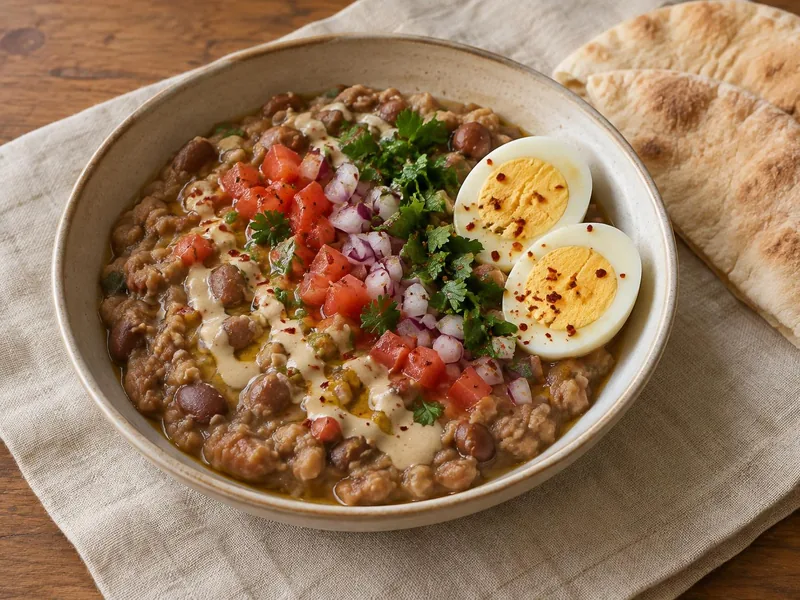
Ful Medames
Slow-simmered fava beans, roughly mashed with garlic, lemon and cumin, served warm with fresh tomato, parsley and good olive oil.
 AI-generated image
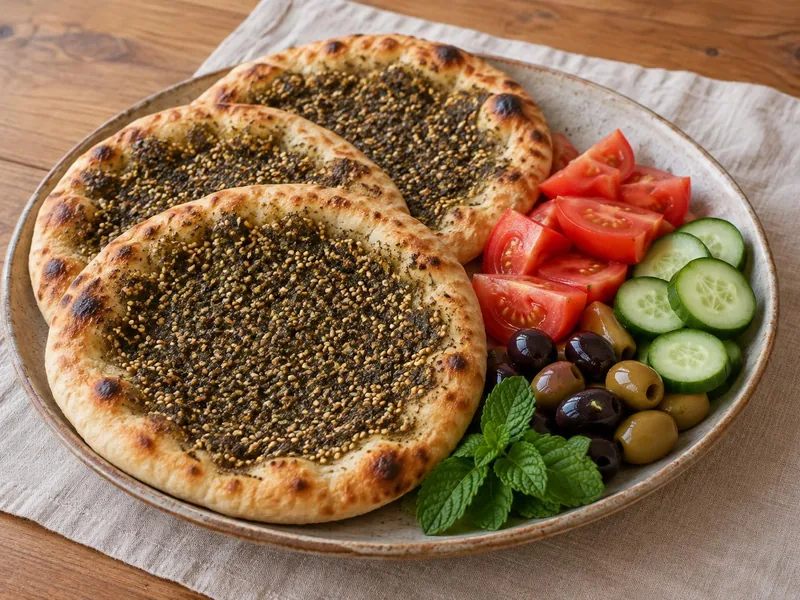
Za'atar Flatbread (Manakish)
Soft, chewy flatbreads brushed with a thyme, sesame and sumac za'atar paste and baked hot until the edges blister and brown.
 AI-generated image
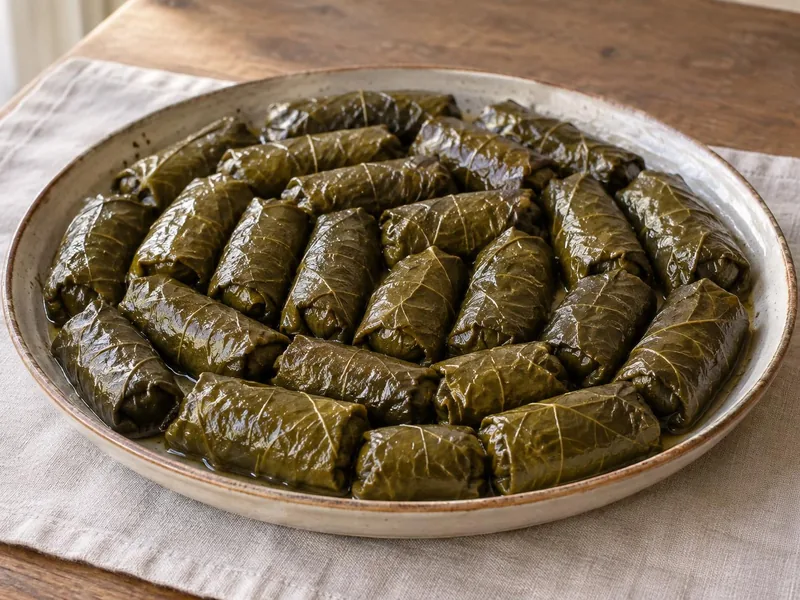
Stuffed Grape Leaves (Olive Oil Dolma)
Tender jarred grape leaves wrapped around a spiced rice, herb and pine nut filling, then simmered in olive oil and lemon until soft and glossy.