Tahini: What It Is and How to Buy, Store and Use It
A practical guide to choosing, storing, stirring and cooking with tahini, with a simple homemade method.
- Tahini is a thick paste of ground sesame seeds, and a good jar should contain only sesame seeds and, maybe, salt. [1][4]
- Buy small quantities, because tahini will eventually go rancid. [2]
- Refrigerate after opening to be cautious, and stir well before each use. [1][4]
- Separated oil is normal, but a rancid smell, strange hue or mold means throw it away. [5]
- Tahini works in dressings, dips, sauces and sweet dishes. [2][3][4]
What tahini is
Tahini is a thick paste made from ground sesame seeds and is a staple of Middle Eastern kitchens. [1] It is also known as tahina. [2] It has been made around the Mediterranean, Middle East and North Africa for centuries. [3]
To make it, raw or toasted sesame seeds are blanched and lightly crushed to remove the outer bran from the kernel. [1] The seeds are then ground into a pale, creamy paste, sometimes with a little olive oil or salt added. [1] Tahini is similar to the sesame paste used in Asian cuisine, but more refined. [1]
The flavor is earthy and nutty, and one source finds it more subtle than other nut butters. [1] Tahini does not necessarily announce its presence in a dish, but you would notice if it were missing. [1]
How to buy tahini
Tahini is widely available in bigger supermarkets and in specialty and Middle Eastern shops. [2] It is readily available at most grocery stores. [4] It usually comes in a jar, though some brands now offer squeeze bottles. [4]
Check the ingredients first. One source says a good tahini should not contain anything other than sesame seeds and, maybe, salt. [4] You can find tahini made from both toasted and raw sesame seeds. [4] Tahini made from just sesame seeds is sometimes labeled raw tahini. [1]
Brands differ a lot. One source says the difference between one brand and the next is huge, with some claggy and others smooth and nutty. [3] The same source says Ethiopian sesame seeds are said to be best for tahini because of their rich flavor. [3] It also says that, generally speaking, Israeli, Lebanese and Palestinian brands are better than Greek and Cypriot ones. [3]
Buy in small quantities so the tahini does not go rancid before you use it. [2]
- Look for a short ingredient list: sesame seeds and, maybe, salt. [4]
- Expect a jar, and possibly a squeeze bottle. [4]
- Buy a small amount if you cook with tahini only occasionally. [2]
Types of tahini
Not every jar is the same, and the type affects texture and flavor. The table below sums up what the sources describe.
How to store tahini
The sources give different timings, so the most cautious approach is to refrigerate an opened jar. One source says an opened jar is best stored in the refrigerator. [4] Another explains that tahini is very high in oil, so it should be refrigerated once opened to prevent it from going rancid too quickly. [1]
On how long it lasts, one source says an open jar can last for up to six months in the refrigerator. [5] Another says it stays good for a couple of months after being opened. [4] A third says that, sealed and kept cool or refrigerated, tahini stays safe for many months. [2]
Some sources allow storage outside the fridge. Tahini does not need to be refrigerated and lasts many weeks at ambient temperatures, but it will eventually oxidise and go rancid. [2] Another source says it will keep in a cool, dark space for up to a month, although storing it out of the fridge for longer than this is not ideal. [5] If you keep it in the cupboard, choose a cool, dry place away from heat and moisture. [3]
Refrigeration also changes the texture. Store tahini in the fridge if you like it thicker. [3] Tahini can solidify when cold. [5] It becomes difficult to stir once chilled, so mix it thoroughly before putting it in the refrigerator. [1] To soften it again, take it out ahead of time and let it come to room temperature. [5]
Stirring, separation and spoilage
Much like natural peanut butter, tahini is thick and usually comes with a layer of separated oil on top that needs to be stirred. [4] This is why recipes often call for well-stirred tahini. [4] Give it a good stir each time before using. [4] It sometimes takes a vigorous stir to bring it back to a pourable paste. [3]
If tahini separates again after you have mixed it, let it warm for a few minutes on the counter before mixing and using. [1] Separation is completely normal and is not a sign that tahini has gone bad. [5] If it has curdled slightly, simply stir the contents of the jar to reconstitute. [5]
Smell is the best first check. When tahini has turned, it develops an incredibly rancid odor that is unmistakable. [5] If you open the jar and it does not smell fresh, throw it away. [5] If it has taken on a strange hue or mold has appeared on the surface, toss it. [5] Do not spoon off the moldy part, because roots and mold spores may have spread through the rest of the product. [5]
How to use tahini
Tahini works in both savory and sweet dishes. [2][4] It is perhaps best known in the Western world as a component of hummus and of the classic sweet halva. [2] It is commonly used in homemade hummus, and baba ghanoush is another classic dip that uses it. [4]
It can also be used as a dip, spread or sauce for almost anything, from breads and pasta, spinach and baked potatoes, to roast lamb and pan-fried fish. [2] Other ideas from the sources:
Tahini sauce is a mix of tahini paste, water, garlic, lemon juice and salt, and is described as a go-to fridge staple. [3] The rich, nutty sauce gives body to a bowl of greens and works well as a salad dressing. [3]
For sweet dishes, tahini can be combined with fruits and found in ice cream and cream-based desserts such as Eton mess, provided it is not inherently bitter because of over roasting. [2] A drizzle on ice cream or a swirl in brownies is another option. [3] Whole tahini is best on toast with a drizzle of honey, as is custom in Iraq and Turkey. [3]
- Salad dressings and marinades. [1]
- Mixed into falafel. [1]
- Eaten as a snack with raw vegetables. [1]
- Added to pan juices for roast meats, or used to flavor baked rolls, breads, cookies and cakes. [2]
- Kebab sauces and other dips. [6]
Making tahini at home
Tahini is quite easy to make at home. [1] One recipe starts with 1 cup (145g) of sesame seeds in a large skillet. [6] Toast them over medium heat, stirring frequently, until just very light golden, and do not deeply brown them. [6] Remove them from the heat immediately, set them in a shallow dish and cool to room temperature. [6]
Once the seeds have cooled, put them in a food processor with a pinch of fine sea salt. [6] Pulse until crumbly and somewhat paste-like, then scrape the sides of the bowl and pulse a few more times. [6] The tahini should be a fairly smooth and thick mixture that is still pourable. [6] If the consistency is not right, add a small amount of oil and pulse, continuing until it is as you like it. [6]
Store homemade tahini in a sealed jar in the refrigerator. [6] It will keep at least a month. [6]
| Type | How it is made | What to expect |
|---|---|---|
| Regular tahini | Hulled sesame kernels, roasted and crushed [3] | A thick, oily paste that eventually separates into oil and solid [3] |
| Whole tahini | Some or all of the hull is kept, and in some cases the seeds are not toasted [3] | Richer, but can be a bit gritty [3] |
| More highly roasted | Made with more highly roasted sesame seeds [2] | Richer, deeper colour and a slightly more bitter flavour [2] |
| Mixed with olive oil | Olive oil is mixed into the paste [2] | A gentler flavour [2] |
Frequently asked questions
Does tahini have to go in the fridge?
Sources differ. One says it does not need refrigeration and lasts many weeks at ambient temperatures before it eventually goes rancid. [2] Others say an opened jar is best stored in the refrigerator. [4] Because tahini is very high in oil, refrigerating it after opening helps prevent it from going rancid too quickly. [1]
Is the oil on top a sign that tahini has gone bad?
No. Separation is completely normal for tahini and is not a sign that it has gone bad. [5] Stir it well before using. [4]
How can I tell if tahini has spoiled?
A rancid odor is the first sign, and if it does not smell fresh it should be thrown away. [5] A strange hue or mold on the surface also means it should be tossed. [5]
Sources
- Sesame’s Secret Weapon: Tahini (thekitchn.com)
- Tahini (bbcgoodfood.com)
- Tahini - information and inspiration | Ottolenghi (ottolenghi.co.uk)
- What Is Tahini? And How Do I Use It? (delish.com)
- Here's How Long Tahini Lasts After Being Opened - The Takeout - Here's How Long Tahini Lasts After Being Opened (thetakeout.com)
- How to Make Tahini (thriftyfoods.com)
Recipes that use this
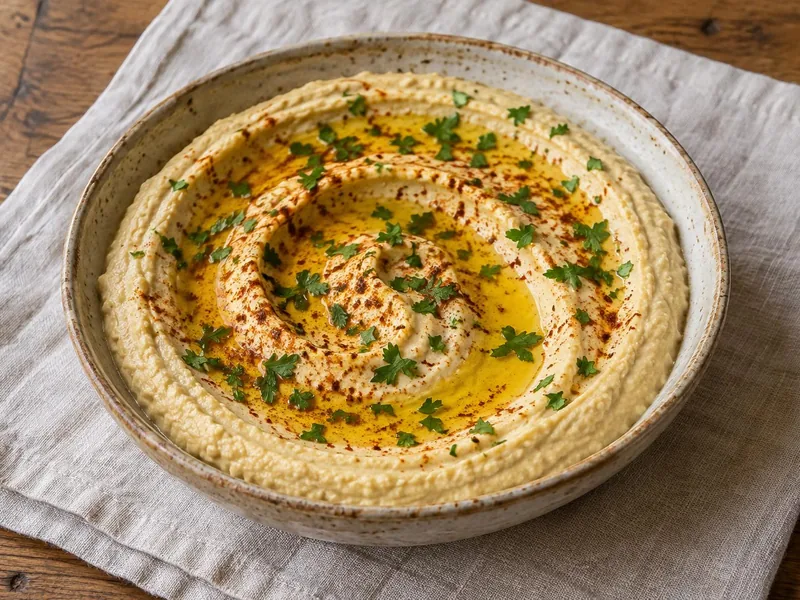 AI-generated image
Hummus
Soft-cooked chickpeas, a tahini and lemon base whipped with ice water, and a few minutes in the food processor give a silky, spoonable hummus.
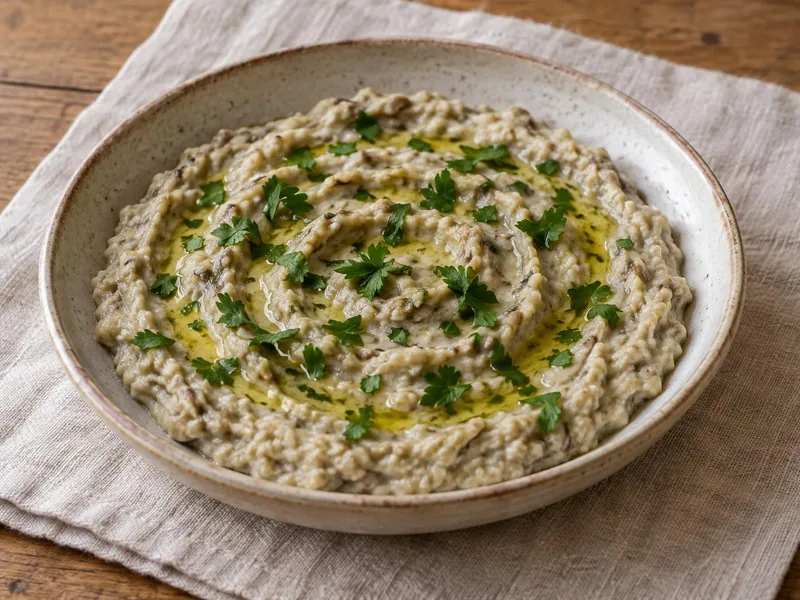 AI-generated image
Baba Ganoush
A spoonable roasted eggplant dip with a lemony tahini base, made in the oven for deep roasted flavor or over open flame for a clearly smoky taste.
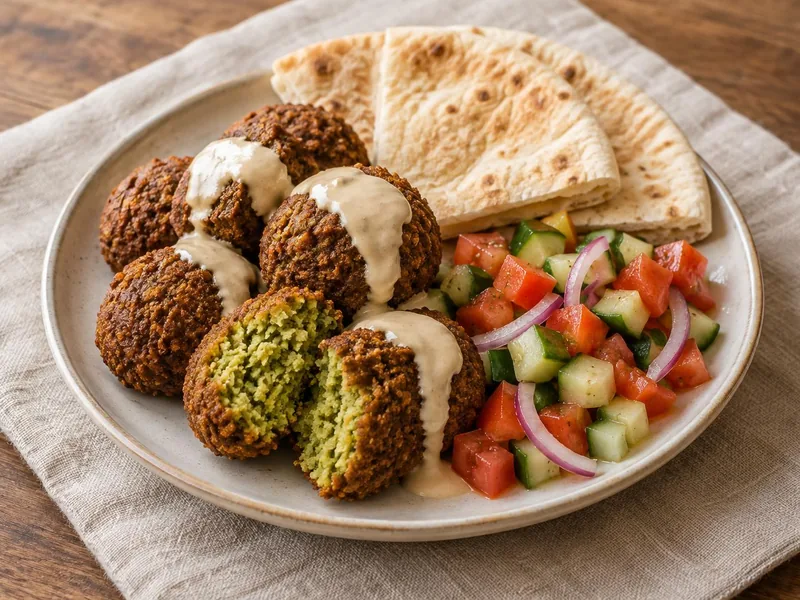 AI-generated image
Falafel
Soaked raw chickpeas and a lot of fresh herbs give falafel a shatter-crisp crust and a tender, green, fluffy middle.