Haydari (Turkish Yogurt and Herb Dip)
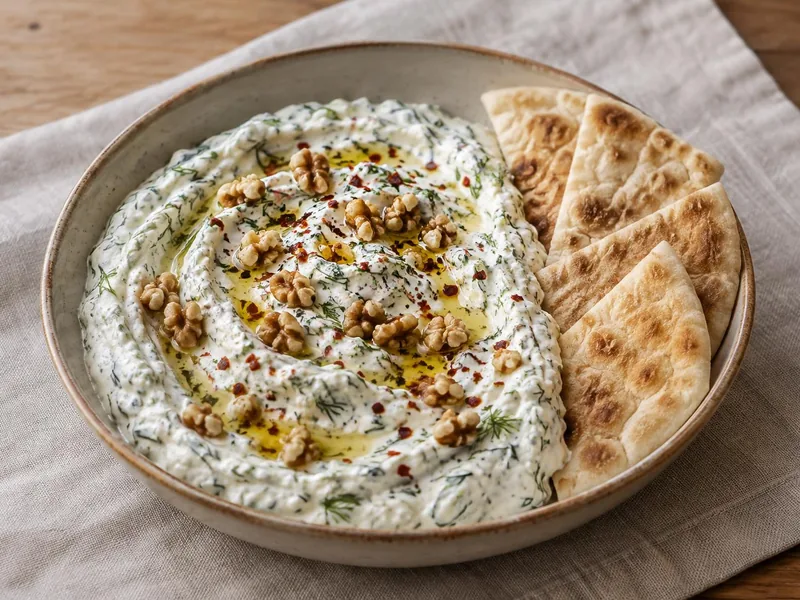
A thick, cool meze of strained yogurt, raw garlic, dill and mint, finished with toasted walnuts and good olive oil.
 AI-generated image
- 400 gthick strained yogurt
- 200 gwarm flatbread or pide
- 25 gwalnut halves
- 15 glemon juice
- 15 gfresh dill
Haydari is a cold Turkish meze made from thick strained yogurt, garlic and fresh herbs. It is commonly served as part of a spread of small dishes, with bread for scooping, alongside grilled vegetables, or next to other dips and salads. Recipes vary from home to home, and some add crumbled white cheese or leave out the nuts.
This version leans on full-fat strained yogurt so the dip holds a spoon and does not turn watery once the herbs go in. The garlic is grated and mashed with salt so it spreads evenly instead of landing in sharp bites, and a short rest in the refrigerator lets the raw edge soften. Dill leads, mint adds lift, and lightly toasted walnuts give a little crunch.
It takes about 15 minutes of hands-on work and needs no cooking beyond toasting the nuts. Serve it in a shallow bowl with a swirl of olive oil and a pinch of red pepper flakes.
Preparation
- Step 015 min
Heat a small dry skillet over medium heat, about 150 C (300 F). Add the walnuts and toast for 3 to 5 minutes, stirring often, until they smell nutty and look a shade darker.
- Step 025 min
Tip the walnuts onto a plate and let them cool completely, then chop them roughly.
- Step 032 min
Put the grated garlic and the salt on a cutting board and press and smear them together with the flat of a knife until you have a smooth paste.
- Step 042 min
Spoon the yogurt into a mixing bowl. Add the garlic paste, lemon juice and the 10 g of olive oil, and stir until smooth and evenly mixed.
- Step 052 min
Fold in the dill, the mint and about three quarters of the chopped walnuts. The dip should be thick and spoonable, not runny.
- Step 0620 min
Cover and refrigerate (at or below 4 C / 40 F) for 20 minutes so the flavors meld and the raw garlic mellows.
- Step 07
Taste and adjust with a pinch more salt or a few drops of lemon juice if needed.
- Step 082 min
Spread the haydari into a shallow serving bowl, making a few swirls with the back of a spoon. Drizzle with the finishing olive oil, then scatter over the remaining walnuts and the red pepper flakes.
- Step 093 min
Warm the flatbread until soft and fragrant, for example for 30 to 60 seconds per side in a dry skillet over medium heat, then serve with the cold dip.
Kitchen notes
- If your yogurt is thin, strain it first: line a sieve with a clean cloth or coffee filter, set it over a bowl, spoon in about 600 g plain whole milk yogurt, and refrigerate for 3 to 4 hours, until it is thick like soft cream cheese. Discard the liquid whey or save it for baking.
- Dry the herbs thoroughly after washing. Any clinging water will thin the dip.
- Storage: keep leftovers covered in the refrigerator at or below 4 C (40 F) for up to 3 days. Do not leave the dip out at room temperature for more than 2 hours in total; discard it if it has. The garlic flavor gets stronger the longer it sits.
- Make ahead: mix the dip without the walnuts and finishing oil up to 1 day ahead, then top just before serving so the nuts stay crisp.
- Variations: swap half the dill for flat-leaf parsley, add 40 g crumbled white cheese for a saltier dip, or leave out the walnuts for a nut-free version. Serve with raw cucumber, radishes or carrot sticks instead of bread if you prefer.
- Do not freeze; the yogurt separates and turns grainy when thawed.
Diet and allergens
Suitable for: Vegetarian.
Contains: tree nuts, milk, gluten (wheat).
Labels come from the ingredient list by fixed rules. If you cook for someone with an allergy, check the labels of packaged ingredients such as stock, spice blends, tahini and bread, since brands differ. How labels work.
Frequently asked questions
What is the difference between haydari and tzatziki?
Haydari is made with thick strained yogurt, garlic and herbs such as dill and mint, and is usually thick enough to spread. Tzatziki typically includes grated cucumber, which makes it looser and fresher in texture.
Can I use regular yogurt?
Yes, but strain it first in a lined sieve in the refrigerator for 3 to 4 hours until thick, otherwise the dip will be runny once the herbs and lemon are stirred in.
How can I make the garlic less sharp?
Grate it finely and mash it with the salt, then let the finished dip rest in the refrigerator for 20 minutes or longer. You can also reduce it to one clove.
What do you serve haydari with?
Warm flatbread is the classic partner. It also goes well with raw vegetables, grilled vegetables, fritters or as part of a meze spread.
References and sources
- Nutrition: USDA FoodData Central records Thick strained plain yogurt, full-fat (FDC 2259794), Garlic (FDC 1104647), Fine sea salt (FDC 173468), Lemon juice (FDC 167747), Extra virgin olive oil, for the dip (FDC 748608), Fresh dill (FDC 172233), Fresh mint leaves (FDC 173475), Walnut halves (FDC 2346394), Extra virgin olive oil, to finish (FDC 748608), Mild red pepper flakes (FDC 170932), Warm flatbread or pide (FDC 174915).
- Proportions: main ingredients and salt per serving were compared with the median of 5 published recipes for this dish. How we make recipes.
 AI-generated image
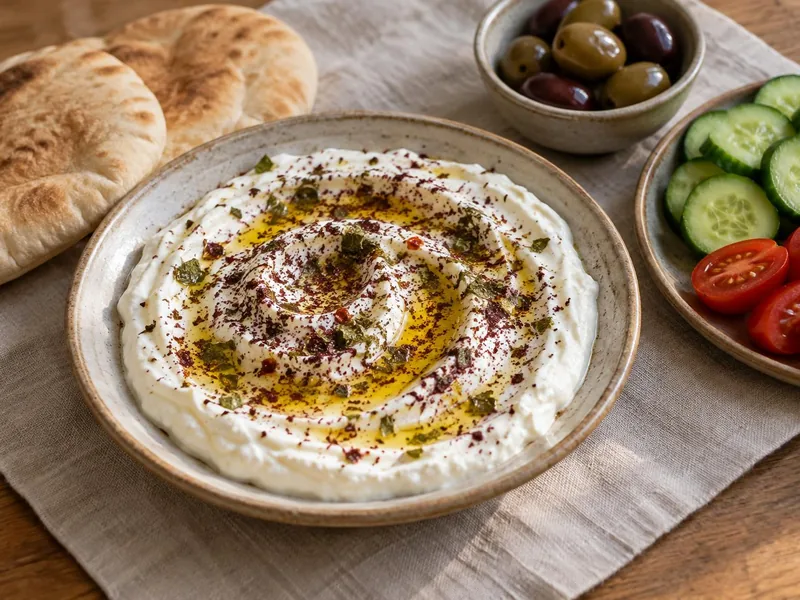
Labneh
Thick, tangy strained yogurt that needs only two ingredients and a night in the refrigerator.
 AI-generated image
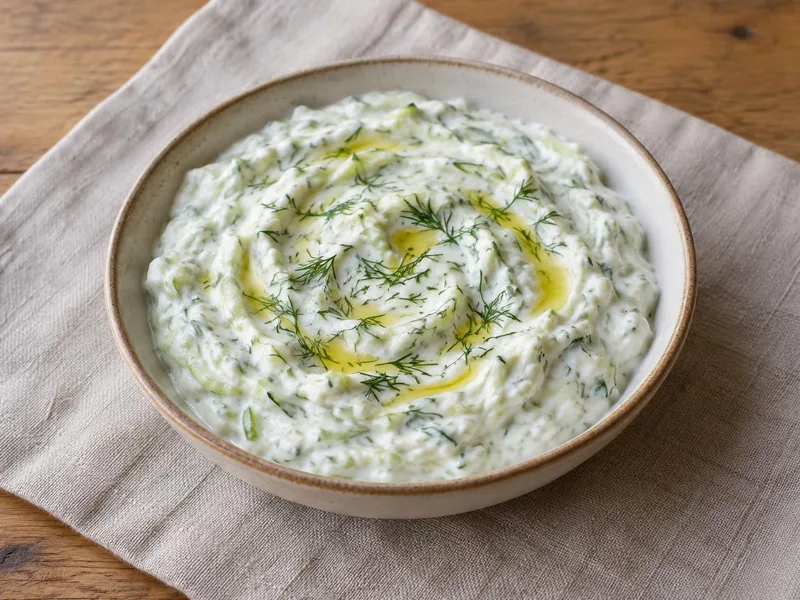
Tzatziki
A thick, cool yogurt and cucumber dip with garlic, lemon and dill that stays creamy instead of watery.
 AI-generated image
Gözleme with Spinach and Feta
Paper-thin yogurt dough wrapped around salty feta and herby greens, then cooked in a hot skillet until blistered and crisp at the edges.