Labneh
Thick, tangy strained yogurt that needs only two ingredients and a night in the refrigerator.
 AI-generated image
- 600 gwhole-milk yogurt
- 240 gpita or flatbread
- 200 gcucumber
- 150 gcherry tomatoes
- 60 golives
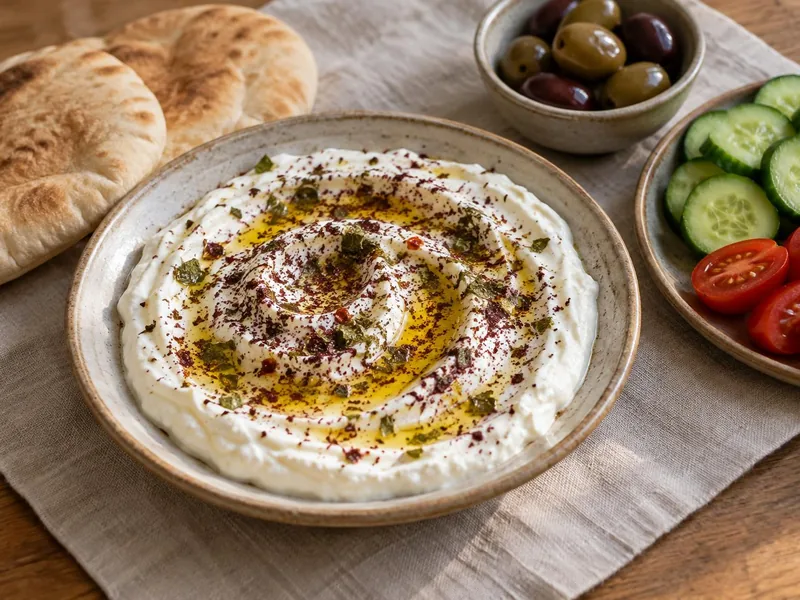
Labneh is yogurt strained until it turns thick, creamy and spreadable, somewhere between sour cream and soft cheese. It is eaten across the Levant, Turkey and the wider Middle East, often at breakfast or as part of a meze spread, scooped up with warm flatbread and served with olives, cucumbers and tomatoes.
This version uses plain whole-milk yogurt and a little salt, strained in the refrigerator so the whole process stays cold and safe. The salt seasons the labneh and helps draw out the whey. A long, gentle strain gives a smooth, rich texture without any stirring or special equipment. 600 g of yogurt gives about 270 to 300 g of labneh, which is plenty for four people as part of a meze plate.
You decide how thick it ends up. Strain for 18 hours for a soft, swoopy dip, or up to 24 hours for a firmer labneh that holds a deep swirl. Finish with good olive oil, sumac, dried mint and a pinch of chili for a classic plate.
Preparation
- Step 013 min
Set a fine mesh sieve over a deep bowl so the bottom of the sieve sits well above the base of the bowl, leaving room for whey to collect. Line the sieve with a double layer of cheesecloth or one layer of thin cotton towel, letting the edges hang over the sides.
- Step 022 min
Stir the yogurt and salt together in a large bowl until completely smooth and evenly mixed.
- Step 032 min
Pour the salted yogurt into the lined sieve. Gather the overhanging cloth over the top and fold it down so the yogurt is covered.
- Step 041 min
Cover the whole setup with a plate or plastic wrap and place it in the refrigerator at 4 C (40 F) or colder. Do not strain at room temperature.
- Step 051080 min
Strain for 18 to 24 hours. Check after 18 hours: the labneh should hold its shape when you lift the cloth and a spoon should leave a clean trail. For a firmer, almost cheese-like texture, strain up to 24 hours. Pour off the whey from the bowl if it rises close to the base of the sieve.
- Step 063 min
Scrape the labneh from the cloth into a clean bowl with a spatula and stir briefly until smooth. You should have roughly 270 to 300 g. Discard the whey or save it for another use (see notes).
- Step 073 min
Spread the labneh in a shallow serving bowl or plate, then use the back of a spoon to make a wide swirl. Drizzle with the olive oil and scatter over the sumac, dried mint and pul biber.
- Step 085 min
Serve right away with warm flatbread, cucumber, cherry tomatoes and olives. Return any leftover labneh to the refrigerator within 2 hours of serving.
Kitchen notes
- Storage: keep plain labneh in a covered container in the refrigerator and use within 5 days. Add the oil and toppings just before serving so the surface stays neat.
- Labneh balls: after 36 to 48 hours of straining the labneh becomes firm enough to roll into walnut-sized balls. Pack them in a clean jar, cover completely with olive oil and keep in the refrigerator, using within 1 week and keeping the balls submerged.
- Greek-style yogurt is already thick, so it will be ready in about 6 to 8 hours and will yield more labneh from the same weight.
- Whey: the liquid that drains off (about 300 g from this batch) is mildly sour and can replace some of the water in flatbread or pancake batter, or be used in soups. Keep it refrigerated and use within 2 to 3 days.
- Variations: stir in finely chopped fresh mint, dill or parsley, or a little lemon zest, just before serving. If you add raw garlic, make only what you will eat in a day or two.
- Nut warning: the recipe as written contains no nuts, but toasted walnuts (a tree nut) or pine nuts are sometimes sprinkled on top. If you add them, the dish is no longer nut-free, so leave them out for anyone with a nut allergy and check labels on any packaged nuts.
- Serving without a cloth: a clean, fine mesh coffee filter or a very fine sieve also works, but a cloth gives the smoothest result. Wash cloths in hot water and dry them fully between uses.
Diet and allergens
Suitable for: Nut-free.
Contains: milk, gluten (wheat).
Labels come from the ingredient list by fixed rules. If you cook for someone with an allergy, check the labels of packaged ingredients such as stock, spice blends, tahini and bread, since brands differ. How labels work.
Frequently asked questions
How long does it take to make labneh?
Allow 18 to 24 hours of straining in the refrigerator for a thick, spreadable labneh. The hands-on time is only about 10 minutes.
How much labneh will I get?
600 g of whole-milk yogurt gives roughly 270 to 300 g of labneh after 18 to 24 hours. The rest is whey, which drains into the bowl.
Can I use low-fat yogurt?
Yes, but the labneh will be less rich and slightly less creamy. Avoid yogurts with added thickeners, which can strain unevenly.
Why strain in the refrigerator instead of on the counter?
Dairy should not sit at room temperature for long periods. Straining in the cold keeps it safe and still gives a thick, tangy result, just a little slower.
What is the difference between labneh and Greek yogurt?
Both are strained yogurt, but labneh is strained for longer and usually salted, so it ends up thicker, denser and more tangy.
References and sources
- Nutrition: USDA FoodData Central records Plain whole-milk yogurt (FDC 2259793), Fine sea salt (FDC 173468), Extra virgin olive oil (FDC 171413), Dried mint (FDC 172239), Pul biber (Aleppo-style chili flakes) (FDC 170932), Pita or flatbread (FDC 174915), Cucumber (FDC 2346406), Cherry tomatoes (FDC 170457), Olives (FDC 169094).
- Not counted in nutrition (no matching USDA record): Ground sumac.
- Proportions: main ingredients and salt per serving were compared with the median of 6 published recipes for this dish. How we make recipes.
 AI-generated image
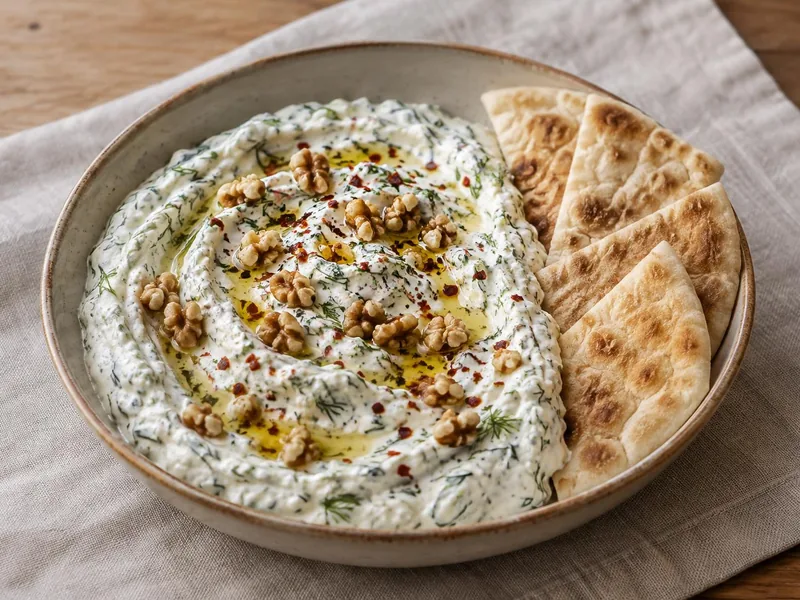
Haydari (Turkish Yogurt and Herb Dip)
A thick, cool meze of strained yogurt, raw garlic, dill and mint, finished with toasted walnuts and good olive oil.
 AI-generated image
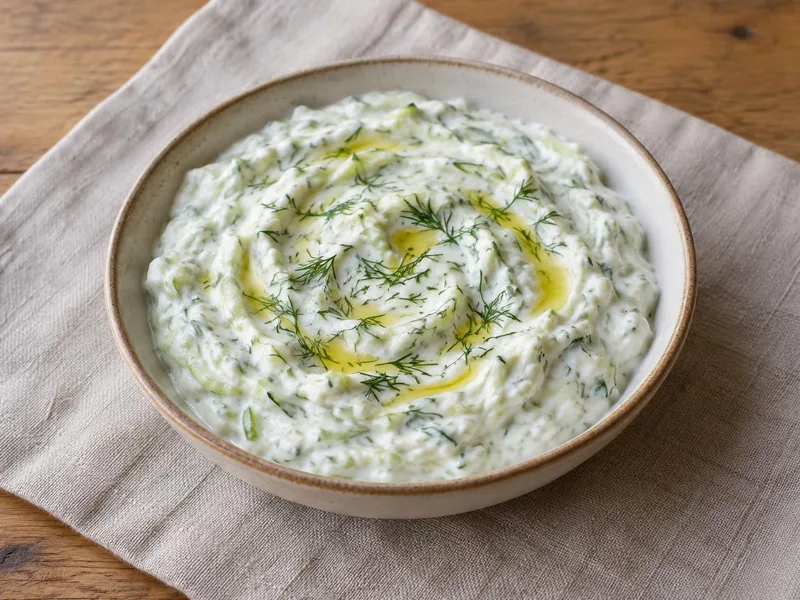
Tzatziki
A thick, cool yogurt and cucumber dip with garlic, lemon and dill that stays creamy instead of watery.
 AI-generated image
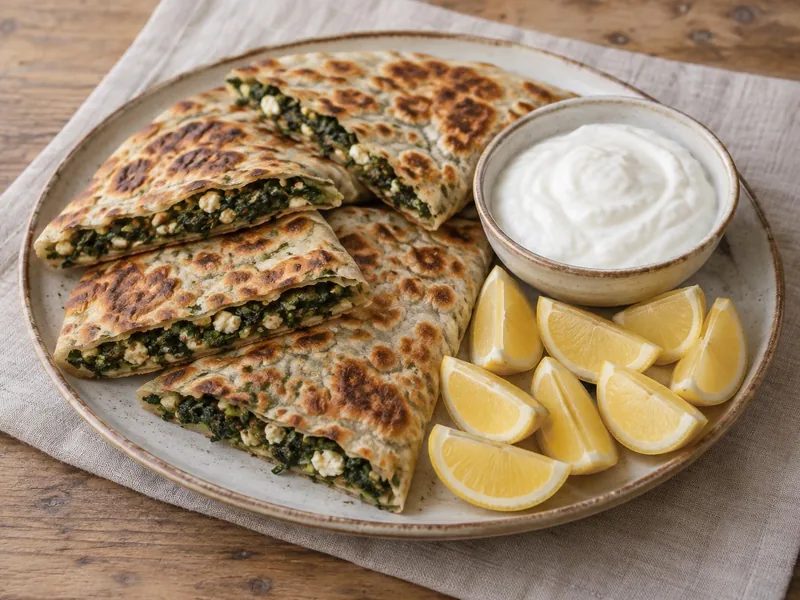
Gözleme with Spinach and Feta
Paper-thin yogurt dough wrapped around salty feta and herby greens, then cooked in a hot skillet until blistered and crisp at the edges.